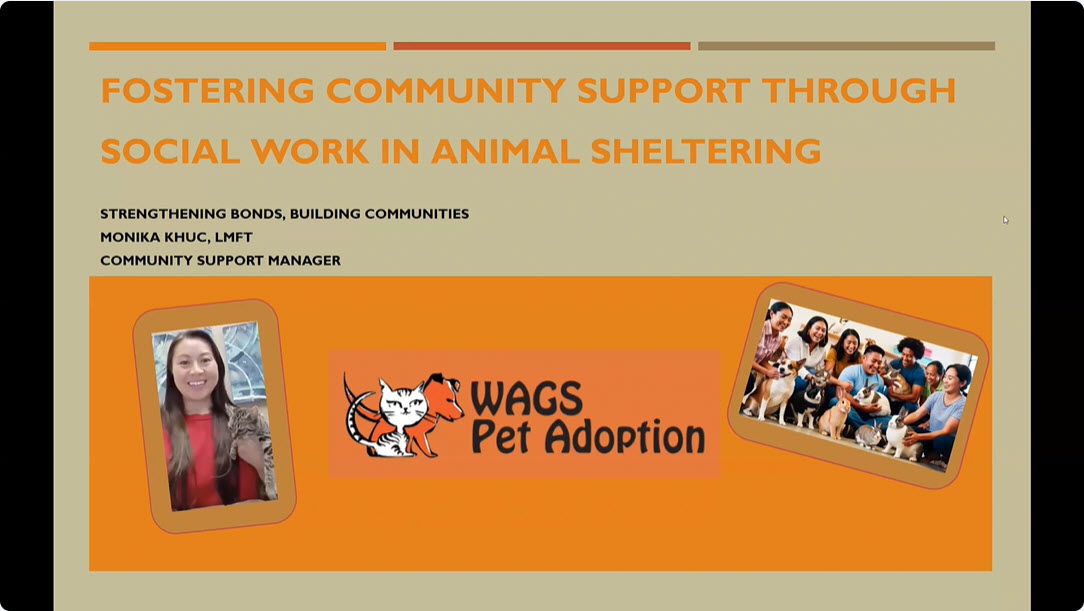
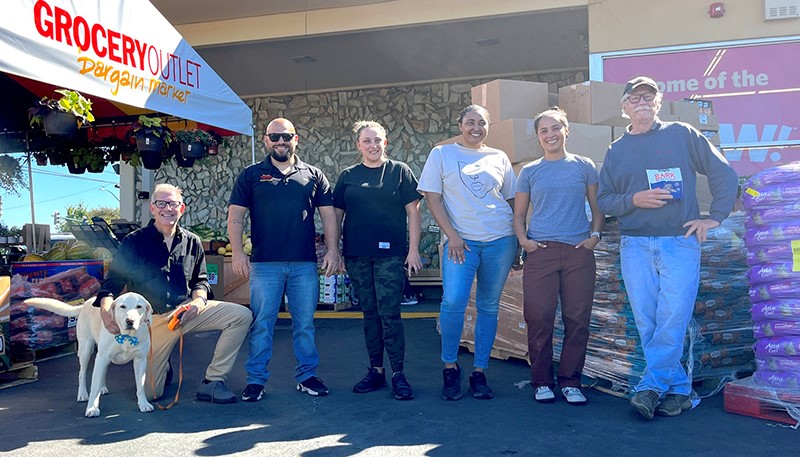
Learn how Monika Khuc, LMFT and Community Support Manager at WAGS Pet Adoption in Westminster, California, helped implement a social work-informed approach to address barriers faced by diverse communities, including the Vietnamese community. By centering diversity, equity, inclusion, and belonging principles, WAGS prioritizes the human-animal bond and keeping pets and families together.
Español
Aprender cómo Monika Khuc, LMFT y Community Support Manager de WAGS Pet Adoption en Westminster, California, ayudó a poner en práctica el trabajo social para reducir las barreras a las que se enfrentan diversas comunidades, incluida la comunidad vietnamita. Al enfocarse en los principios de diversidad, equidad, inclusión y pertenencia, WAGS da prioridad a la conexión entre humanos y animales y a mantener juntas a las mascotas y sus familias.
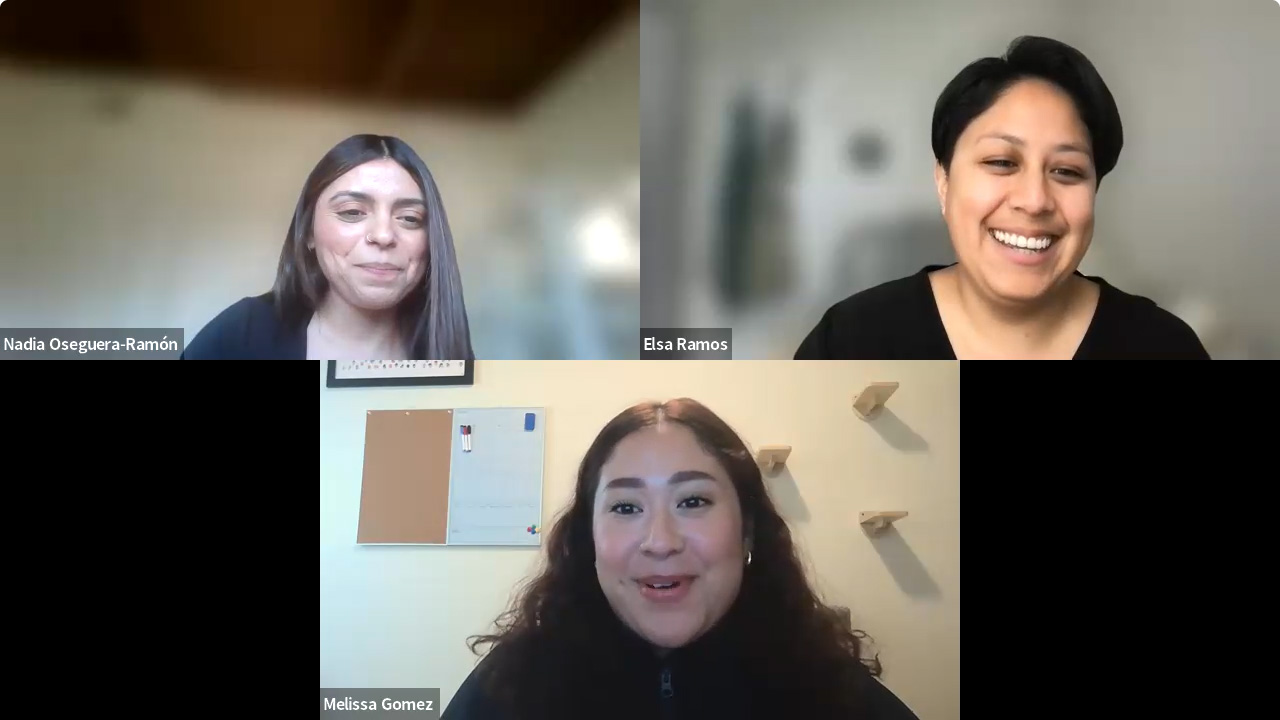
“Wow—thank you all so much. These conversations are needed now more than ever,” shared one participant at last week’s All Call, and we couldn’t agree more. Thanks to Melissa Gómez (SF SPCA Community Workforce Manager) and Elsa Ramos (Friends of Oakland Animal Services Bilingual Adoption Coordinator) for their inspiring insights, and to everyone joining the Multicultural Engagement Community of Practice. Together, we can explore new ways to expand our circle of adopters, volunteers, fosters, and partners to keep more pets safe at home instead of waiting in shelters.
Here are three of Melissa and Elsa’s strategies shelters can adapt and implement in their own communities, regardless of budget.
Build a team of bilingual volunteers. Start with two-hour translation shifts during adoptions, while also working toward dedicated staff positions to meet the needs of bilingual pet guardians. As Melissa pointed out, “We really need to be able to serve people properly; it’s unjust if we don’t.”
Table at community events—with translated signage and bilingual volunteers or staff—and let members of that community lead. Elsa drew on her Latine heritage in tabling at Oakland’s Dia de los Muertos Festival, with an altar and an invite for people to honor beloved pets. By creating a space that was responsive and meaningful—by Latine community members, for Latine community members—her team was able to foster trust and connection, answer questions, and share services and resources.
Understand your community’s strengths and struggles, and remind your team that we help animals by supporting people. To support Latine families caring for their pets, we can counter fear and threats of deportation with trauma-informed practices that benefit clients and staff, like emphasizing choice, communicating with dignity, and meeting people where they are. This includes recognizing that engagement through door-knocking might not be the best approach in this moment, Melissa added. We can get clear on our rights in the workplace and share tools like Red Cards so community members know their rights, regardless of immigration status.
For more on intentional recruitment practices, conversations that cultivate trust, and gaining buy-in from donors and team members, watch the recording and catch Understanding Your Community Part 1 here.
To help California shelters implement welcoming practices, Cal for All Animals is fully subsidizing translation services. Email Patitas y Palabrasfor more information. Plus, our Spanish-language sample shelter site has ready-made messaging available for everyone!
Melissa emphasized that understanding our communities helps us create and translate information that truly resonates—a process that requires us to check assumptions and stay curious, even when we are members of the community in question:
Melissa: ”I like to look at my materials like, Will my mom understand this? […] Will my grandma understand what they’re saying? So, really, understanding your community is really, really important in this program—I think not only understanding and learning about your community, but also unlearning things about your community. I think we go, you know, as a Latina I think we have […] our certain experiences. We have our lived experiences. And so we really have to go into these communities open-minded. Even if we grew up in these communities, I think all of us have different experiences.”
Elsa emphasized thinking beyond typical adoption event venues to create even more possibilities for people and animals to connect, from libraries to churches.
Elsa: ”Because my background is working at community centers, after-school programs, nonprofits, and things like that, I know that people feel safe in those places, and they know that those are places that they can go to access resources and ask for help. So we’re starting off with [an adoption event series at] Oakland Public Library branches. […] We’re inviting all of our fosters to come by and […] show off their dogs that they’ve been fostering, and we’re making the adoptions free. We are having translators come by so that it’s fully bilingual. […] And we’re going to also use these events to share any resources, training materials, things like that.”
Resources Shared on the Call
Understanding Your Community Part 1 – The first in a series of All Calls building a multicultural engagement community of practice, with contributions from Debra Olmedo of Patitas y Palabras, an English-Spanish translation service focused on animal welfare.
Red Cards/Tarjetas Rojas – All people in the United States, regardless of immigration status, have certain rights and protections under the U.S. Constitution. The Immigrant Legal Resource Center’s red cards give examples of how people can exercise these rights in real situations.
S.O.L.A.R. – Support, Outreach, Leadership, Action, and Reform (Apoyo, Alcance, Liderazgo, Acción y Reforma). A Facebook group created by Jacqueline Hernández to take on pressing issues like immigration reform, animal well-being, and social justice.
“Wow, muchas gracias a todos. Estas conversaciones son más necesarias hoy que nunca”, compartió un participante de la llamada de la semana pasada, y no podríamos estar más de acuerdo. Gracias a Melissa Gómez (SF SPCA Community Workforce Manager) y a Elsa Ramos (Friends of Oakland Animal Services Coordinadora de Adopción Bilingüe) por sus ideas inspiradoras, y a todos los que se unieron a la Comunidad de Práctica de Participación Multicultural. Juntos, podemos explorar nuevas formas de expandir nuestro círculo de adoptantes, voluntarios, hogares temporales y socios para mantener a más mascotas seguras en casa en lugar de esperar en refugios.
Aquí se presentan tres de las estrategias de Melissa y Elsa que los refugios pueden adaptar e implementar en sus propias comunidades, independientemente del presupuesto.
Construir un equipo de voluntarios bilingües. Comenzamos con turnos de traducción de dos horas durante las adopciones, y también trabajamos para conseguir puestos de personal dedicados a satisfacer las necesidades de los guardianes de mascotas bilingües. Como señaló Melissa: “Realmente necesitamos poder atender a las personas adecuadamente; sería injusto si no lo hiciéramos”.
Participar en eventos comunitarios, con letreros traducidos y voluntarios o personal bilingüe, y dejar que los miembros de esa comunidad tomen la iniciativa. Elsa se basó en su patrimonio Latine al participar en el Festival del Día de los Muertos de Oakland, con un altar y una invitación para que la gente honrará a sus queridas mascotas. Al crear un espacio receptivo y significativo (por miembros de la comunidad Latine, para miembros de la comunidad Latine), su equipo pudo fomentar la confianza y la conexión, responder a preguntas y compartir servicios y recursos.
Comprender las fortalezas y las dificultades de su comunidad, y recuérdale a su equipo que ayudamos a los animales apoyando a las personas. Para apoyar a las familias Latines que cuidan a sus mascotas, podemos contrarrestar el miedo y las amenazas de deportación con prácticas informadas sobre el trauma que benefician a los clientes y al personal, como enfatizar la elección, comunicarse con dignidad, y conocer a las personas donde están. Esto incluye reconocer que el compromiso de visitar de puerta a puerta puede que no sea el mejor enfoque en este momento, añadió Melissa. Podemos aclarar nuestros derechos en el lugar de trabajo y compartir herramientas como las Tarjetas Rojas para que los miembros de la comunidad conozcan sus derechos, independientemente de su estatus migratorio.
Para obtener más información sobre prácticas de reclutamiento intencional, conversaciones que cultivan la confianza y cómo obtener la aceptación de los donantes y los miembros del equipo, mire la grabación y escuche Entendiendo a tu comunidad, parte 1 aquí.
Para ayudar a los refugios de California a implementar prácticas de bienvenida, Cal for All Animals está subsidiando completamente los servicios de traducción. Envíe un correo electrónico a Patitas y Palabras para obtener más información. ¡Además visite nuestra página de ejemplo de sitio web de refugios, que tiene lenguaje listo para usar y es disponible para todos!
Melissa enfatizó que comprender nuestras comunidades nos ayuda a crear y traducir información que realmente resuena, un proceso que requiere que verifiquemos suposiciones y mantengamos la curiosidad, incluso cuando somos miembros de la comunidad en cuestión:
Melissa: “Me gusta analizar mis materiales como, ¿mi mamá entenderá esto? […] ¿mi abuela entenderá lo que están diciendo? Entonces, realmente, comprender a tu comunidad es muy, muy importante en este programa. Creo que no solo entender y aprender sobre tu comunidad, sino también desaprender cosas sobre tu comunidad. Creo que, como latinas, tenemos […] nuestras propias experiencias. Tenemos nuestras experiencias vividas. Por eso realmente tenemos que entrar a estas comunidades con la mente abierta. Incluso si crecimos en estas comunidades, creo que todas tenemos experiencias diferentes”.
Elsa enfatizó en pensar más allá de los lugares típicos de eventos de adopción para crear aún más posibilidades para que las personas y los animales se conecten, desde bibliotecas hasta iglesias.
Elsa: “Como tengo experiencia trabajando en centros comunitarios, programas extraescolares, organizaciones sin fines de lucro y cosas así, sé que las personas se sienten seguras en esos lugares y saben que son lugares a los que pueden acudir para acceder a recursos y pedir ayuda. Así que vamos a empezar con [una serie de eventos de adopción en] las sucursales de la Biblioteca Pública de Oakland. […] Estamos invitando a todos nuestros padres adoptivos a que vengan y […] demuestren los perros que han estado criando, y estamos haciendo que las adopciones sean gratuitas. Vamos a tener traductores para que sea completamente bilingüe. […] Y también vamos a utilizar estos eventos para compartir recursos, materiales de capacitación y cosas así.”
Recursos compartidos en la llamada
Understanding Your Community Part 1 – El primero de una serie de All Calls sobre la creación de una comunidad de prácticas de participación multicultural, con contribuciones con Debra Olmedo de Patitas y Palabras, un servicio de traducción inglés-español especializado en el bienestar de los animales.
Red Cards/Tarjetas Rojas – Todas las personas en los Estados Unidos, sin importar su situación migratoria, tienen ciertos derechos y protecciones bajo la Constitución de los Estados Unidos. Las tarjetas rojas del Centro de Recursos Legales para Inmigrantes ofrecen ejemplos de cómo las personas pueden ejercer estos derechos en situaciones similares.
S.O.L.A.R. – Support, Outreach, Leadership, Action, and Reform (Apoyo, Alcance, Liderazgo, Acción y Reforma). Grupo de Facebook creado por Jacqueline Hernández para tratar temas urgentes como la reforma de la inmigración, el bienestar de los animales y la justicia social.
California’s diversity is one of its greatest strengths. Forty percent of Californians claim Latine heritage. Nearly half speak a language other than English at home (Spanish is the most common, followed by Chinese, Tagalog, and Hindi). Yet a 2024 review of Cal for All Animals grantee shelter websites showed 91% did not offer culturally-accessible translations. What happens when that changes?
At the first session of the All Call Multicultural Engagement Community of Practice this week, State Director Allison Cardona shared examples of the impact three shelters experienced when they incorporated culturally-relevant translations into their grant initiatives:
15% increase in Spanish-speaking clients
25% increase in adoptions
A jump in Return-to-Home rates (and unexpected insight into how they could better meet the needs of hearing-impaired pet guardians in their community as well)
These stats kickstarted a conversation with Debra Olmedo (Patitas y Palabras Translation Services) and attendees that touched on what these sessions are all about: Learning from Cal for All grantees, partners, and one another as we deepen our understanding of all of our community members as a way to increase adoptions, foster, and return to home.
And asking questions in a supportive space—like, How can we expect folks to follow the “rules” if they are not available in the language they speak? What steps can we take to support everyone’s right to communicate, understand, and be understood in the language in which they feel most powerful? What can we do to make the shelter a welcoming place, when government agencies can be a source of fear, especially for marginalized community members? How can we support staff when they are the first person on the team doing this kind of work?
Bring your curiosity to the next call, and listen to this first conversation focused on these questions and the opportunities that exist at this moment: all the pet guardians and potential adopters, fosters, or volunteers you could be connecting with in your community. If you’re a California shelter, Cal for All Animals can help you get started with free translation services—email us for more information. Not in California? Our Spanish-language sample shelter site has ready-made messaging available for everyone!
During the call, Outreach Specialist Ivy Ruiz reflected on how important it is to understand the demographics of where we live and work. In her former role as a shelter manager, she didn’t initially realize her community was over half Latine. She pointed out that connecting with community members who have been historically excluded takes time:
Ivy: “How can an organization expect community support in the work we were doing with language barriers and barriers in general? […] When we start to understand our community, we can start to move away from the enforcement piece, for example, the citations, seizing animals, neglect cases, which oftentimes aren’t neglect cases. They are situations where there are lack of resources. And so we begin to see and hear and understand the challenges and in turn become more culturally sensitive and build trust and great relationships and partnerships. […] These trust-building processes, they take time and patience, and it doesn’t happen overnight. You may not be able to collect the data within that month, or within that that timeframe that you hoped for. But […] you’ll see the qualitative data, and you’ll see a shift in the community, and you’ll feel the support.”
Debra Olmedo emphasized the importance of taking action rather than getting stuck in feelings of blame or shame:
Debra: “How do you know who you’re missing? And as California has been doing these studies, and we’ve been getting this now, I think somebody’s waving a flag, saying, Hey, we’re missing these people. We’re missing our community. And now we can do even better than we have before. […] I want to make sure everyone doesn’t feel bad because they haven’t been doing this. Now we’re going to start doing it.”
Español es el más común, seguido por el chino, el tagalo y el hindi. Sin embargo, una evaluación en 2024 de los sitios web de los refugios subvencionados por Cal for All Animals reveló que el 91% no ofrecen traducciones culturalmente adecuadas. ¿Qué ocurre cuando esto cambia?
En la primera sesión de la Comunidad de Práctica de Colaboración Multicultural de All Call (All Call Multicultural Engagement Community of Practice) esta semana, la Directora Estatal Allison Cardona compartió ejemplos del impacto que tres refugios lograron cuando incorporaron traducciones culturalmente relevantes a sus iniciativas de subvenciones:
Aumento de 15% de clientes que hablan español
Aumento de un 25% de las adopciones
Un aumento en los regresos a casa (y una inesperada percepción de cómo se puede atender mejor las necesidades de los cuidadores de mascotas con dificultades auditivas en su comunidad).
Estos datos sirvieron como punto de arranque para una conversación con Debra Olmedo (Servicios de Traducción, Patitas y Palabras) y los participantes, en la que se abordó la esencia de estas sesiones:
Aprender de los participantes en las subvenciones de Cal for All, de los colaboradores y de unos y otros mientras nos ayudamos mutuamente a conocer mejor los miembros de nuestras comunidades con el fin de aumentar las adopciones, el cuidado temporal y el regreso a casa.
Y también poder hacer preguntas en un ambiente de apoyo, por ejemplo: ¿Cómo podemos pedir a las personas que sigan las ‘reglas’ si no están disponibles en el idioma que hablan? ¿Qué medidas podemos tomar para apoyar el derecho de todos a comunicarse, comprender y ser comprendidos en la lengua en la que se sientan más capaces? ¿Qué podemos hacer para que el refugio sea un lugar amable, cuando los cuerpos del gobierno pueden ser una causa de miedo, especialmente para los miembros marginados de la comunidad? ¿Cómo podemos apoyar al personal cuando es la primera persona del equipo que implementa este tipo de trabajo?
Venga con su curiosidad a la siguiente llamada y escuche nuestra primera conversación enfocada en estas preguntas y las oportunidades que existen en este momento: todos los guardianes de mascotas y posibles adoptantes, cuidadores o voluntarios con los que podría conectarse en su comunidad. Si es un refugio en California, Cal for All Animals puede ayudarle a empezar con servicios de traducción gratuitos; envíenos un correo electrónico para obtener más información.
Nuestra especialista en trabajo comunitario, Ivy Ruiz, reflexionó sobre lo importante que es conocer la demografía del lugar donde vivimos y trabajamos. En su trabajo anterior como gerente de refugio, al principio no se dio cuenta de que más de la mitad de su comunidad era latina. Comentó que conectar con los miembros de la comunidad que han sido históricamente excluidos toma tiempo:
Ivy: “¿Cómo puede una organización esperar el apoyo de la comunidad en el trabajo que estábamos haciendo con las barreras del idioma y las barreras en general? … Cuando empezamos a entender a nuestra comunidad, podemos empezar a dejar atrás la parte policial, por ejemplo, las multas, la confiscación de animales, los casos de negligencia, que en muchos casos no son casos de negligencia. Son situaciones en las que faltan recursos. Así que empezamos a ver, escuchar y comprender los retos y, a su vez, a ser más sensibles culturalmente y a crear confianza y buenas relaciones y asociaciones. […] Estos procesos de creación de confianza toman tiempo y paciencia, y no suceden de un día para otro. Es posible que no puedas conseguir los datos en ese mes o en el tiempo que esperabas. Pero […] verás los resultados cualitativos, verás un cambio en la comunidad y sentirás el apoyo.”
Debra Olmedo habló de la importancia de tomar acción en lugar de estancarse en sentimientos de culpabilidad o vergüenza:
Debra: “¿Cómo sabes quién te falta? Y a medida que California ha ido haciendo estos estudios, y hemos ido entendiendo esto ahora, creo que alguien está moviendo una bandera, diciendo: Oye, nos estamos olvidando de estas personas. Nos falta nuestra comunidad. Y ahora podemos hacerlo mejor que antes. […] Quiero asegurarme de que nadie se sienta mal por no haber hecho esto antes. Ahora vamos a empezar a hacerlo.”
Why does diversity, equity, and inclusion still matter? At this All Call with Jasmin Robinson (Director of Diversity, Equity, and Inclusion Initiatives with The Association for Animal Welfare Advancement and MSM Global Consulting), attendees answered for themselves:
More animals finding homes. Keeping animals in their homes. Better meeting the needs of the community, not just what we think the needs are. Better understanding of cultural perspectives of pet ownership. Better engagement with multiple communities. Diversity in problem-solving. More interesting conversations. Closer teams. Trust-building within communities. Healthier and happier communities. Expanding community.
Nationally, we’re experiencing a difficult period of pushback that threatens this collective vision and our shared values, Jasmin acknowledged, even as the 2024 State of DEI in Animal Welfare Report shows we’ve started to make progress in our field. We can reject attacks aimed at reversing civil rights gains and freedom from discrimination, and choose to respond in ways that bring us closer to each other and the reality we want to see.
“The more we are aware of what diversity, equity, inclusion is—and I would love to emphasize equity—the better that we can be in terms of recognizing, assessing, and addressing needs in particular areas [of our organizations and communities],” Jasmin emphasized. It’s not only key to attracting and retaining talented teams, but also building a stronger coalition of animal well-being partners and advocates, and fostering innovative solutions to the issues that affect pets and the people who care for them.
Those are goals worth fighting for—for animals, our communities, and ourselves. Watch Jasmin’s presentation for concrete steps we can each take at the individual, interpersonal, and organizational levels to leverage DEI in animal well-being, plus real-talk advice on meeting this moment without burning out.
What we mean when we talk about DEI
Diversity: Welcoming people with different backgrounds and embracing our differences, whether related to race, age, gender, where someone comes from, who they love, physical ability, or other aspects of identity.
Equity: Ensuring fair treatment and access to opportunities—recognizing that racism, sexism, ableism, xenophobia, and other intersecting forms of oppression continue to give some people advantages while holding others back and harming all of us. Equity means understanding how these unfair systems impact us, our workplaces, and communities and working to level the playing field so everyone can thrive.
Inclusion: Creating a culture where everyone feels like they belong—where people of all backgrounds are represented, heard, and respected.
In this AllCall, we heard on-the-ground fire response and mutual aid updates from Los Angeles County. Over 200 animals placed in foster homes over the last week at LA Animal Services. More than 1000 animals to date reunited with guardians through combined efforts at Pasadena Humane. Field officers setting up feeding stations and traps for animals still in evacuation zones.
“I have been both heartbroken and overwhelmed with gratitude during this whole crisis,” Kim Burbank, Pasadena Humane philanthropy manager, said. “It has been amazing to see not only our community, but the world come together to support our communities across LA.”
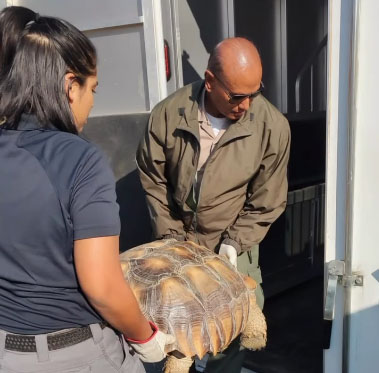
“It almost gives me goosebumps how much everybody has reached out to us and helped us,” LA Animal Services’ Jennifer Curiel said. She shared that field officers are also coming together to help animals in fire zones, from koi fish to tortoises and even a bobcat. (Photo: LA Animal Services)
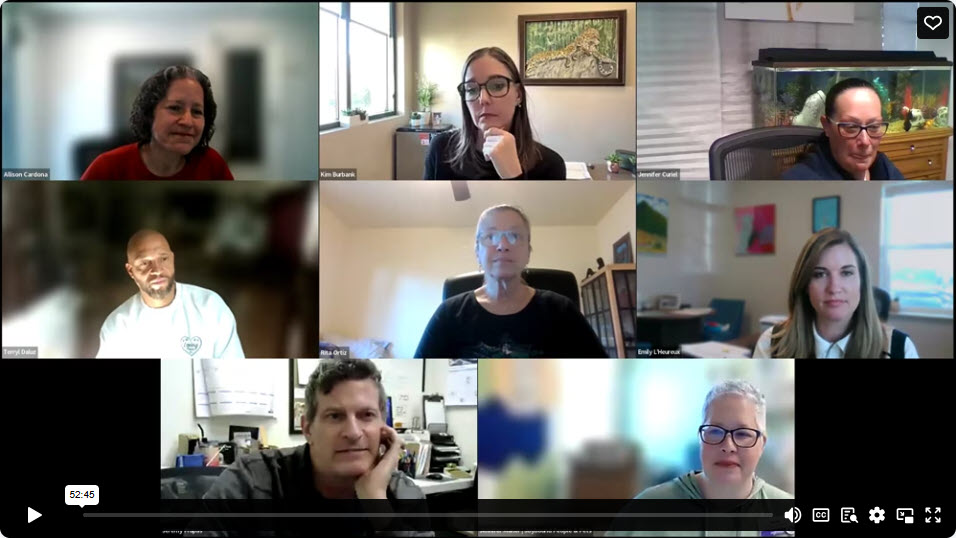
Terryl Daluz, founder and president of Loving Paws Inc., was one of many who joined the call to offer support and gratitude as communities care for displaced pets and people.
“We were in the middle of the blackout and said, ‘How can we help?’ Losing electricity doesn’t compare to people losing their homes.”
Loving Paws is fundraising for a mobile van so they can meet people where they are; in the meantime, they can offer free baths, grooming, and limited boarding at their locations in Sylmar and Van Nuys—and, if needed, anywhere they have access to running water with their portable tub. Know of anyone else offering discounted or free grooming or boarding? Fill out this form for Pasadena Humane.
The full All Call resource list includes shelters’ suggestions for pitching in as well as grants, food banks, housing help, and other forms of support from organizations like HEART LA, Best Friends, betterTogether Forever, Greater Good Charities, The Little Lion Foundation, and more. In partnership with Patitas y Palabras, Cal for All Animals continues to offer translation support for shelters in the LA area and across the state.
In the aftermath of the first sparks of fire, one Pasadena Humane volunteer noted, there have been moments of hope, ones we create together. It takes a village to repair, reunite, and rebuild. The fires have shown us that our village extends far beyond LA’s 88 cities and unincorporated areas; it’s strong, big-hearted, and ready to act.
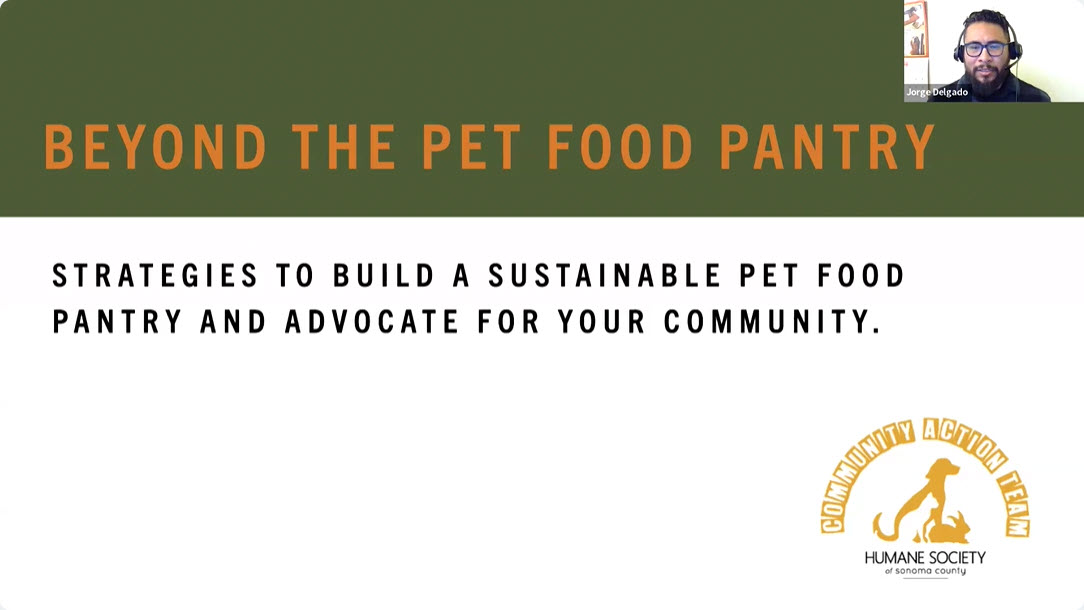
Cel Jimenez, who co-manages Humane Society of Sonoma County’s Community Action Team (C.A.T.) with colleague Jorge Delgado, wanted to put himself in the shoes of Californians experiencing food insecurity—that’s more than 1 in 5 people, with unfair systems driving even higher rates among Black, Indigenous, and people of color; single moms and caregivers; trans and gender expansive folks; and immigrants and refugees. He and Jorge called 41 food banks in California to ask if they provided food for pets. They all said no.
Instead of getting discouraged, Cel and Jorge were excited about the enormous potential this gap affirmed. “Imagine the difference and the impact that we can start [by partnering],” Cel said. That’s the energy they brought to December’s All Call, along with pet food pantry tips and resources inspired by their experience building HSSC’s programming and their previous work in human food banking.
Tips
Define your why. Getting clear on the purpose of your pet food pantry sets you up to make smarter decisions when it comes to operations, inviting donations, seeking volunteers, or applying for grants, Jorge explained. For HSSC, the goals are to reduce shelter entry and ensure the well-being of pets, while keeping families together by increasing food access and choices available to pet guardians who are seeking support.
Keep it simple. At HSSC food donated by businesses or individuals is repackaged into storage bags—gallon-sized for dogs and quart for cats—and labeled in Spanish and English. Pet guardians can pick up one bag of cat/dog food per household, per day, barrier-free. Keep food fresh by keeping it moving: “That’s the most key element of this,” Jorge said. “Do not sit on that food. [It] needs to go in and out.”
Get to know local hunger indicators. Cel and Jorge shared links we can use to quantify need (see resources below), including federal Supplemental Nutrition Assistance Program (SNAP) recipient numbers. They also shared important reminders: When it comes to SNAP, known as CalFresh in California, pet food is not included—and many people face barriers to qualifying.
Collect core data and share it. Using a formula based on the amount of food pets receive in the shelter, Cel and Jorge track how many meals the pantry provides in the community. They also track community members’ cities and zip codes. Data points like these tell the story of where hunger happens and what’s needed to increase food access—a story you can share to get future donors and partners on board.
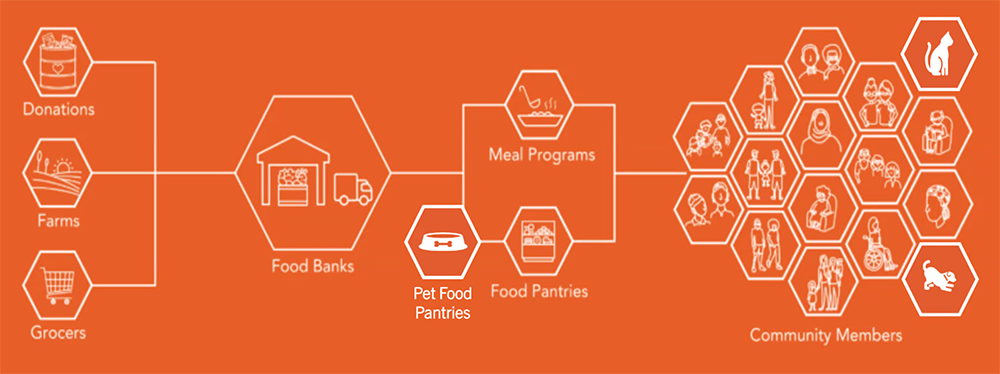
Recognize the power we have to make a difference. Through pet pantries and partnerships with food banks, we can connect even more people and pets to the food they need to stay together. When we also fight the root causes of hunger, we fight many of the root causes of shelter entry. We can advocate for anti-hunger policies at state and federal levels, including joining with food banks and others in protecting SNAP benefits, which are currently at risk as the bill that provides funding stalls in congress.
So often hunger is something people experience in private, Jorge said. Every aspect of Jorge and Cel’s approach reinforces the message they want to send to the community and to every person they meet: You’re our neighbor, and we’re here if you need help. It’s a beautiful reminder that when we prioritize partnership with community organizations and pet guardians, we welcome our communities to see shelters as compassionate partners too.
Interactive Household Budgets Calculator – The official poverty measure primarily accounts for the cost of food, but this calculator also factors the cost of housing, healthcare, child care, and more to reveal what it really costs to live in California.
We ran out of time before Jorge and Cel could answer all the questions in the chat. They graciously agreed to answer the additional questions here.
How much food do you typically give away in one average day? Dry dog food: 20-24 bags per day Dry cat food: 20 bags per day
What type of storage do you use to keep pests out? Storage bins, steel bins? We use black storage bins, plastic or fiber drum with lid 55 (we found these used in Facebook market for a really good price)
Are you dispensing prescription foods and if so, how are you managing/tracking prescriptions for these? We do not offer prescription pet food diet at our pantry. When we get this type of food donated, we bring it to our Community Veterinary Clinic staff for them to decide if they can use this at the shelter or for their clients.
Where do you source your barrels? We found them on Facebook Market place.
What is your stance on expired food use (dry/wet)? We throw away any expired food, especially if it is open. When we go through donations, we check on “Best by date” and determine if we keep the food or dispose of it.
Dry food: Best by date more than 6 month, dispose of it.
Wet food: Best by date more than 1 year, dispose of it.
Damaged canned food or unlabeled need to be disposed of.
When collaborating with local businesses, is it usually easy to ask or are there certain needs that need to be made? It depends. Some stores require us to fill in a form to rescue pet food for liability reasons.
Other stores have guidelines in place on what to donate to us. In some cases, we have developed good relationships with the store managers that they would support our program at their own discretion.
Do you have a system to track or manual entry? We do not track the food that comes in unless we need to report on it. We prefer to track the food that comes out because that is a more valuable statistic that reflects the need. We tried tracking inventory in the beginning but as the pantry grew, we decided that it was not worth the time invested in tracking the food that came in since the food left the pantry faster than the donation coming in.
How much staff time does your program take, or is it volunteer run? Currently, we are two paid-staff employees running the pantry and other programs. If Food Bank would provide pet food to pantries regularly, pet food pantries can be run by volunteers 100 percent similar to community pantries.
The need for our pet food bank has been growing significantly. Are you seeing the same thing? Yes, there is no way to sugar coat that the need continues to grow. This is the same issue that food banks are expiring because of our economy.
Does your pantry offer any other supplies other than pet food? Yes, we offer cat litter, pee pads, pet diapers, and small animal foods when available.
Do you mix all the food up together or keep brands separate? We do not mix food together. We like to keep foods separate.
Do you have a code for what the protein is? Or what brand in case these is a recall? We do not keep a code for potential recalls. Since the food we provide is limited in quantity and it is not meant to feed a pet for more than a few meals, we feel that the risk is minimal if we were to encounter this issue.
How often throughout the year are you doing food drives to collect donations? Like food banks, we try to target food drives around holidays or hunger action month. However, food drives can happen any time of the year.
sorry if i missed this- but how are you tracking pounds/meals distributed? We are tracking both. Our tracking spreadsheet helped us to keep track of both without doing additional work.
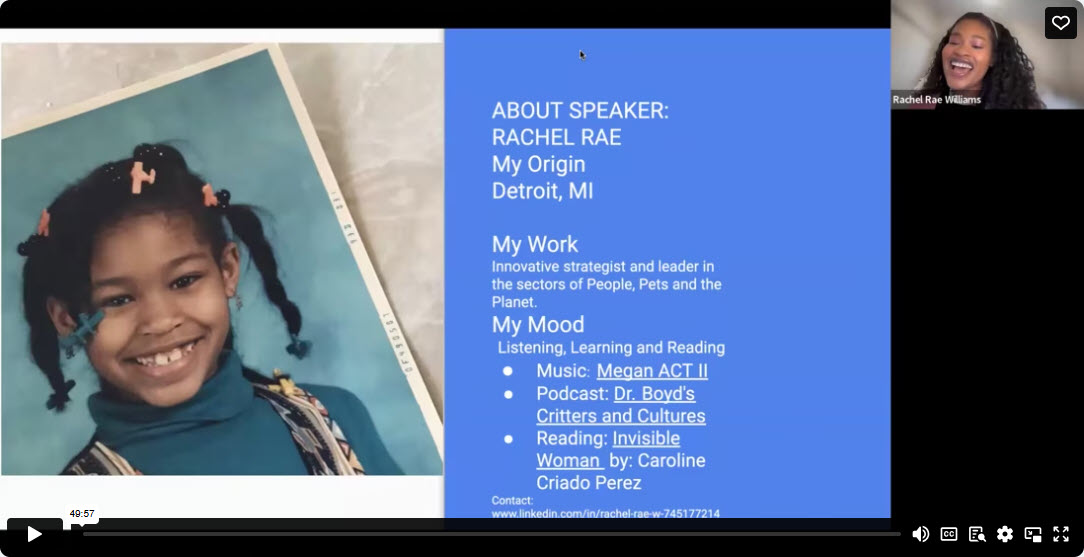
For Rachel Rae Williams, exploring radical possibilities with questions like, “If every person and pet had a just and fair opportunity to achieve their highest level of health and well-being, how would our world change?” isn’t just a way to dream big. It’s a way to ground strategy, program design, and decision-making in pets’ and people’s needs and priorities. “We need imagination to innovate,” she said.
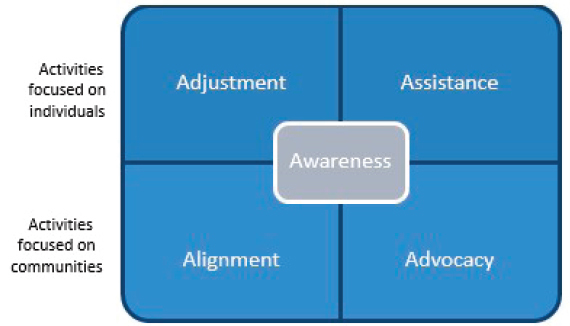
In this All Call, she outlined six activities to better integrate social care for individuals and communities, a public health model that we can adapt to make our work more effective, with the recognition that protecting the health of people, pets, and communities is a cross-sector effort. “Social care is just integrating the person into the care that they’re receiving,” Rachel explained. “So whether that is access to veterinary care or food, or whatever that care is, just make sure that the person is at the center of it.”
1. Acknowledge: An important step at every stage. “You have to acknowledge that systems may be unfair and unjust,” Rachel said. “You need to be aware of those things, because looking past a problem, you’re never going to get anywhere, right? You have to really address…the root cause of the issue in order to have any success.”
2. Awareness: Through collecting and reviewing data (via tools like the Social Vulnerability Index and Data Commons) and talking with community members, cultivate a deeper awareness of your community’s experiences, strengths, challenges, and priorities. For example, you might discover that the reasons people are missing spay/neuter appointments are different than you expected. If we want to be in community with our neighbors, Rachel suggested, we should know what their priorities are. “If you’re feeling like an outsider, you may need to ask more questions. Why are you feeling like an outsider in this realm?”
3. Adjustment: Evaluate programming and identify any changes that could help remove barriers. If people can’t access transportation for spay/neuter or other services, what adjustments could be made to meet them in the neighborhoods where they live?
Rachel was inspired by Five Health Care Sector Activities to Better Integrate Social Care; she added a sixth activity, Acknowledgment.
4.Assistance: Explore what kind of assistance could enable more people to connect with the support they need most. In a zip code where the majority of dogs are coming in as “stray,” that could look like fixing fences or holding mobile vaccine/microchip/ID events at community gatherings.
5. Alignment: Start a conversation with potential community partners, and ask what you can do to combine forces and support the whole family. “Talk with the folks who work in human and social services,” All Caller Sharon advised. “I attended a social worker conference two weeks ago, and it was amazing to see all the lightbulbs go off over everyone’s heads when I asked how we could work together to include the ‘entire’ family in all of their programming.”
The point isn’t to do every activity all the time, or all at once. But each kind of activity is key to strengthening program delivery, keeping pets in homes, and ensuring that pets and people have a fair opportunity to achieve health and well-being so that our communities can thrive. “With this model, you can get in where you fit in,” Rachel emphasized, then reassess and adjust as you go.
Curious about a public health perspective? Dr. Ilan Shapiro touches on many of these activities through his lens as a physician, including empowering communities with accessible health information and centering social care and cultural connection.
We know what scarcity feels like, because every day we try to figure out how we can do more for animals and the people who love them, and often it feels like what we can do isn’t enough. We know what scarcity feels like, because we live in a culture that constantly tells us there are not enough resources for us all, while income inequality grows. We know because we live in a culture where the blame for that inequality is shifted to Black, Indigenous, and people of color, to immigrants, and to anyone who is struggling to get by.
Sometimes we blame pet guardians, and sometimes we blame shelters. We blame each other. We know what it feels like, because we are told a zero-sum story that says if some of us succeed, others have to fail; if some of us have enough to care for ourselves and our pets, others have to suffer. This story costs everyone.
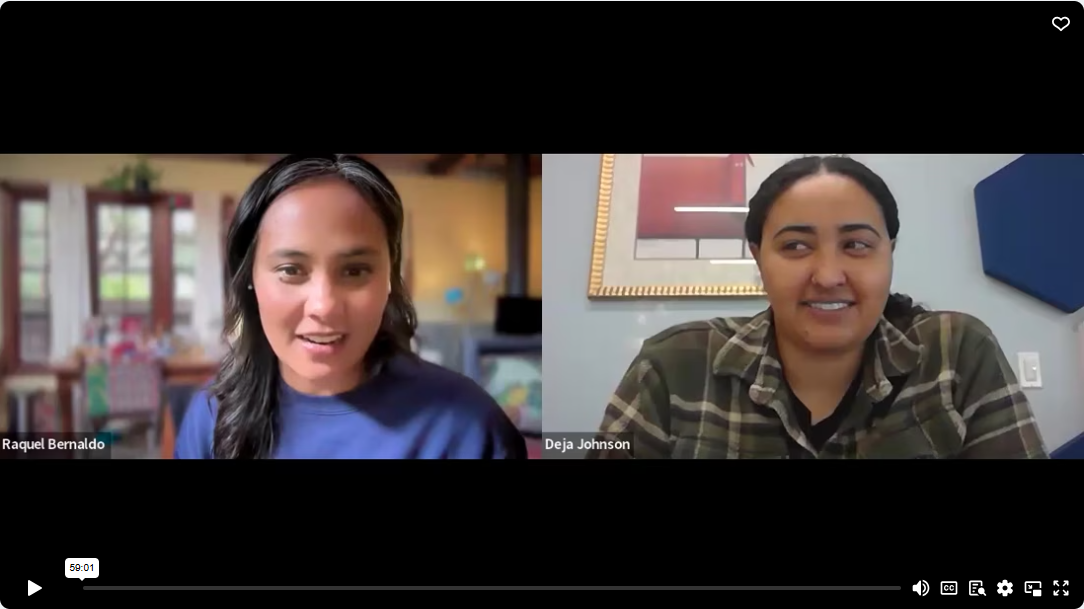
This story also reinforces the charity model that has shaped mainstream animal welfare and philanthropy from the beginning, but we aren’t stuck with it. In this recording, Friends of the Alameda Animal Shelter (FAAS) Community Services Manager Raquel Bernaldo and Community Services Lead Deja Johnson showed us how FAAS is shifting to a different model, one that more accurately reflects the relationships they want to cultivate with animals and people in their community and with one another.
What are drawbacks to an approach that centers charity? “Charity models can really sort of reinforce a sense of scarcity by adding requirements like income verification, residency checks, or eligibility screening, and in a charity model these requirements are often used to determine who ‘deserves’ assistance based on a set criteria,” Raquel explained. “This approach can really direct resources to specific groups, but it can also create barriers, especially for people with complicated situations or urgent situations, or who might not have access to required paperwork.
“Although charity can really be helpful for immediate relief, it often positions one group as the giver and the other as the receiver, and then sets up…power dynamics that can feel exclusive and really don’t align with with the set of values that we’re really trying to hold center as we work with people in our community and build community.” What is a mutual aid model, and how is it different?
Mutual aid moves beyond charity’s limitations by eliminating these requirements and conditions and instead focusing on building connection, trust, and safety. Raquel and Deja don’t wait for people to come to them. When they’re getting to know people in the community, including unhoused folks, they are up front about what resources FAAS has to share via their Healthy Pets Healthy People programs, from pet food and emergency vet care assistance to vaccines and spay/neuter vouchers, without assuming what community members need—and they bring the good dog treats!
Deja emphasized the importance of genuine care, consistency, and showing up without expectations or judgments. “I want [people] to feel that they’re not an afterthought. And I think that’s something within a traditional charity model versus mutual aid approach. You know, they’re not an afterthought. This is their right, and they have a voice, too.” It’s an approach that recognizes pet owners are the experts of their own lives and of their pets, because they know them best, Deja said.
Through Deja and Raquel’s leadership and cultivation of community, Alameda has come together to make sure everyone can access food for their pets, no exceptions. (Credit: FAAS)
Scarcity tells one story; data might tell another. Raquel and Deja acknowledged feelings of scarcity swooped in whenever the pet food pantry, a program entirely funded by donations, wasn’t fully stocked. The Alameda community is close-knit, and Deja knew they could come together to make sure no pet goes hungry. She focused on making asks through social posts and outreach to Alameda businesses and community organizations, and once more people knew about the program, food flooded in.
Deja began closely tracking pet pantry inventory and use and discovered two surprises:
FAAS had enough food to meet the need and could actually give out more food.
Though the scarcity mindset could make it seem like pet guardians from other communities were overrepresented, that actually wasn’t true.
We know what scarcity feels like: stress, grief, empathy fatigue, blame, burnout. Mutual aid offers us a way to tap into our collective strength to support each other when we need community most.
This shift won’t happen overnight, Raquel said, but we can start by asking, “If you need something, how can I support you in it? We we can build that trust and mutual respect with one another. Then we’re going to build that trust and mutual respect with the community. We, at the end of the day, can’t do this work alone.”
We will show up for each other and for the animals and people in our communities now and over the next four years. Let’s build our mutual aid muscles together: Start by watching our conversation with Raquel and Deja. If you want a deeper dive, California Program Manager Nadia Oseguera-Ramón recommends checking out Mutual Aid: Building Solidarity During This Crisis (And the Next) by Dean Spade.
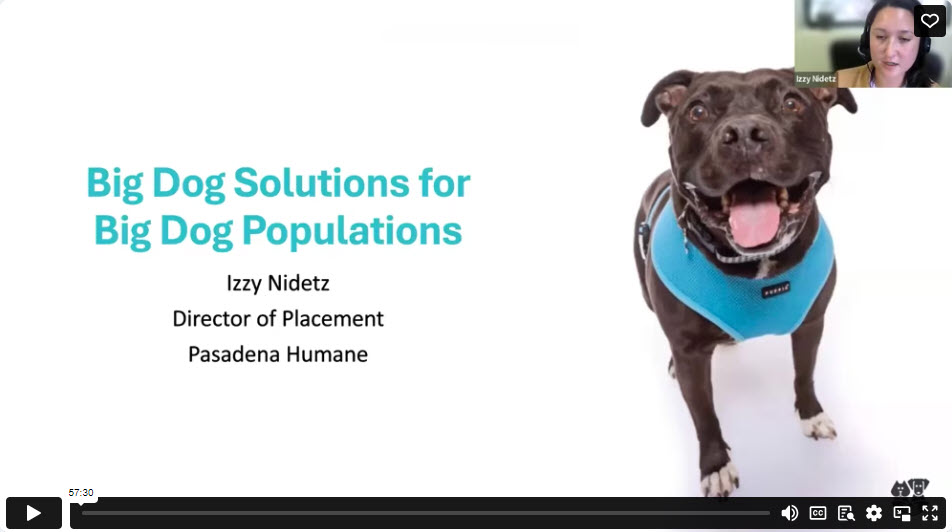
On her first day of work at a shelter, Izzy Nidetz met a shy dog named Dictionary, and they steadily built a bond; on her last day at the job, she successfully facilitated Dictionary’s adoption. Izzy has been chasing that amazing feeling, along with better solutions for harder-to-place dogs, ever since. As the current Director of Placement at Pasadena Humane, Izzy visited the All Call to break down her team’s creative, community-centered and results-driven approach to identifying big dog solutions for big dog populations.
Izzy outlined four main initiatives that are helping decrease length of stay and increase adoptions, relieving some pressure for everyone as intake numbers tick up, including an adoption trial program with a 95% placement rate! Here’s an overview of the programming you’ll hear about in the presentation:
Izzy and her team started slow by working with existing volunteer dog walkers, then fosters. The temporary fostering concept turned out to be a big hit when they introduced it to their community via in-person public training sessions, and now field trip training is incorporated into all foster parent training. The field trip option is popular with people who may already have pets at home, Izzy said, and community members who volunteer to keep a dog overnight for a sleepover often turn into longer-term fosters. So far this year, they’ve completed 526 field trips and 80 sleepovers.
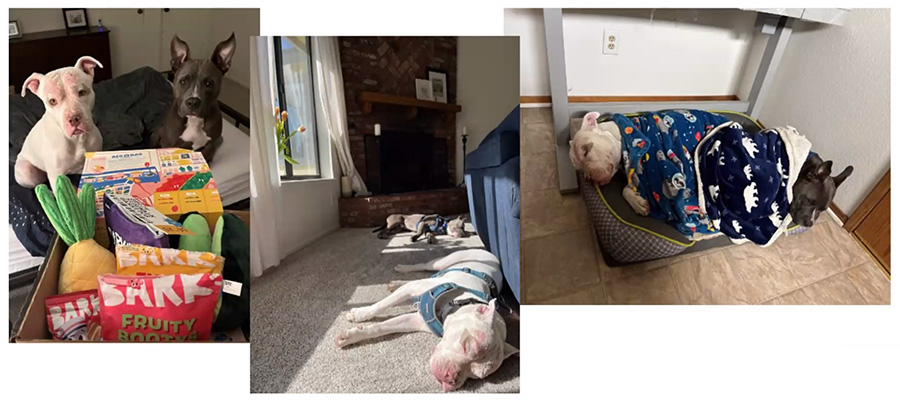
A double-success story: Izzy shared that Elfie (the gray Pittie snoozing under the polar bear blanket) was the longest-stay dog in the shelter until she was adopted via the adoption trial program—by the same family who used the trial program years earlier to adopt Tofu, Elfie’s new best friend.
Adoption trials
For certain dogs who are traditionally harder to place, like German shepherds, pit bulls, and huskies, adopters are offered a 10-day trial period to test whether a dog is a good fit. The goal is to address people’s common fears—that, for whatever reason, the dog won’t work out—and give them space for decision-making, all while providing the supplies and support needed to build adopters’ comfort and confidence. It works! In 2023, 161 out of the 169 dogs who participated in trials were adopted.
Special events
Izzy and her team are constantly brainstorming new ways to bring people in and get dogs out. At their first Doggy Speed Dating event, the vibes were on point, but the timing—Mother’s Day—discouraged attendance. Still, two dogs were placed with fosters, and the next time they hosted date night ahead of an adoption event, ten dogs were placed into foster homes. They’ve also piloted public workshops, including a primer on Living With Large Dogs to dispel myths about what’s required, and Dog Fostering 101 sessions in their community classroom space. Both were a good reminder of the new fosters we can find and the deeper connections we can make when we’re all in the same room.
Foster pleas
You won’t get an answer if you don’t make the ask! Izzy and her team have fine-tuned the language they use on social posts, volunteer email blasts, and website pop-ups to make it clear why, when, and how community members can help. “If we’re not advocating for ourselves and being transparent with the community,” Izzy pointed out, “they’re not going to help us.”
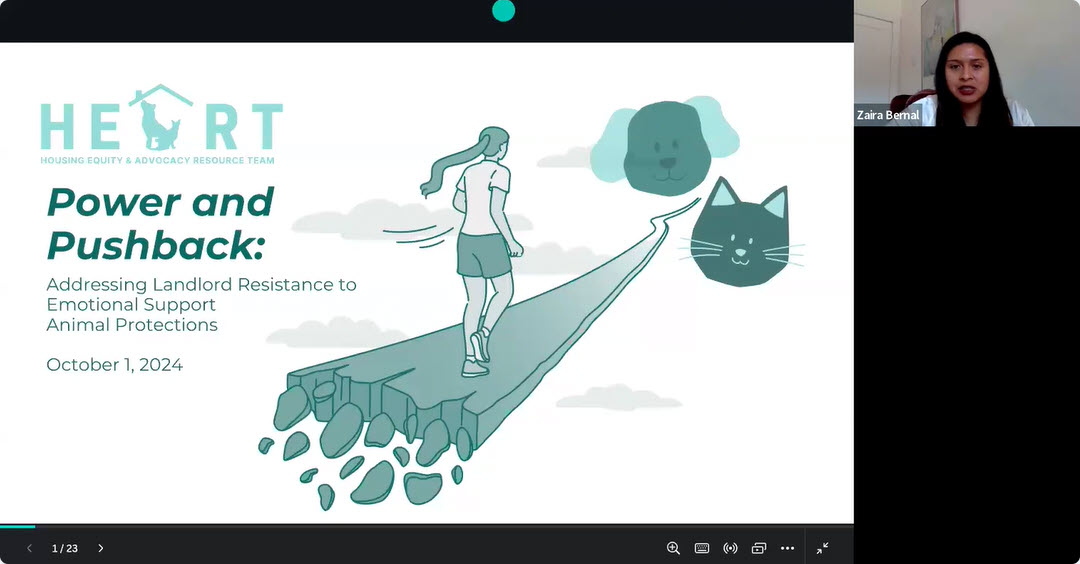
We know the human-animal bond is powerful, period. Whether or not there’s a signed letter to prove it, Emotional Support Animals (ESAs) are lifelines for their people. But some landlords refuse to respect state and federal protections for support animals and instead threaten to push tenants and animals like Minnie out of their homes. At this week’s All Call, HEART LA’s Zaira Bernal (Paralegal) and Diana Cruz (Program Director/Law Clerk) remind us that when we act in community, we can speak truth to power and meaningfully push back—keeping more pets out of shelters and affirming the rights of those of us with mental, emotional, or physical disabilities.
There are many ways to start!
Identify opportunities for intervention in your community. First, understand who housing providers are, from individual landlords to corporations, and the role they play in our housing ecosystem. Diana and Zaira shared that according to HEART LA data focused within Los Angeles County, individual landlords account for nearly 40 percent of eviction threats. Collect and review intake data so that you can pinpoint how many animals enter your shelter due to housing challenges. Share All Calls Part 1 and Part 2 with colleagues at your shelter, and take the free Keeping Tenants and Their Pets Together training at Maddie’s University together.
Create a local network of people who can write ESA letters—that might even include you! When one All Caller expressed interest in providing letters and had questions about potential liability, Diana and Zaira reminded us that letter writers are simply “reliable third parties” who aren’t vouching for the animal. Instead, they’re attesting that the pet guardian has a disability and that their animal is relieving an associated symptom or symptoms.
Share what you’ve learned. Get familiar with the common tactics property owners use to intimidate tenants—Diana and Zaira shared six, including making false allegations and piling on unnecessary paperwork—and how to respond. “An educated tenant is a stronger tenant,” Zaira pointed out. When shelter staff has the information they need to support and reassure tenants who feel they have no choice but to give up their pets, a better outcome is possible for everyone. Make HEART LA resources available to staff and community members, or create your own flyers to share.
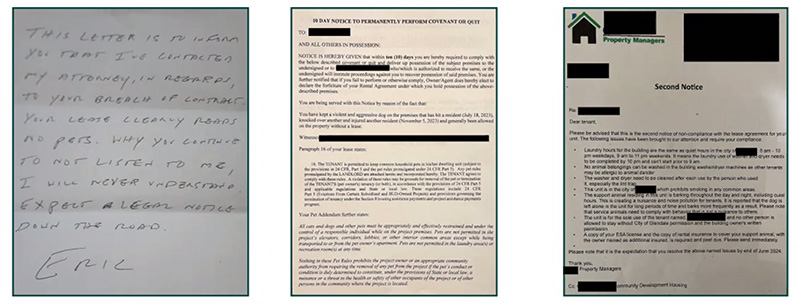
How do you know which kind of notice actually requires action on behalf of the tenant? Diana and Zaira break it down in their presentation. Here’s a hint: an official notice requires certain language that the handwritten note on the left lacks.
Build relationships to build power. Start a conversation, and listen. Invite partners, staff or volunteers from community organizations, and people with lived experience of this issue to share how it shows up in your community and develop solutions together. Community leaders, pet guardians, and advocates in LA worked together to secure a huge win: COVID-era eviction protections for people who adopted pets through January 2023 are now permanent.
Work alongside partners to hold agencies accountable. Ask how you can apply collective pressure to make sure agencies responsible for enforcing tenant rights and support animal protections are fulfilling their duties, including the California Civil Rights Department, local housing departments, and our elected officials.
Email cal4allcall@californiaforallanimals.com to request a one-on-one deep dive session with Zaira and Diana. They’ll answer your questions and help you make a plan!
Watch this week’s presentation and discussion to discover how often “unauthorized” pets are cited as justifications for eviction, whether a support animal must be spayed or neutered, how to balance asserting ESA protections with the very real fear of losing one’s home or pet, and more.