Category: News

News is timely.

  • #allthenews: The Cal for All Animals Newsletter v.1 i.2

    Volume 1, Issue 2

    August 10, 2022

    In This Issue: Copy This Website! | Sign of the Times | Bright Spots | Rancho Cordova | Supporting Each Other | EAP Tips | Expanding Learniverse | Paws to Appreciate | We Dream Different

    We are so excited to announce the completion of the Open Grant application review: We have awarded over 6 million dollars in shelter grants, bringing the total dollars awarded through California for All Animals to over $7,500,000 since its launch on Valentine’s Day 2022!

    Details are still being finalized and will be released as soon as they are available, but we want to keep you informed every step of the way.

    Proposals were assessed using a formula that weighted impact, community vulnerability, and need. The social vulnerability index[1] helped identify shelters in areas of high vulnerability, while shelter data such as annual intake, euthanasia rates, helped measure potential impact. Shelters and animal control agencies located within the highest vulnerability index regions were prioritized as well as programs that provide free or low-cost services to keep pets in homes.

    Funding has been prioritized in the following areas:

    • Spay/Neuter surgeries for shelter animals and to keep pets in homes
    • Access to veterinary care in communities where resource deserts exist
    • Shelters in areas of high vulnerability or with high euthanasia rates
    • Increasing outcomes such as foster, adopt and return to home that remove barriers and promote inclusivity and equity
    • Humane housing for animals in shelters such as double-compartments for dog kennels
    • Reducing euthanasia of healthy and treatable animals
    • Resources to keep pets in homes, allowing animal control agencies to offer services as an alternative to impoundment

    Expanding access to spay and neuter services was paramount this funding cycle and will remain a priority for the life of this program. As many of you know and are experiencing firsthand, length of stay in the shelter is climbing, while medical capacity and adoptions are declining, two factors that are contributing to shelter bottlenecks and reducing positive outcomes for animals entering shelter systems. Initiatives that support shelter-community integration and prevent unnecessary shelter intake, such as community/volunteer engagement and family-led rehoming, were selected outside the shelter, while initiatives that support animal well-being, such as double compartment housing or behavior, training and enrichment programs, were favored inside the shelter to reduce the length of stay for animals experiencing an emergency and for whom the shelter is the right place to receive care.

    Last but certainly not least, initiatives that reduce the number of barriers between pets and people were prioritized. Examples include expanding access to affordable pet care; removing restrictive, fear-based adoption policies that are not supported by science and not in line with equity and inclusion; waiving reclaim fees; streamlining foster/volunteer onboarding (including making orientations and training available online); and introducing field service initiatives that focus on strengthening the human-animal bond and the relationship between community and animal services, or provide problem-solving resources to help community members keep their pets or support those willing to foster short-term.


    Measuring risk in vulnerable populations

    [1] Natural disasters and infectious disease outbreaks can pose a threat to a community’s health. Socially vulnerable populations are especially at risk during public health emergencies because of factors like socioeconomic status, household composition, minority status, or housing type and transportation. To help public health officials and emergency response planners meet the needs of socially vulnerable populations in emergency response and recovery efforts, the Geospatial Research, Analysis, and Services Program (GRASP) created and maintains the CDC/ATSDR Social Vulnerability Index (CDC/ATSDR SVI).

    The Social Vulnerability Index (SVI) uses U.S. Census data to determine the relative social vulnerability of every census tract. The SVI ranks each tract on 14 social factors and groups them into four related themes. Each tract receives a separate ranking for each of the four themes, as well as an overall ranking.

    Read more on the CDC’s SVI website.

    Copy, Paste: Off the Shelf Website Copy for Your Animal Shelter

    Do you know what’s on the homepage of your website? Could you easily navigate to a page that tells community members what to do (and what not to do) if they come across a dog, healthy free-roaming cat, kitten, or sick or injured animal? Or what to do if they’ve lost their pet? Could your parent, grandparent, or neighbor find that information easily? It’s a great time for a website check-up: Is yours working as well as it could for you and your community?

    Not everyone will visit your website before calling or coming to the shelter, but many will. And if you’re a municipal shelter, chances are your pages are among the most viewed on your county website! Your shelter website can do more than convey essential information. It’s an extension of your building that reaches beyond your doors and into the community, and it’s an opportunity to tell your story and have a hundred meaningful conversations all at once—with finders, potential adopters, fosters, volunteers, and donors. 
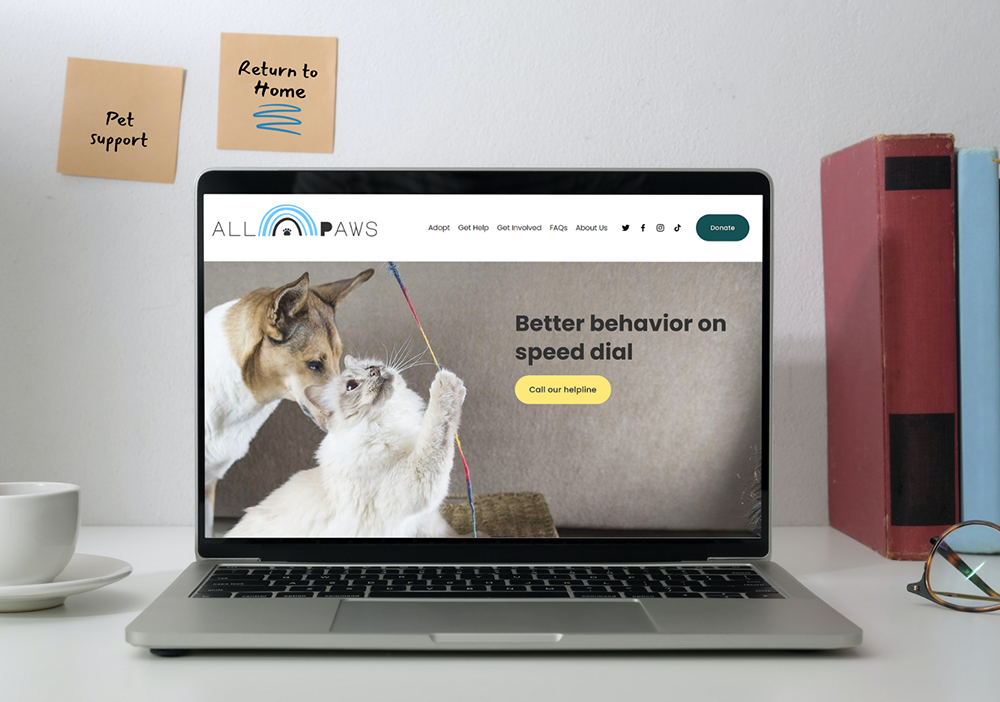
    Laptop showing All Paws sample shelter website

    To make it easier for you to refresh your website and align your messaging with tried and true practices, we’ve created a sample shelter site filled with copy and templates you can reuse and adapt! This sample site highlights the best ideas and resources from your partner organizations and peers and was designed to help you accomplish four important goals:

    Share lifesaving information with your community.

    You know which actions and interventions will allow you to serve the largest number of pets and people in the Right Place, at the Right Time, providing the Right Care, to the Right Outcome; make sure you share these practices with your community! We’ve included step-by-step suggestions for finders of cats, dogs, and kittens, and tips for people who have lost their pets. The sample site also demonstrates how to make it easy for visitors to discover support and resources available to them within the shelter and community, from videos for kitten-finders to guidance on pet rehoming, and it spotlights the convenience of making appointments for non-emergency services—recognizing that appointments can improve the quality of service as well as animal health and well-being in the shelter. Don’t forget to consider translating key materials into the languages spoken in your community.

    Equip staff with resources to help guide conversations with community members.

    Decision trees and SOPs are must-have tools for reducing decision fatigue and helping public-facing staff communicate effectively whether on the phone, via e-mail, or in-person. When website messaging coincides with these proven policies and practices, staff can supplement conversations by easily directing community members to helpful pages that share more information on available free or low-cost clinics or other support services, offer research-based overviews of hot topics, answer frequently asked questions, and more.

    Your website is an opportunity to proactively and transparently tell a new story that more accurately reflects community-centered shelter programming and goals at every level, one that emphasizes what we know to be true: The well-being of animals and the people who care for them is interconnected.

    Tell your story.

    As Kristen Hassen has written, the dog pound is dead, yet many people don’t understand the full scope of shelters’ work today. Your website is an opportunity to proactively and transparently tell a new story that more accurately reflects community-centered shelter programming and goals at every level, one that emphasizes what we know to be true: The well-being of animals and the people who care for them is interconnected. Building communities in which people and pets are supported is an essentially collaborative endeavor. Throughout the sample site, we’ve included language and photos that reflect this. As you think about how to convey your organization’s particular story, ask, Who are you, and what work do you aim to do? What matters to you and to your community, and what common values and beliefs shape your work and the way you show up in your community?

    Invite and empower your community to collaborate with you and signal your own openness to collaboration.

    Communicating with your community isn’t a one-way street. When it comes to animal sheltering, engaging your community is an ongoing process to improve communication, build trust, develop and strengthen relationships with community members and partners, and improve outcomes and grow community well-being through teamwork. There can be no us and them; whether shelter staff, rescue volunteer, or neighbor, we are all affected when the welfare of people and animals suffer, and we all benefit when people and animals can access the support they need when they need it. A California for All Animals starts with establishing connections and nurturing relationships, so that all of us can work toward this shared vision together.

    Explore the sample shelter website and let us know if you have any ideas or resources to share. If you’re feeling overwhelmed or need help adapting materials for your website, we’re always here to help!


    Sign of the Times

    Can a reminder to be kind make your shelter a calmer place? When a friend of the KSMP went to her private veterinarian recently, she experienced a longer-than-usual wait. A giant sign in the lobby explained why. “Thank you for your patience & kindness to our staff,” the sign begins. “We respect you and want to share our current reality.”

    What follows is a list of historical trends and current challenges that provide context the client might not otherwise be aware of:

    • Pet ownership is at an all-time high
    • Burnout is on the rise
    • There is a national shortage of veterinarians
    • What are we doing to improve these situations?
    • We cherish the human-animal bond as you do
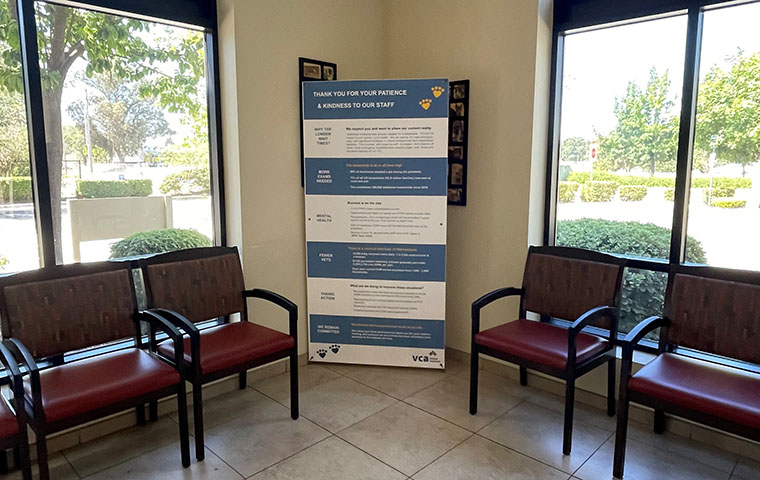
    Large sign is displayed in veterinary hospital lobby

    “During my wait, a dozen people read that sign and one by one I watched their energy change the instant they started reading,” said Kristy Dwyer. “It was nice to be told what was going on. We’re all experiencing staffing shortages and can understand the need to triage. It actually inspired me to embrace greater transparency at my own workplace.”

    Hospital Administrator Margit Spencer was kind enough to share the “Be Kind” document used to create the pop-up. You can borrow from it to share a similar message in your lobby. The document is flyer-sized, but Margit recommends blowing it up to poster size; installing the pop-up shown above was considerably more effective at bringing out clients’ better angels than handing out the same information at the counter.

    People who are stressed and anxious are not interested in hearing “excuses.” It’s important to share the concrete steps you’re taking to provide the best care you can given the circumstances. It’s also important to establish that we all want the best experience and outcome for animals and their people.

    The most recent report from Shelter Animals Count (SAC) points out that even though animal shelter intakes are down in the first six months of this year compared to the same time period last year, the intakes are still outpacing outcomes by 5.8% . Worse yet, the SAC forecast is for that number to increase in the second half of the year. You may know you’re over capacity, but your clients probably don’t know that…or how that affects your operations. Being transparent about your challenges as well as your commitments offers perspective that can bring out the best in people when they visit.


    Are You Covered and Don’t Even Know It? Getting the Most Out of Your Policy

    Only 3.5% of employees take advantage of their Employee Assistance Program. Why? The vast majority of employees don’t know the range of services offered or how to access them. 

    An Employee Assistance Program (EAP) is a voluntary, work-based program that offers free and confidential assessments, short-term counseling (e.g., 5–12 visits per “issue,” though there is no limit to the number of issues that may cause you to seek counseling services), referrals, and follow-up services to employees who have personal and/or work-related concerns. EAPs address a broad and complex body of issues affecting mental and emotional well-being, such as overwhelm, compassion fatigue, stress, grief, family conflict, legal issues, addiction, and psychological disorders. In recent years, many EAPs have expanded their services to include help with transitioning into retirement, budgeting, coping with sudden death or natural disaster, and everyday tasks like planning a vacation or locating childcare. 

    EAP counselors also work in a consultative role with managers and supervisors to address employee and organizational challenges and needs. Many EAPs are active in helping organizations prevent and cope with workplace violence, trauma, and other emergency response situations. 

    Ask your human resources representative if your organization has enrolled in an EAP program and how you can access the free services!


    The Learniverse Is Expanding
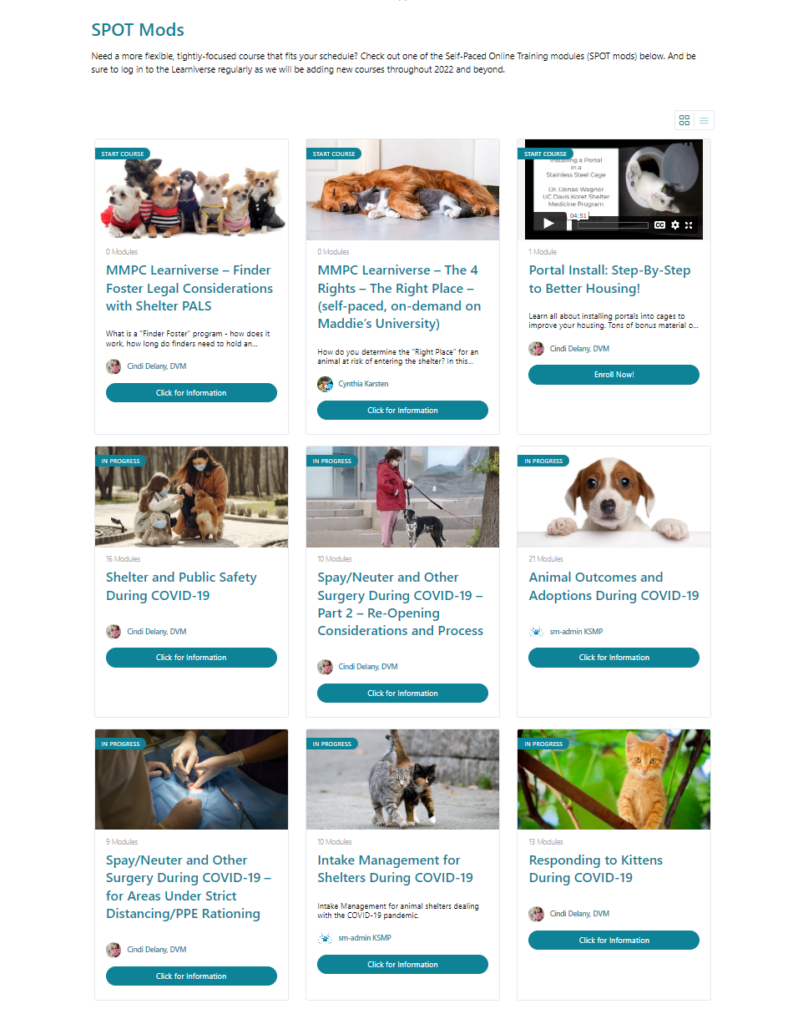
    Image shows courses available in the Learniverse

    Stop by the Maddie’s® Million Pet Challenge Learniverse often and never miss out on new training opportunities for you and your staff! Recently, three new Self-Paced Online Training modules (SPOT mods) were added to the course lineup, as well as a brand new, six-week Bootcamp.


    Paws to Appreciate…

    Shelters that are supporting helpers by offering microchip scanners!

    This microchip scanner by Tosuny retails for only $29.99 on Amazon and provides finders with the chip number needed to search national databases like AAHA.org.

    Tosuny microchip scanner

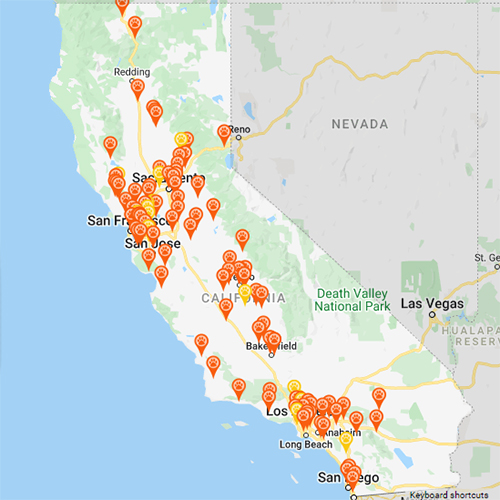
    Mapping the Movement

    From Siskiyou to Chula Vista…View the shelters and supporting organizations that have joined so far on our interactive map.

    Notice anyone missing? Tell them about California for All Animals!


    Bright Spots:

    Could you watch these kittens all day, too?

    How it started:
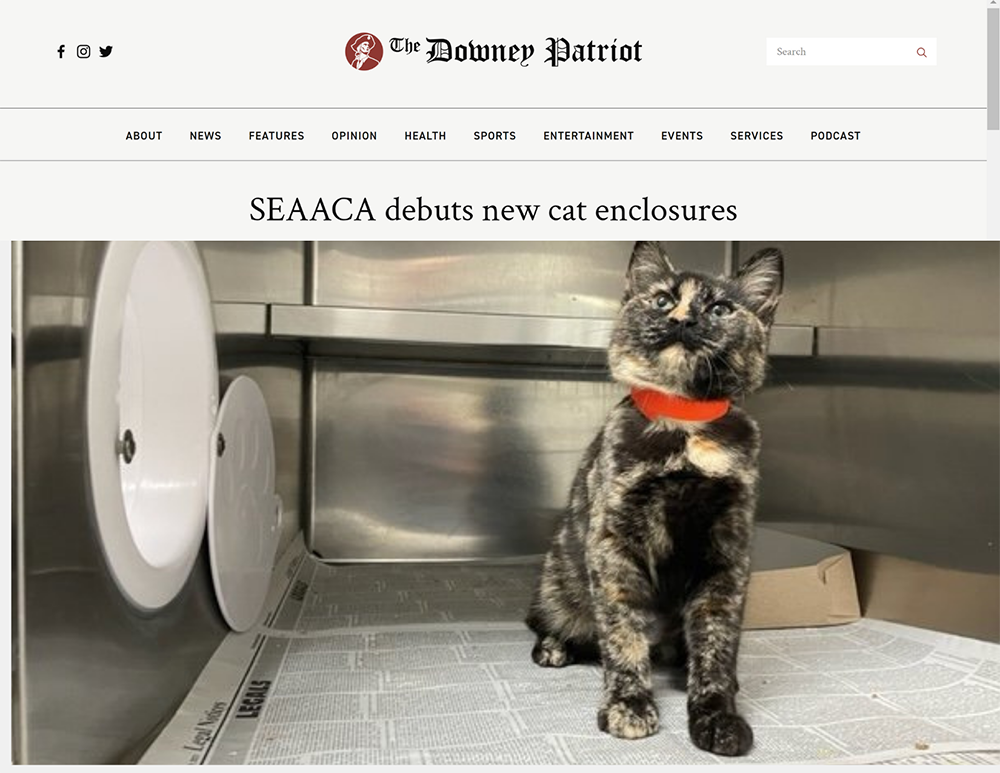
    Image of newspaper headline, 'SEACCA debuts new cat enclosures'

    How it’s going:

    video credit: Donna Soriano


    Going All Out for the Community in the Field

    City of Rancho Cordova Animal Services recognizes that success for their community starts with field officers providing neighborhood-level support that keeps people and pets together, whether it’s boosting return to home efforts, supplying dog housing or fencing materials, or developing programs to pay renters’ pet deposits and expand access to care.

    “As Field Services staff,” they note, “we often see the inability to pay vet bills leading to people surrendering their beloved pet.” With Open Grant funding secured for their Animal Services Community Support Program, they hope to help people avoid the heartbreaking choice prompted by an unexpected medical expense or lack of affordable, pet-friendly housing—and create more opportunities to connect with community members.

    Senior Animal Services Officer Craig Hall and his team already know the impact that can come from building individual relationships with community members. Recently officers worked with a concerned resident to trap a community cat with an injured tail. The resident expected the cat would be euthanized, but after a tail amputation at the Sacramento SPCA, the cat was returned and, to the resident’s delight, is now comfortable enough to cozy up indoors.
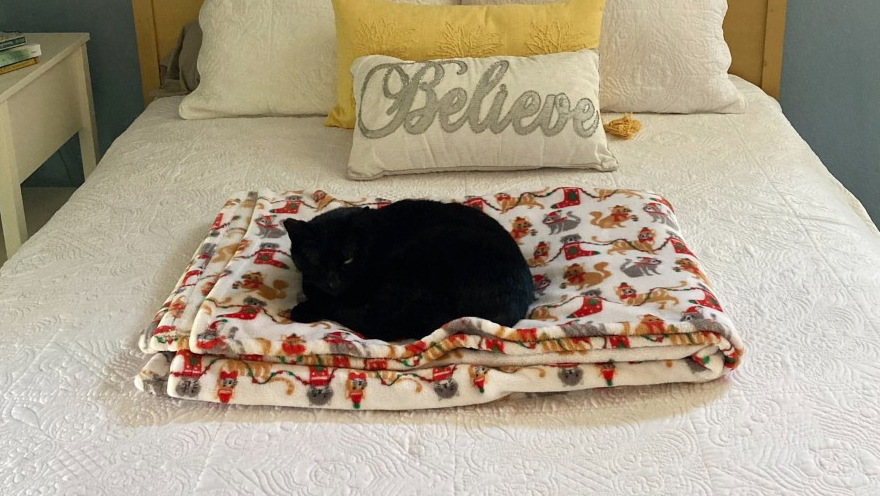
    Black cat lies curled up on a fluffy blanket in the middle of a bed

    We can’t wait to see how Rancho Cordova Animal Services’ big ideas continue to benefit the people and animals of Rancho Cordova!


    Supporting Each Other

    How do we help ourselves, our employees, and our company culture during a difficult and overwhelming time?
    Cat sits with paws crossed, speech balloon reads, 'Self-care is not an outside (the workplace) job'

    We’ve never needed a reason to prioritize employee wellness, but the list of benefits has grown beyond human kindness, good workplace culture, increased productivity and better customer service to include the words on everyone’s lips: employee recruitment and retention.

    Harvard Business School study found that avoiding a toxic worker was worth about $12,500 in turnover costs—and even more to replace them and onboard new employees! Forbes reports entry-level employees cost between 30–50 percent of their annual salary to replace. For mid-level employees, that number climbs to upwards of 150 percent of their annual salary.

    Here’s a short list of things you can do to care for and stabilize your team during difficult times:

    Support others by supporting yourself. Model and normalize self-care practices. Enlist the mental health support services you need when you need them.

    Speak openly about caring for your mental health and our industry’s predisposition to compassion fatigue. Know what compassion fatigue looks like and the resources available to manage it.

    Be authentic. Recognize that you may have the unintended consequence of adding to feelings of hopelessness by promoting self-care but providing working conditions and expectations in which practicing self-care is difficult or impossible. The same goes for suggesting self-care practices that are outside the means of your staff.

    Pay fairly. Financial stress is a chronic stress that affects every area of our lives. The less you make, the more stress you have—and the fewer resources you have to manage and deal with that stress. Burnout is a result of prolonged stress.

    Walk the walk. Is working the hardest/longest praised? Understand the toxic culture of a chronically understaffed system and make hiring the appropriate number of staff a priority.

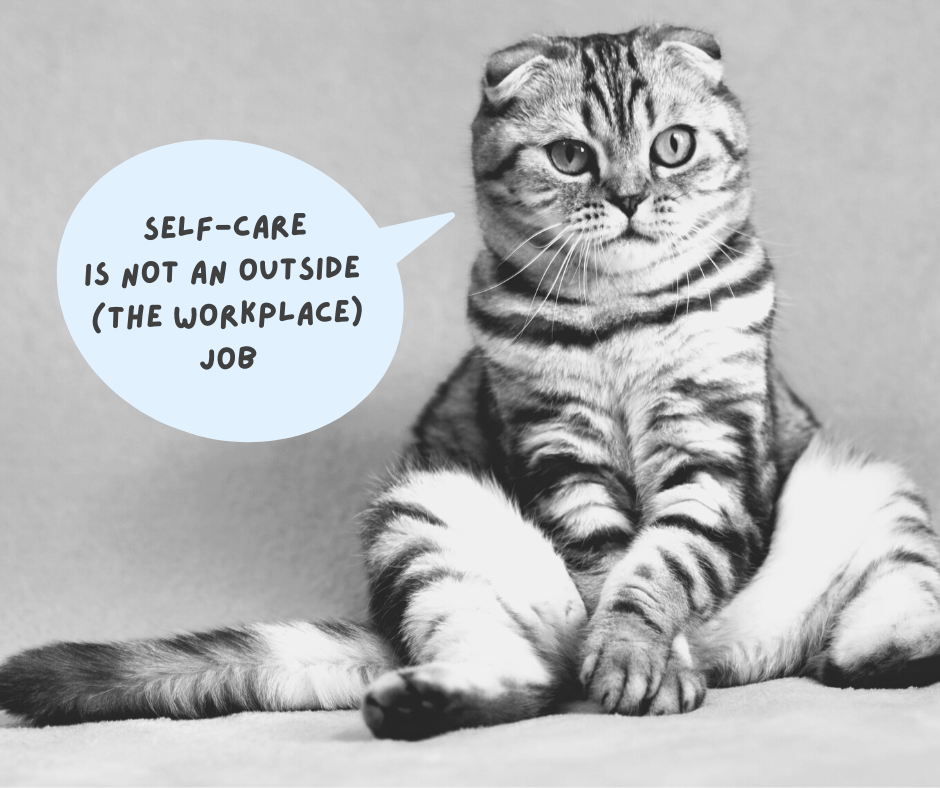
    Self-care is not an outside (the workplace) job. During the workday, encourage walking meetings, don’t eat lunch at your desk, be flexible (studies show employees stress less when they can take calls and schedule appointments during work hours), demonstrate work-life balance, and let your staff/peers know it’s okay to put yourself first sometimes.

    Create a wellness initiative at work; introduce wellness check-ins and encourage employees to self-assess their mental well-being. Create an improvement pathway for employees who have concerns.

    Raise awareness. Does your organization have an Employee Assistance Program? Share it! Assign an awareness advocate to go desk-to-desk, email-to-email, workstation-to-workstation and ensure every employee knows how to access the resources over 95% of people aren’t utilizing!

    Don’t shy away from having a conversation when you notice an employee is struggling. Have a list of resources that are provided by their policy and/or are readily available and free, such as the National Alliance on Mental Illness, Mental Health America Staying Mentally Healthy and Finding Help. Mental Health America also operates a hotline. If you or someone you know is struggling or in crisis, help is available. Call or text 988 or chat 988lifeline.org. You can also reach Crisis Text Line by texting “MHA” to 741741.

    Don’t sugarcoat the truth: Front-line employees across the board, from flight attendants to teachers, are experiencing an uptick in abuse. Acknowledge the problem, provide training and resources in de-escalation to manage situations as they arise, and have each other’s back when they do.

    Empower your team. Does your staff regularly encounter people in the public who may be experiencing a mental health crisis? Empower employees to respond appropriately by offering training, such as Mental Health First Aid Training

    Help employees find the time. Make health a habit by setting a standing and recurring time on the All Staff calendar in which all employees are invited to schedule wellness into their calendar. Maybe it’s taking time to convert a few meetings to walk and talks, possibly it’s that 15 minutes you need to find out how to access your EAP benefits or schedule that free yoga-in-the-park class.

    We Dream Different

  • #allthenews: The Cal for All Animals Newsletter v.1 i.1

    Volume 1, Issue 1

    June 1, 2022

    In This Issue: Getting to Know Allison Cardona | Cal for All Call | Portals | Four Rights Webinars | Bootcamp Grads | We Dream Different

    Welcome grant flyer

    Grant applications are now being accepted!

    Have a good idea you want to try? Looking to expand an already successful program? Hit us up! Our Open Grants period lasts through June. Not sure what to ask for? We’re happy to talk it through. Read more on our Open Grants page.

    Getting to Know Allison Cardona: “It’s all about connection”

    An Interview with Our California Director

    In your Candid Conversation with Maddie’s Fund, you mention that you started out in marketing in New York City and didn’t realize a career in animal welfare was even a possibility—until your curiosity about community cats in a parking lot led you to learn more about TNR and, eventually, to a job ad for the ASPCA, where you would go on to work for 14 years. Since then, you’ve worked as deputy director for the Los Angeles County Department of Animal Care and Control, and you’re now the California State Director here at the KSMP. How has your perspective or approach changed since that day you encountered those cats in the parking lot, and how has it stayed the same?

    People and animals are interconnected. I think I understood that intellectually but it didn’t hit home until I experienced it. I became curious about the cats in the parking lot because I was concerned about their well-being. What I came away with is how much collaboration with people was needed to reach the desired outcome. TNR was less well known so I had to convince local veterinarians to help, I had to connect with rescue groups to get supplies and learn how to trap, I had to outreach to community members to adopt out the kittens. It was about so much more than tending to the needs of the cats. I would like to think I have learned a lot since that parking lot twenty years ago. How to listen and empathize; try to understand where people are coming from instead of judging. Something that has stayed the same is curiosity and questioning why things are being done the way there are.

    A follow-up question to this might be—What, if anything, surprised you about animal welfare or the people you encountered through your work in the field? What would you tell young Allison about the turn her career path would take?

    I was surprised by how separate animal welfare is from other social justice movements. I think we are just now learning how to talk about intersectionality and how societal issues impact people’s ability to care for animals in a way that is engaging and not alienating.

    Ah, young Allison! I would tell her to keep going and take up space, that she deserves to be here. And to take more days off—you don’t get time back.

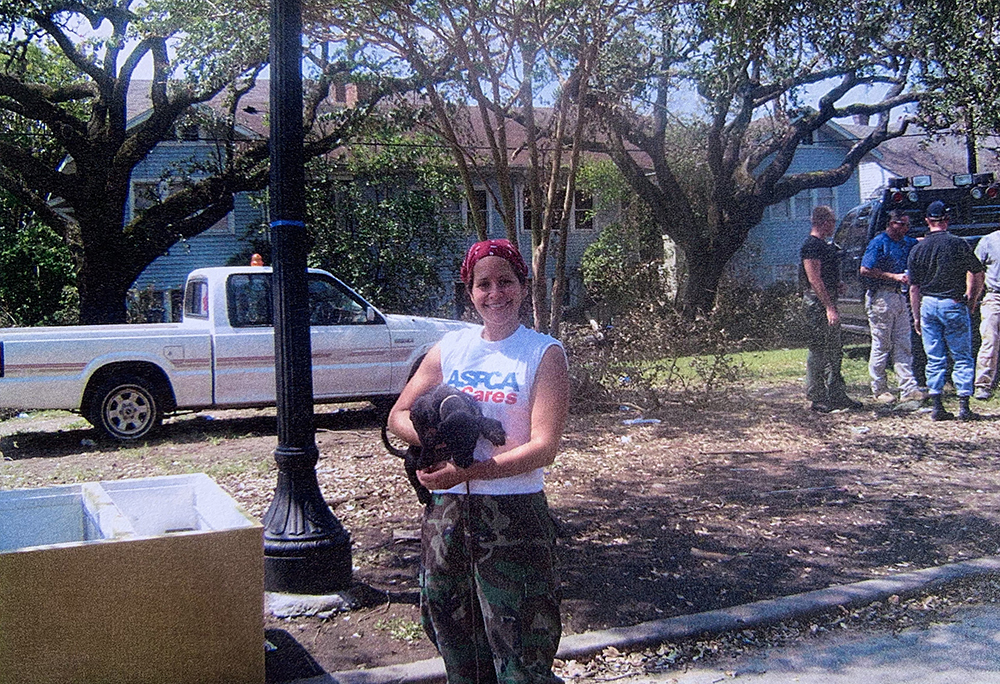
    Allison in front of a blue house holding a black dog, wearing an ASPCA tee-shirt and camo pants.

    During your time at LA County, Animal Care and Control received multiple awards for its Managed Intake and Enhanced Placement programming. You’ve mentioned that listening to the community was a really important aspect of the work, and, as the largest animal care and control system in the country, that community is huge and diverse: that’s seven animal care centers serving over 3 million people! Why do you think it’s so important to make space to listen? Is there one personal experience of listening that has stuck with you?

    I am very grateful that I had the opportunity to serve LA County for five years and to meet so many people with diverse stories and experiences. I definitely learned that one size does not fit all and flexibility is key. We made a point of hosting community forums, town halls and gatherings to hear from the communities we served. It helped personalize the issues and opened my eyes to how people perceive things differently, and it reminded me to not dismiss perspectives.

    For example, we were working with the Housing Authority and Homeless Services to draft a pet-friendly housing ordinance for new apartment developments. We hosted listening sessions with service providers, developers, and people experiencing homelessness. I distinctly remember the session with people experiencing homelessness, where folks talked about the bond with their pet and what it meant to have them in their lives. I know the incredible role pets play so I expected to hear that sentiment. But we also heard from folks who had been placed in supportive housing and were scared of the dogs that were being walked off-leash or who barked and lunged while on leash. They talked about not being able to run away from a dangerous dog. Hearing that feedback allowed the ordinance team to look at what guidelines needed to be in place to ensure the safety and well-being of all residents. I’m happy to report that the ordinance was adopted in early 2020 with guidelines in place.

    We came together as an industry and have started talking and connecting more than ever. I know we can harness that collective energy and brainpower to shape the future. And the investment of resources makes me hopeful—when we invest in communities, everyone benefits.

    When you’re not working in the shelter or in the community, what helps ground you? What gives you life?

    As I get older, I want to spend more time with the people I care about. Thinking about younger Allison, I have definitely been focused on work and being of service, to the detriment of some of my personal relationships. I make time to get outside and walk every day and to listen to the birds and sounds of the neighborhood. I love going to flea markets like the Queer Mercado in East LA and local shops like The Plant Chica, The Salt Eaters Bookshop and Hilltop Coffee. I also volunteer with the Downtown Women’s Center and Hearts for Sight Foundation, and I just signed up with Big Brothers Big Sisters LA. It’s all about connection for me these days.

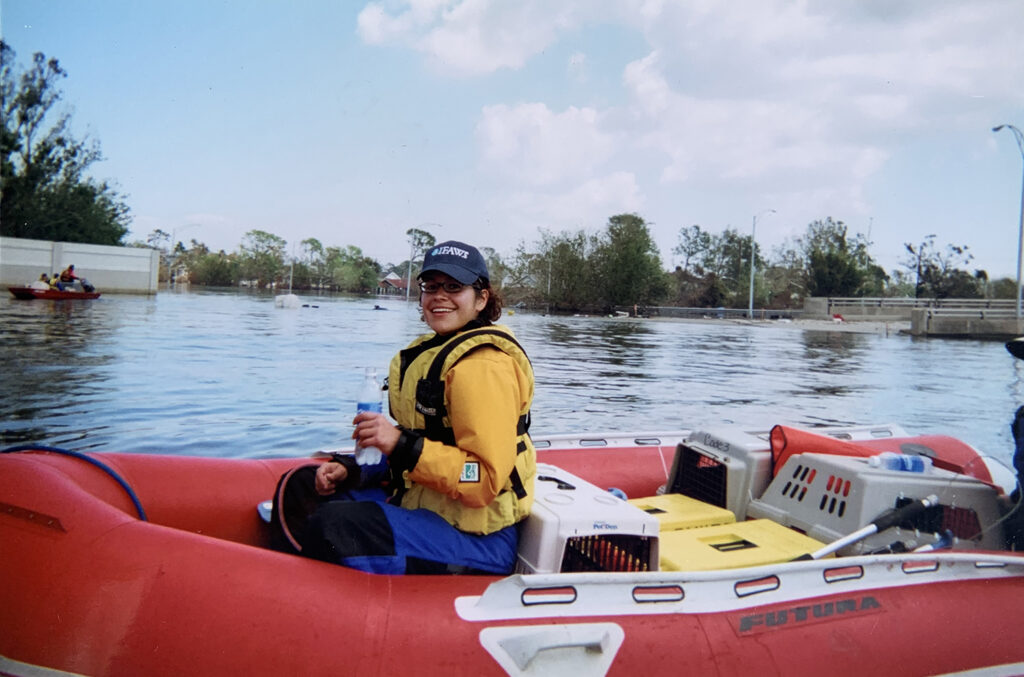
    Allison on a raft wearing a life jacket, with crates behind her.

    You joined the KSMP as California State Director just before the launch of California for All Animals in February. What do you dream we might accomplish, all of us together, through this movement? What does a California for all animals look like, feel like, sound like to you?

    First of all, how incredible is it that California made this commitment to animal health and well-being! I am so proud to be part of this moment and opportunity. I would love to see more connection between animal organizations, advocates and communities—to see us all working together to come up with solutions and get creative. I’d also like to see communities that have been excluded from mainstream animal welfare embraced and centered. Black, Indigenous, and people of color have not had a seat at the table, to the detriment of our collective movement. As a queer Latina and the daughter of immigrants, I hope I can inspire and open the door for others.

    What keeps you hopeful about the possibility of small- and large-scale change in animal sheltering, both in California and in the field at large?

    Look what we have gone through and are going through—the past two years brought seismic shifts in how we operate. We came together as an industry and have started talking and connecting more than ever. I know we can harness that collective energy and brainpower to shape the future. And the investment of resources makes me hopeful—when we invest in communities, everyone benefits.

    What’s on your read/watch/listen list right now?

    I love Abbott Elementary—it is so earnest and heartfelt! The Summer of Soul, the documentary that highlights an incredible summer of music and activism in Harlem; the Latino USA podcast, including the great episode about mapping indigenous migrant languages in California; and I am reading Cicely Tyson’s autobiography, Just As I Am. Her resilience and humor are giving me life!


    Cal for All Call

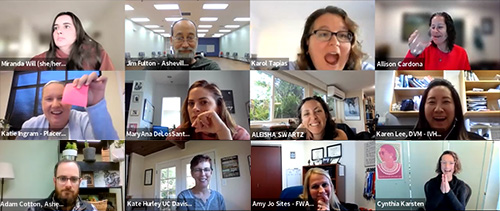
    To begin our inaugural call, KSMP Outreach Veterinarian Dr. Cindy Karsten introduced the concept of Capacity for Care for Us, which is based on the recognition that when our shelters operate at their capacity for care, we not only do better for our animals, communities, staffs and volunteers, but we also create more humane conditions for ourselves as shelter leaders.

    At subsequent calls, we explored some of the issues most on the minds of shelter leaders at the moment: staffing and community relations.

    Our guest facilitators include BJ Rogers, Karen Green, and José Ocaño, all accomplished animal welfare leaders and adept communicators. Each of them focuses on a different aspect of “capacity for care for us” for the calls, be it values, communication or self-reflection.

    Values: BJ Rogers

    “When I joined the animal welfare field back in the early 2000’s,” he recalls, “it was as executive director of a small shelter in northern New England, in Vermont, and I had no idea what the hell I was doing but I came to that work from the human service and social service sector, from advocacy and a little bit of politics, and I thought that it would be a delight to not work with people anymore but to work on behalf of animals. It was somewhere between 20 and 30 minutes in on the first day that I realized I had moved from one human service organization to another human service organization. And it was about 45 minutes in on that day that I realized I was exactly where I was supposed to be and what I brought to the role that might have some value was an understanding that people drive the well-being of animals in profound and meaningful ways.”

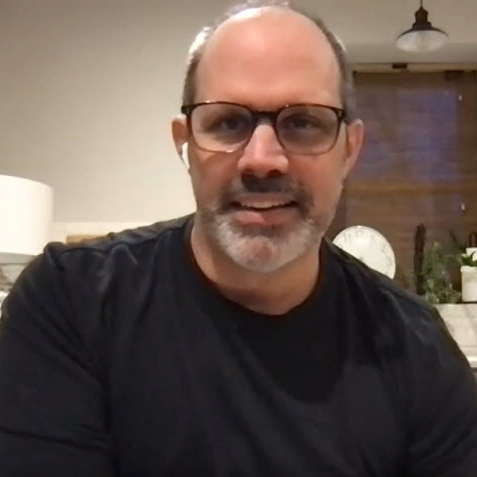
    BJ Rogers on a zoom call in his kitchen

    BJ is currently Chief Learning Officer at Emancipet. He is a certified dialogue education teacher, certified animal welfare administrator and has completed a certificate of public leadership at the Harvard Kennedy School of Government.

    Describing his interest in joining the Cal for All Calls, BJ says, “I’m here because I suspect the opportunity to learn from all of you will be quite rich on a monthly basis and I’m really grateful for that.”

    Describing his vision of servant leadership, he notes, “Since there’s only really one thing we can count on in life, which is that change will happen, the best thing we can do is to try to equip ourselves and the people that we serve with the capacity to encounter, weather and manage change with some degree of grace and resilience and perseverance.”

    Communication: Karen Green

    “Karen has not only taught me a lot about cats, she has also taught me a lot about what it means to be human. And not perfect, but perfectly flawed and good enough.” – Dr. Karsten

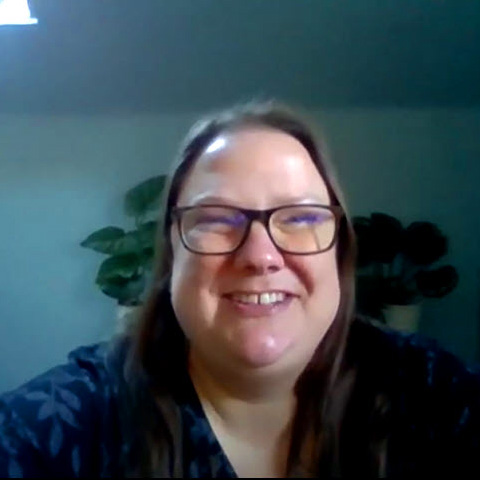
    Karen Greene on a zoom call from her attic.

    Karen Green is the Executive Director of Cat Adoption Team (CAT), the largest cat-focused organization in the Pacific Northwest, with around 3K adoptions a year and robust S/N and retention programs. She spent a decade at Best Friends before leading the Alliance for Contraception in Cats and Dogs and moving from there to CAT. She has a special interest in organizational culture, communication and conflict resolution.

    “How do we create and maintain healthy organizations where our people are thriving?” Karen asks. “Thriving people do great work.”

    “Sometimes we have a tendency in animal welfare to think like, well, we’re here for the animals. This is about the animals, this isn’t about the people. So we need to focus on the animals and we need to help as many animals as we can. But it’s really important to remember it’s the people who are helping the animals, so if we do things at the expense of the people that ends up being at the expense of the animals.”

    “We don’t have all of the answers here,” Karen says. It’s not easy to build and maintain coalitions, work through conflict and create healthy organizational cultures, but there is hope. “You can make progress no matter where you are, and we just want to be here to help you do that.”

    Self-Reflection: José Ocaño

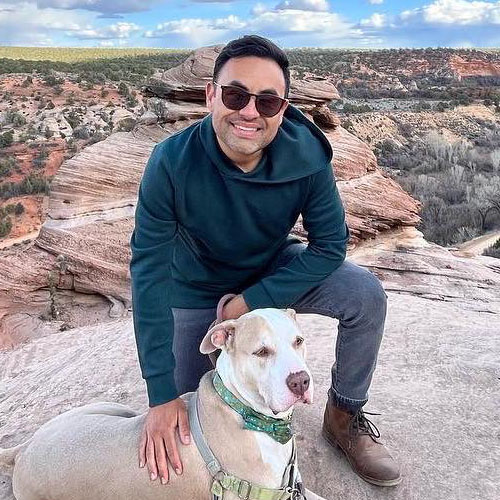
    José Ocaño with tan and white dog atop a scenic mesa

    As Senior Director of People and Culture for Best Friends Animal Society, José Ocaño leads employee recruitment, development and growth.

    He also leads a fair amount of Zoom meetings, which has impressed upon him the need to “bring the humanity back” to online gatherings. Something as simple as having people share their favorite food or movie or music can remind us that there are real humans behind the little boxed faces onscreen.

    “He brings to our calls his deep kindness and lived experience along with his knowledge of leadership (in the most expansive sense of that word) and how to build a healthy team culture,” says Dr. Hurley. “We are so lucky to have him as a resource in our state!”

    José started his animal welfare career at Pima Animal Care & Control in Arizona. During his decade there, he rose from technician to Executive Director, all the while helping the shelter reduce euthanasia and become a beacon of progressive animal sheltering.

    Mapping the Movement

    From Siskiyou to Chula Vista…View the shelters and supporting organizations that have joined so far on our interactive map.

    Notice anyone missing? Tell them about us!


    Bright Spots: Portals

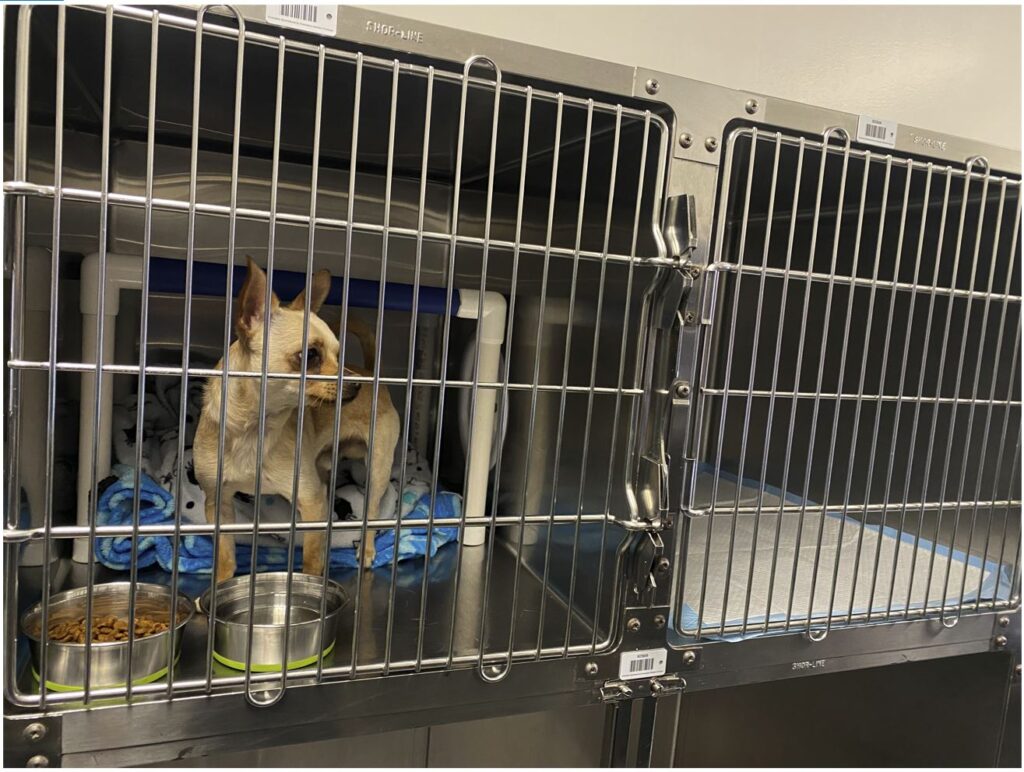
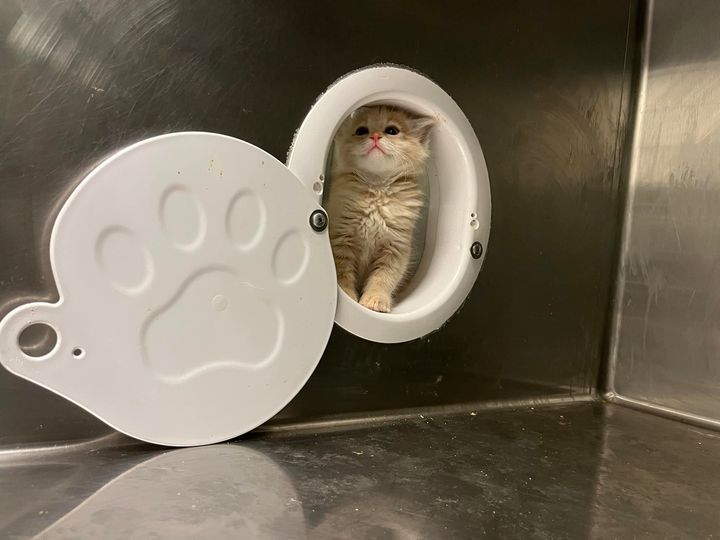
    If you’ve ever attended a KSMP event, joined our mailing list, stopped by our booth at a conference, or are friends with us on social, you already know we’re crazy about portals, a small door that retrofits two standard-sized cages into double-compartment housing. A two-sided suite allows dogs and cats to eat, sleep, and lounge separate from where they eliminate and makes cleaning less stressful and more safe for both animal and caretaker: The ultimate win-win!

    This week, in our first-ever Bright Spot, we’re raising our glass and wagging our tail in celebration of Antioch Animal Services for expanding their double-compartment cage housing to include puppies and small dogs. 

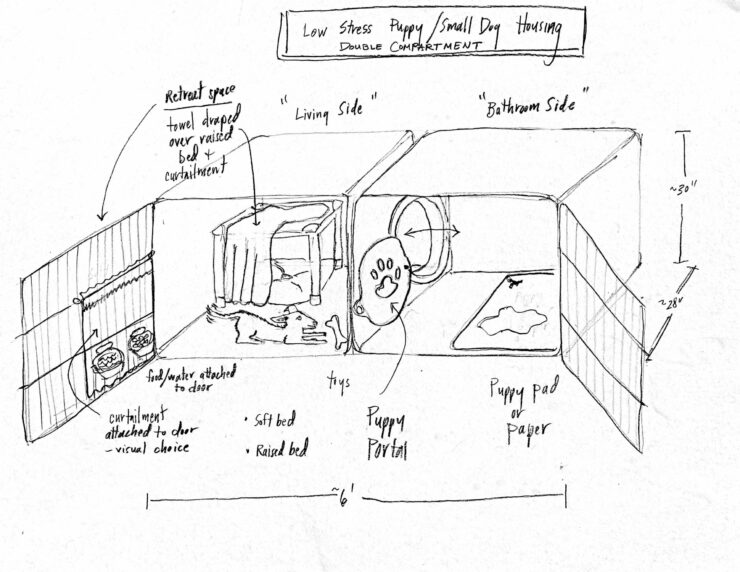
    Portals are often associated with feline housing, but double-compartment cage housing can be a great fit for some smaller dogs, too. The Puppy Portal has a slightly larger passthrough diameter than its Kat Portal counterpart and is built to stand up to dog use.

    Dr. Denae Wagner's sketch of low-stress puppy/small dog housing.
    Click this image to see a larger version

    California shelters, do you want to expand housing variety and allow staff greater flexibility and choice when matching the right housing to the individual needs of the cats and dogs in your shelter?

    Every single California shelter is eligible for portals through the California for All Animals program: Leave no cage unportaled! Apply for your grant today.

    Huge congratulations to:

    • Antioch
    • City of Fresno
    • SEAACA
    • Contra Costa County
    • Visalia Animal Services

    on your recent portal installation.

    To the dozen shelters awarded portals and awaiting installation: Send in those Portal Day pictures!  We love seeing stretched cats, bouncing puppies and litter-free water bowls <3


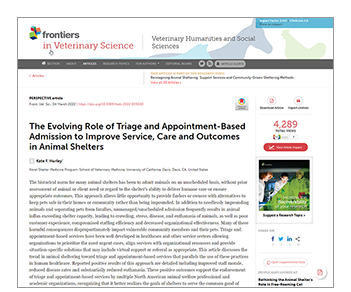
    Why are shelters switching to or continuing appointment-based admissions? Dr. Kate Hurley explains in this popular Frontiers article published in March.

    Four Rights Webinars Recap

    Ensuring every animal and person the best service means getting four things right. Each animal should get the Right Care in the Right Place at the Right Time to the Right Outcome.

    If you missed Dr. Kate Hurley’s introduction to the Four Rights, March Fourward: The Future Is Four, you can still catch the presentation on demand here (requires enrollment in the Maddie’s University course; you only need to register once to view this and the rest of the webinars in the Future Is Four series).

    Last Tuesday, Kate and Dr. Cindy Karsten presented the final webinar in the series, describing the Right Outcome as The Right Outcome is the one that best supports the well-being of animals, honors the connections between humans and pets, stabilizes systems and maintains public health and safety.

    On May 10, the Koret Shelter Medicine Program’s Drs. Denae Wagner and Chumkee Aziz, along with CAT’s Karen Green, presented an hour-long webinar focused on providing the Right Care, whether that’s in the community or within shelter walls.

    Also available on-demand: Right Place, with Drs. Cynthia Karsten and Chumkee Aziz, and Right Time, presented by Drs. Cindi Delany and Kate Hurley.

    This series comes to you #ThanksToMaddie, via Maddie’s® Million Pet Challenge.


    Congrats to Bootcamp Grads

    Four Rights Bootcamp Spring 2022 Cohort

    • Ashville Humane Society – Asheville, NC
    • Chula Vista Animal Care Facility – Chula Vista, CA
    • Dallas Animal Services – Dallas, TX
    • Fort Wayne Animal Care and Control – Fort Wayne, IN
    • Humane Society of Weld County – Evans, CO
    • Inland Valley Humane Society and SPCA – Pomona, CA
    • Placer County Animal Services – Auburn, CA
    • Southeast Area Animal Control Authority – Downey, CA

    Behavior, Training and Enrichment Bootcamp Feb/Mar 2022 Cohort

    • East Bay SPCA – Oakland, CA
    • Humane Society Silicon Valley – Milpitas, CA
    • Kauaʻi Humane Society – Lihue, HI
    • County of San Diego Department of Animal Services – Bonita, CA
    • San Francisco Animal Care and Control – San Francisco, CA
    • San Jose Animal Care and Services – San Jose, CA
    • SPCA of Texas – Dallas, TX
    • Ventura County Animal Services – Camarillo, CA

    Behavior, Training and Enrichment Bootcamp Apr/May 2022 Cohort

    • Antioch Animal Service
    • Best Friends Life Saving Center of Los Angeles
    • Broward County Animal Care
    • Contra Costa Animal Care
    • Inland Valley Humane Society & SPCA
    • Lollypop Farm Humane Society of Greater Rochester
    • Pasadena Humane
    • Sacramento SPCA
    • Treehouse Humane Society
    • Valley Animal Shelter

    Paws to Appreciate…

    Community-based sheltering

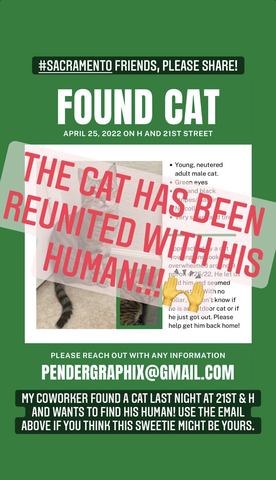
    mobile screenshot of Found Cat post with 'The cat has been reunited with his human' written across in big red letters

    SAC Data Submission Is About to Get Much Easier

    Shelter Animals Count just announced that their long-awaited API is almost ready to launch.

    What does that mean for you? After you opt in, you’ll never have to enter your data manually at SAC again! Instead, your data will be sent directly from your shelter software to the Shelter Animals Count database.

    PetPoint users will be the first to have a chance to automate their SAC data entry. Click here to provide authorization. Users of Animals First, ShelterLuv, Chameleon and ShelterBuddy will see automation soon. Click here to be notified when the API is ready for you.

    And if you haven’t done so already, remember to join the California Animal Welfare Association SAC coalition!


    We Dream Different

  • UC Davis Koret Shelter Medicine Launches $50M Program for Shelter Animals

    Spreading the love to ALL on Valentine’s Day.

    [The launch event is now available to view below]

    California shelters and their communities are invited to join the California for All Animals online launch party on February 14. The kick-off event marks the beginning of a five-year project to improve the lives of at-risk animals in the state and provide much-needed resources to shelters that serve this vulnerable population.  

    This unique state-funded initiative was made possible in 2021 when California Gov. Gavin Newsom signed budget legislation that includes $45 million in one-time support for a statewide Animal Shelter Assistance Program, an augmentation to $5 million earmarked earlier that year.  

    The initiative – administered by the Koret Shelter Medicine Program (KSMP) at the UC Davis Center for Companion Animal Health – will provide critical funding for shelters, perform onsite and virtual consultations, and offer expert-led training. The program represents a promise kept and emphasizes the governor’s commitment to help communities realize the state’s long-held policy that “no adoptable or treatable animal should be euthanized.” 

    “I pledged that all California communities would have the resources they need to ensure that no healthy or treatable animal dies in a shelter and I have not forgotten, we have not forgotten, that promise,” said Newsom. “Both then and now it’s clear that we must take action to protect the most vulnerable among us.” 

    KSMP California State Director Allison Cardona said she knows firsthand from her experience at the largest sheltering system in California that these funds are needed now more than ever. 

    “Communities are struggling and shelters are too,” Cardona said. “These funds promise a brighter tomorrow. We’re excited to partner with shelters to find creative solutions within their communities to help keep pets in their homes whenever possible and provide the best care inside the shelter when it’s not.”  

    The Valentine’s Day event will include information about joining the program, eligibility, and details about the first round of grants available beginning February 14th.

    You can read more about the Animal Shelter Assistance Act. For a history of the governor’s original proposal, see Governor Newsom Proposes a $50M Investment to Help California’s Homeless Animals at Sheltermedicine.com. Visit California for All Animals to find out more about grants available now. 

    To be kept up to date about developments, please sign up for the California for All Animals mailing list.

    About UC Davis Koret Shelter Medicine Program
    In 2000 UC Davis School of Veterinary Medicine launched the first shelter medicine program in the world. Since then, the Koret Shelter Medicine Program has moved beyond the basics — how to vaccinate, clean, feed, and handle animals — to guide the whole animal-shelter system. The program offers organizational evaluations, facility design consultations, and online training, all intended to provide practical, cost-effective solutions to improve animal welfare and adoptability.