Lose your animals or lose your housing: Housing instability is one of the top reasons people bring their pet to a shelter for rehoming. In their work with HEART LA and in the South LA city shelter, Zaira Bernal (Paralegal) and Diana Cruz (Program Director/Law Clerk) meet tenants facing similar threats or harassment from landlords all the time, despite protections for Emotional Support Animals (ESAs) laid out in the federal Fair Housing Act. And for individuals with disabilities, getting necessary ESA documentation is blocked by one barrier after another, barriers that are compounded for people who are low income or from marginalized communities.
What can we do? When it comes to keeping individuals with disabilities and their Emotional Support Animals (ESAs) together, knowledge is power.
Individuals with disabilities shouldn’t have to navigate the journey to Emotional Support Animal documentation alone. “Attorneys aren’t the end-all and be-all of housing justice,” said Diana Cruz. “It’s really a community-led effort.”
In this week’s All Call, Zaira and Diana cover the ins and outs of ESA documentation and protections, answered your questions, and offer steps we can take to join the fight for disability and housing justice in our communities.
Takeaways and Resources
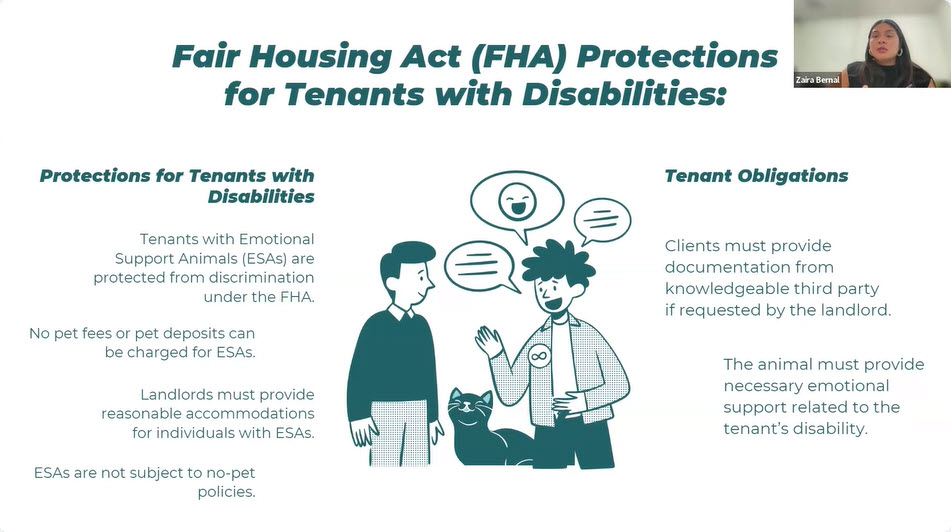
Emotional Support Animals provide comfort and emotional support to someone with a mental, emotional, or physical disability and are protected under federal and state law. While ESAs don’t require formal training, animals designated as service animals do. Both have equal protection within the Fair Housing Act.
ESAs are not subject to no-pet policies. Pet fees or pet deposits can’t be charged for ESAs, and landlords must provide reasonable accommodations.
If requested, tenants must provide ESA documentation. That simply means a letter from a knowledgeable third party, like a healthcare provider or caseworker, that affirms they have a need for an ESA because of a disability. But even if an individual is able to access a physical or mental healthcare provider despite systemic roadblocks, the provider often refuses because they are unfamiliar or misinformed about the process and fear legal liability, or face company-wide policies prohibiting ESA letter issuance.
While working toward long-term policy change, we can also learn from the solutions Diana and Zaira are implementing now. For example, in California, individuals who receive disability benefits can self-certify their need for an ESA. Shelter teams can take advantage of free training at Maddie’s University, request a training tailored to their organization, or reach out for advice from HEART LA, so that they are better equipped to support and advocate alongside community members who feel pressured to give up their support animals to keep their housing.
The ongoing crisis in access to care has its roots in historical and current racial inequities, as well as a shortage of veterinarians and vet techs. Those systemic inequities don’t just limit access to care–they also contribute directly to that shortage of veterinary professionals: unequal access to information, education and financial resources limits the number of potential future veterinarians and techs. And we may be perpetuating inequities at the individual level and losing valuable staff by the way we recruit, hire, pay and promote. Sound hopeless? The good news is, there are things we can do right now to retain the great RVTs we have and to set young people on a path to be the next generation of veterinary professionals.
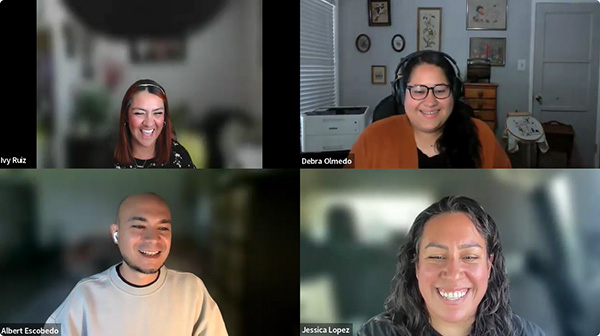
In this Cal4AllCall, California Outreach Specialist, Ivy Ruiz, RVT explores ways to improve vet tech recruitment and retention with Debra Olmedo, RVT (Adjunct Veterinary Technology Instructor at Platt College), Albert Escobedo, RVTg (Director of Veterinary Operations at Humane Society of Sonoma County) and Jessica Lopez, RVT (Executive Director at the Paw Mission). The personal experiences of all four–as RVTs, directors and educators, as well as members of the Latine community–gave them insights they shared enthusiastically on the call.
Some key takeaways for hiring and onboarding:
Be transparent. During the interview process, mention that culture is important to you and acknowledge any struggles your org is going through. Albert warned that experienced RVTs will be able to spot red flags right away. “They’re going to notice things. They’re gonna see things. They’re going to hear things. They know what’s behind the cabinets. They know what’s underneath the refrigerator. They’ve seen it all before.”
Reassess the criteria for hiring. Albert noted that systemic barriers limit the ability of underrepresented people to gain experience. He suggested bringing Black, Indigenous and People of Color on as volunteers so they can gain that experience. Ivy drew on her coaching background and discussed how she actively seeks resources and tools for young ladies on her softball teams who may not have access to an equal opportunity for growth and development. Similarly, people in the animal well-being profession should consider offering support, tools and resources for growth to folks who may not have had access to formal education, or hold the experience or skills being demanded for a position due to systemic barriers. Jessica emphasized the importance of enthusiasm and a willingness to learn in potential employees rather than focusing on whether they have prior experience.
Schedule predictable work hours. Having a set schedule is a simple way to support staff lives and needs. Debra shared the challenges she faced in finding a job when she returned to work after maternity leave. Despite her eagerness to get back to work, and her willingness to work weekends and holidays, she had trouble finding a position with a set schedule so she could find childcare.
Seek out bilingual staff. Hiring bilingual staff will help you serve your community better immediately. Plus, in the long run, it starts a self-reinforcing virtuous cycle of deepening your ties to the community. Ivy noted that representation in staff and leadership is important: potential employees want to see people like them already in the organization.
Ways to retain staff
Know your employees. Recognize and support natural leaders. Spotlight opportunities for growth based individual interests and talents. Debra pointed out that not everyone wants to be (or should be) a manager. She emphasized the need to think beyond traditional management roles for career advancement, suggesting that RVTs could excel in various aspects of veterinary medicine, such as community liaison or community event planning (e.g., vaccination or spay/neuter events).
Set small goals and clear expectations. Incremental progress is a great motivator, and clarity enables action.
Foster collaboration and mentorship. Albert suggested a mentorship system where new hires could be paired with experienced staff. Jessica shared the value of implementing a mentorship program at her previous organization, which included weekly check-ins and 360-degree reviews.
Support staff development through scholarships and externships. Debra pointed out, “It’s hard for people that do not have the privilege of not working and not having additional time to be exposed to [opportunities in shelter medicine]. So I think that, providing maybe scholarships that your organization could do, or even opening up the opportunity to do an externship. You would be so surprised how hard it is to get externships. People do not want to make that accessible.”
Acknowledge and counter biases in assignments and promotion.Animal well-being organizations tend to be heavily White (84%) and non-Hispanic (86%). Ivy noted that biases and racial discrimination impact performance reviews and unfairly exclude BIPOC staff from high profile assignments, depriving the individual of advancement opportunities and depriving the organization of benefiting from the full expression of that person’s talents.
Offer equitable pay. Albert suggested tracking the impact of veterinary technicians to better advocate for higher wages. The group agreed that it would take time, but emphasized the importance of continuous advocacy.
Support work/life balance. Making sure staff have time for family, school and other commitments can be a way to compensate when salaries aren’t where we’d like them to be.
“We should be talking to our community at high schools and talking to our kids about the different opportunities that there are, because most people especially, I mean, I could speak from the Latina community. I thought it was either being a veterinarian or nothing. I did not know that there was anything in between there, and it wasn’t until I was in college that I [found out] you could be a tech.”
Jessica Lopez, The PAW Mission
Tips for recruitment and breaking down barriers to build community:
Look at your org’s recruiting practices to see where you might be excluding folks.
Raise awareness about RVTs. Often, people don’t know that there’s a career in animal well-being that doesn’t require the time and expense of obtaining a DVM degree. Both Debra and Ivy laughingly noted they have relatives who still misidentify them as veterinarians, likely because there’s a widespread lack of visibility of the contributions vet techs bring to veterinary medicine. Jessica has visited local high schools to make sure young people know this career exists. As Albert says, “The universities that have DVM programs and the schools that have RVT programs and the schools that have veterinary assistant certification programs should all be recruiting the youngest kids out there that want to get involved in animal medicine and animal welfare.”
Visit local vet offices or local schools to find volunteers. Jessica shared her experience of building relationships with customer service reps at veterinary hospitals by bringing donuts or empanadas and just chatting. Word about her spreads around the office, and eventually, when she asks for volunteers for an upcoming community clinic, she gets more volunteers than she needs. All agreed on the importance of community involvement and utilizing available resources to address systemic issues in veterinary care.
Fight budget cuts. Justify every dollar. Stretch resources further than you think they can possibly go. Does this feel like your job description? If you’re ready for a conversation that celebrates shelter teams’ resourcefulness and get-it-done dedication and offers concrete strategies for financial sustainability, this All Call is for you.
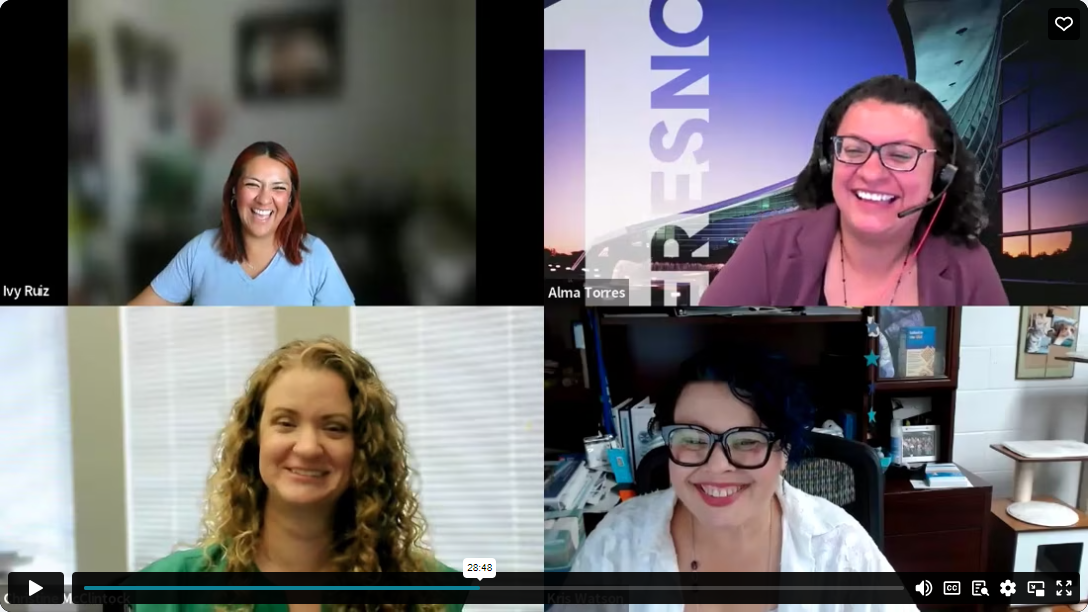
Whether rural or urban, big or small, shelters face the constant challenge of balancing budgets, while maintaining humane care and meeting expectations for positive outcomes and services. Early in the summer, we explored the HASS budget calculator as one tool for addressing the persistent underfunding of animal services. We closed out August with this panel on municipal shelter budgets moderated by California Outreach Specialist Ivy Ruiz, RVT, who managed Visalia Animal Services prior to joining the KSMP team. She was joined by Alma Torres (Director, Fresno Animal Center), Christine McClintock (Animal Care Center Manager, Tehama County Animal Care Center), and Kris Watson (Director, City of San Bernardino Animal Services), all colleagues with expertise in finessing finances at municipal shelters.
Here are just a few of the many insights out of Fresno, Tehama County, and San Bernardino:
Data is your compass: Understanding your shelter’s specific needs and costs through data analysis is crucial for effective case-making to city officials and planning for unanticipated intake spikes.
Tell a strong story: Whether talking to community members or electeds, communicating the impact of underfunding on animal care and operations can help secure support and allies. For city leaders, center the opportunity cost of a potential cut and make clear the impact on efficiency, staff safety, and community. For community members, stay grounded in relatable examples—like how rising veterinary costs are affecting shelters and pet owners alike.
Get creative and team up: Each shelter leader detailed how they supplement their budget, from grants, donations, and contracts with neighboring cities and counties, to cultivating community partnerships that maximize veterinary care capacity and reduce costs or assist pet owners with redemption fees. They also emphasized that we can be one another’s best resources, whether it’s by swapping contract samples and advice or getting together to tackle a repair in-house. “You forget how creative shelter staff are!” Kris said.
Contract design matters: Christine shared why she’d never consider a per animal contract again, and how she landed on a model that works for her shelter. For more on weighing contractual models, from flat rate to per animal or per capita, check out the Maddie’s Community Conversation Government Contracts: Negotiating Fair Compensation.
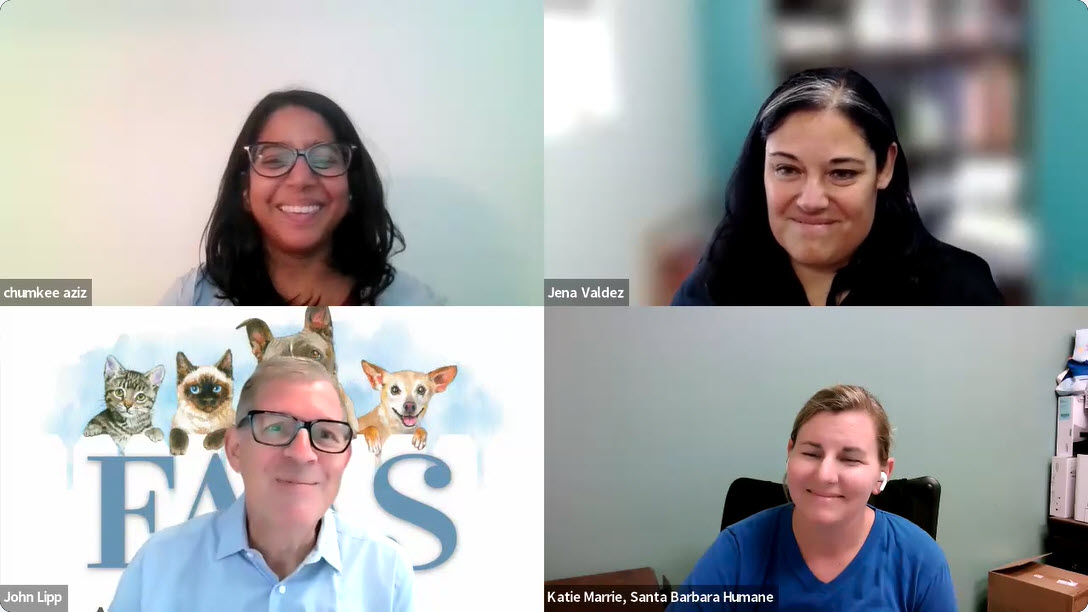
UC Davis KSMP Outreach Veterinarian, Dr. Chumkee Aziz hosts a panel on public-facing veterinary clinics serving animals in the community. Guests John Lipp (CEO at Friends of the Alameda Animal Shelter), Dr. Katie Marrie (Chief Veterinary Officer at Santa Barbara Humane), Dr. Jena Valdez (Chief Medical Officer at San Francisco SPCA) offer insights and practical advice on ways to expand access to veterinary care in different types of communities.
In the high-pressure environment of a busy animal shelter, open communication, trust, mutual respect and kindness among colleagues and teams power positive outcomes. Chief Veterinarian and Animal Care Officer Dr. Maria Pyrdek and Chief Program Officer Chris Ramon describe how it works at Pasadena Humane.
On Oakland Animal Services’ Facebook page, commenters aren’t shy about voicing support for community clinics and what they agree is important: connecting people with the resources they need to care for their pets. “Amazing outreach for people and pets.” “I love to see this!” “Look at these beautiful doggos and their beautiful hoomans!” “Truly beautiful effort!”
At OAS, what makes the effort beautiful and successful is that it’s coordinated, collective, and truly community-centered. Everyone from volunteer veterinarians, groomers, trainers, students, community members, human services and other local organizations, and shelter staff come together to make community clinics possible. Community Program Coordinator Donell Randolph and Dr. Jyothi Robertson (DVM, DABVP, Shelter Medicine) joined this All Call to answer questions and share some of the lessons they’ve learned in the process.
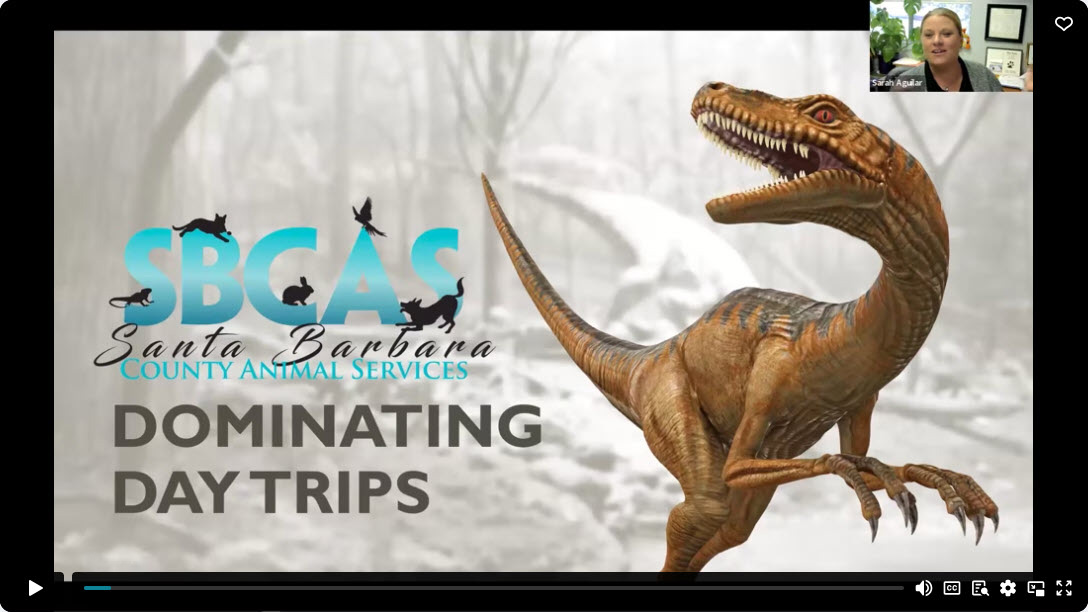
Sarah Aguilar, Director of Santa Barbara County Animal Services, describes how she and her small team started their Dog Day Trip program, which offers volunteers some doggie time while dogs get out of the shelter for a few hours. Treating the program as very-short-term-foster, Sarah and her team built on their existing systems and saw immediate benefits in dog well-being, adoptions, and volunteer engagement. Hear how they did it, what they learned along the way, and what’s next for the program.
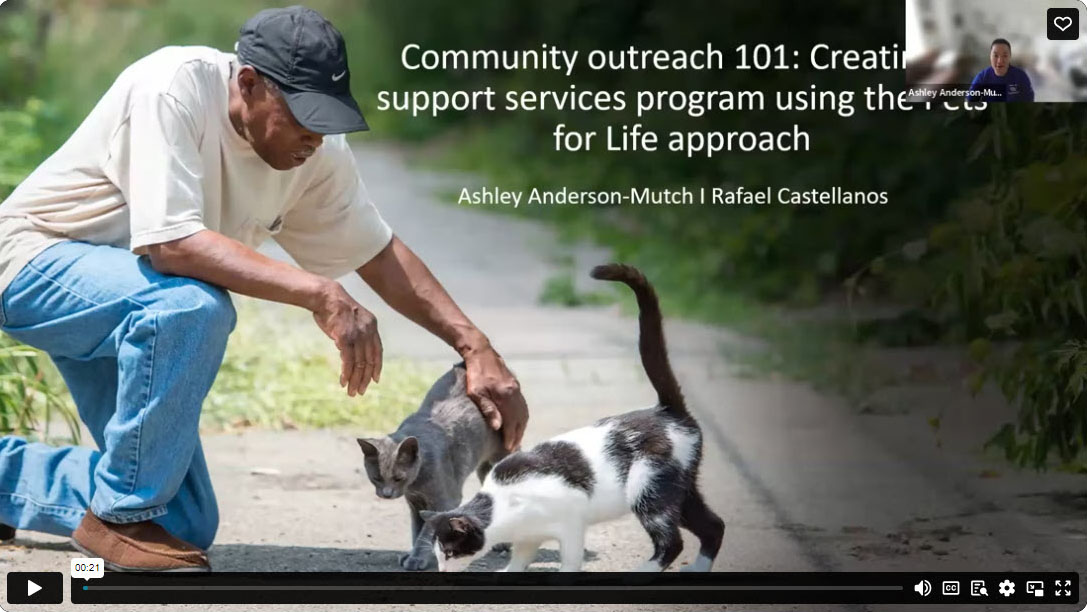
Ashley Anderson-Mutch (Senior Program Manager, Enforcement and Policy Reform, Pets for Life at Humane Society of the United States) offers a brief overview of how Pets for Life combats the effects of historical and current inequities by serving people and pets in marginalized communities.
Rafael Castellanos (Pets for Life Coordinator, Ventura County Animal Services) shares his experience creating a support services program in the city of Oxnard using the Pets for Life approach. He discusses strategies for establishing or expanding a strategic, sustainable community-based outreach program, whether rural, urban, or somewhere in between.
Excerpts from the call
In this 4-minute clip, Rafael demonstrates the benefits of going door-to-door to introduce yourself to your community by telling the story of what happened when he knocked on the door of Flavio, Jonathon, and their dog Coffee.
In this clip, Rafael talks about how advocating for a client seeking a health certificate for her 15-year old poodle kept a family together and a dog out of the shelter–and led to a clarifying conversation with a veterinary partner.
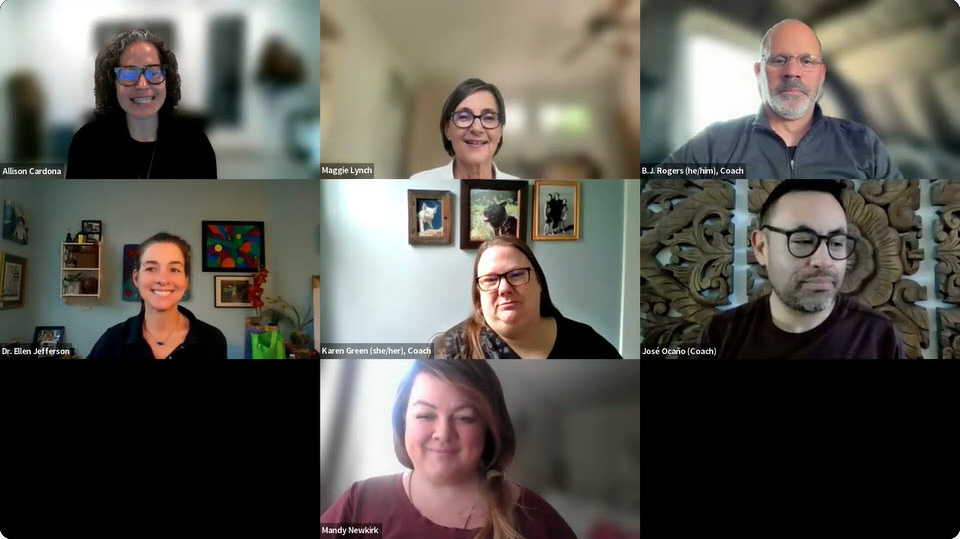
Dr. Ellen Jefferson and Maggie Lynch from Austin Pets Alive! walk us through the new HASS budget calculator, created to address the persistent underfunding of animal services. Learn how to use the calculator tool and its results to advocate for budgets appropriate to meet the public’s expectations around humane care and shelter lifesaving.
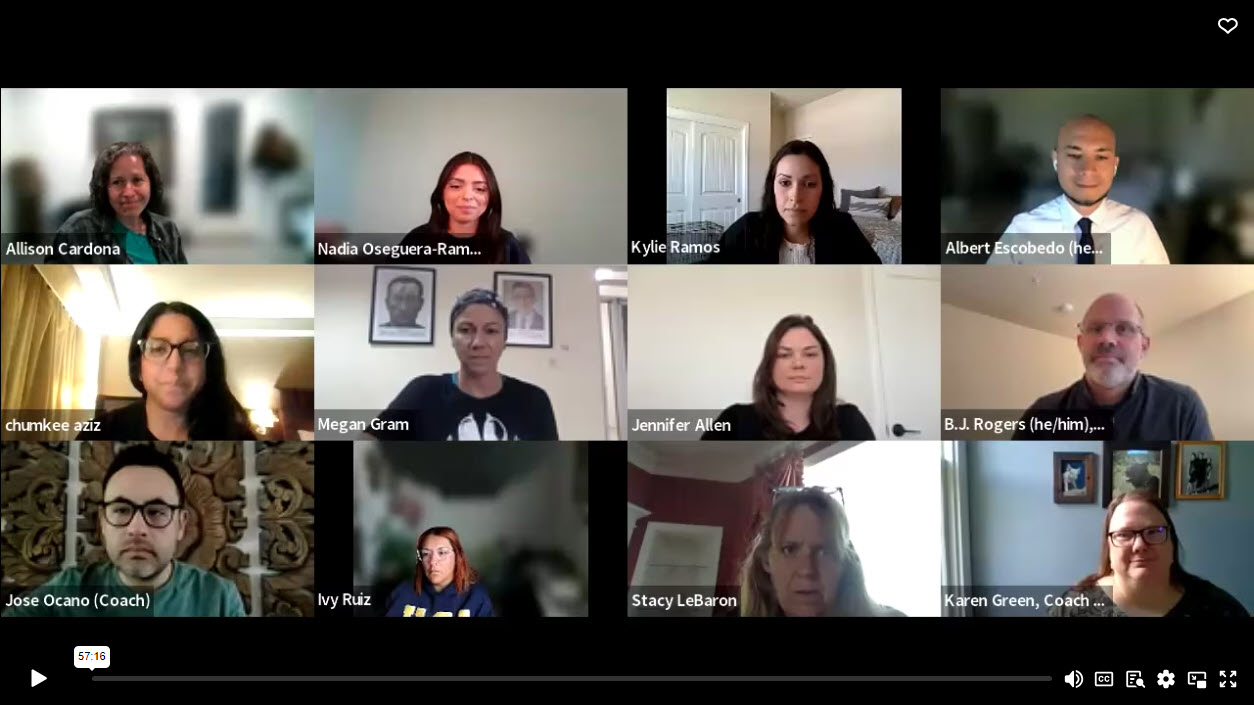
KSMP Outreach Veterinarian Chumkee Aziz leads a panel discussion on setting up and running High Quality, High Volume Spay Neuter programs. How can HQHVSN help address the veterinary care crisis? Find out from our panelists, Albert Escobedo (RVTg and Director of Veterinary Operations, Humane Society of Sonoma County), Dr. Jennifer Allen (Veterinarian, CAMP LA), Megan Gram (Director of the Pacific Region, Animal Balance), and Kylie Ramos (Community Engagement Program Manager, San Francisco SPCA).