
Category: ACO stories

Stories about Animal Care Officers posted for ACO Appreciation Week 2023

  • When the Heat Rises, Blythe ACO John Bush Has Your Back
    When the Heat Rises, Blythe ACO John Bush Has Your Back

    Approximately 225 miles east of Los Angeles and 150 miles west of Phoenix, located inside of Riverside County and flanked by the Colorado River, you’ll find Blythe, California, a rural desert town named after the San Francisco financier who established water rights to the region. You’ll also find John Bush, sole animal control officer for Blythe’s animal shelter, collaborating with residents and visitors to craft solutions for challenges both anticipated and unexpected. 

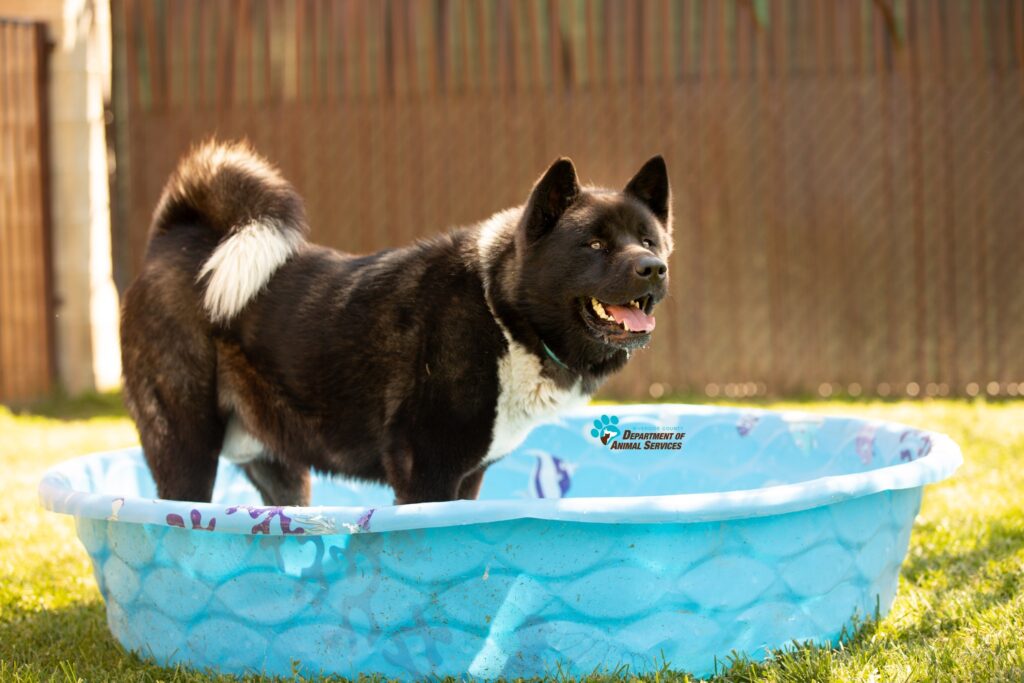
    Currently John is racing against the summer sun to launch his idea for a “cool down” campaign, an initiative to get more portable kid-sized pools in the yards of outdoor pets. In the hottest, driest subdivision of the Sonoran Desert, it’s about helping people keep their pets not just comfortable in the summer, but safe. Blythe is known for temperatures that hang around a blistering 110 degrees and sometimes climb to 120. On a typical day, though, he’s pulled in several equally important directions, all in service to his community.  

    Travelers as well as people experiencing homelessness can be especially vulnerable to the heat, and John, a Blythe native familiar with the dangers that come with extreme temperatures, watches out for them and their pets.   

    “We have an influx of river [encampments] in the summertime. When animals get lost […], they don’t know where to go and they wander. A lot of my job is public education and helping people know what they need to do in the summer months. Many travelers just don’t know how hot it is here, so I’m out there hitting those stopping points.” 

    John is also on hand to help livestock, wildlife, and reptiles in addition to companion animals.  

    “My day does not look anything like I thought it would,” he says. “I grew up in this area, I’ve been around livestock my whole life. They told me I could learn dogs and cats, but they needed someone who knew livestock.”  

    Helping kids help their families

    As John quickly realized, the job is as much about people as it is about dogs, cats, or livestock. Whether it’s getting animals back to their families or playing detective to figure out how a community member’s animal keeps getting loose, helping people and sharing knowledge is his favorite part of the job. And as a 4-H leader for the last 30 years and a volunteer firefighter for 27, John knows young people lead change in their communities and in their families.  

    “If you can work with kids to get at the problem, they’ll help solve that problem at home.”  

    Recently, he was able to keep a rowdy dog in his home by engaging the family’s children in the problem-solving process.  

    “They were on board,” John recalls. “I was just out there the other day for a check-up and the kids were still completely on board. They had fixed the fence and were working with the dog. They totally helped their parents out and the dog is still with the family.” 

    John is also working to develop a presentation on animal care that “teachers can have on hand to share with the children whenever they find 30 minutes or need a quick lesson.” He’s timed the education campaign to land right before students are released for the hot summer months—he wants those pet pools to be top of mind as they head into break. 

    Outside of the shelter, he also teams up with young people to strengthen community fire safety, delivering fire prevention and safety programming to kindergarten through fourth grade classrooms. He knows the children will help their parents spot dry brush that needs to be cleared, identify locations where smoke detectors should be installed, or recognize already-installed detectors in need of maintenance.  

    Photo credit: Riverside County Animal Services

    Finding funding: From paperwork to partnership

    Covering nearly 30 square miles, approximately half of which is rural, is a tall order for one field officer. Added to the geographic challenges are the difficulties of documenting all the encounters in his jurisdiction. 

    “I love helping people,” John says. “The hardest part of my job is really just the paperwork. I like to be in the field; I want to go out there and make a difference. But the more work you do, the more paperwork that needs to be done…hours of it! I’m the only ACO out here, I should be out in the field teaching and doing things.”

    John applied for a California for All Animals grant and was awarded the money needed to hire a part-time coordinator. With an extra set of hands to assist with licensing, vaccinations, administrative duties, and, of course, humane education materials, he can spend more time in the field coming up with creative solutions to help animals and people stay safe together. The funding will also help secure microchips to ensure lost pets are reunited with their families, humane cat traps, and a climate-controlled vehicle to transport animals across the desert in the hot summer months. 

    Sonoran Desert photo courtesy of the Arizona-Sonora Desert Museum

    Today you’ll find John stocking his “arsenal of supplies” to create pet care kits for community members, like those losing their housing and struggling to find pet-friendly accommodations. Sixty percent of renters in San Bernadino and Riverside Counties “worried that they won’t be able to make the next month’s rent,” and 39% were extremely or moderately concerned that they will have to move out of their homes for reasons outside their control,” according to a 2020 survey by the Othering and Belonging Institute at UC Berkeley.  The survey also found that “insufficient affordable housing in the Inland Empire corresponds with families making harmful cutbacks.” John proactively works with the sheriff to identify families who are at risk of eviction in case transportation, crates, or kennels might help pets and their owners during the transition.  

    The new coordinator position also means he’ll have the time to make his cool-down campaign a reality in time for the first heatwave. In May, the average high is 97 degrees; by June, it soars to 106.  

    No matter what the project, John says, you can’t go it alone. 

    “We can’t do it by ourselves. We need the community, we need people’s opinions, we need their input. And sometimes we need help understanding how to fix something. Sometimes we don’t have the answer and we need help finding those answers.”  

    https://vimeo.com/817828476/ffc2f093cb

    ACO John Bush has seen a lot of turnover in the animal welfare field. In this short clip, he shares his advice on how to approach the rewarding and often challenging work.

    Related Stories

  • How Rancho Cordova Animal Services Is Making the Right Thing Possible for Pets and People
    How Rancho Cordova Animal Services Is Making the Right Thing Possible for Pets and People

    At a time when many families lack access to essential resources that build health and well-being for themselves and their pets, Rancho Cordova Animal Services is focused on partnering with community members to tackle barriers and create more opportunities for people and animals to thrive. 

    It’s the nature of the job for an animal services officer: You’re often meeting people and pets who are going through a rough spot, but that also puts you in the position to lend a hand. Navigating tricky situations to help animals and people is what drew Craig Hall, Kristy Acuna, and April Stevenson to their roles at Rancho Cordova Animal Services, and coming up against their own limitations to lend a hand is what led them to a program evolution and a new chapter for animal services in the city. 

    When Craig joined Rancho Cordova as Senior Animal Services Officer in 2019, he brought with him over a decade of experience and an outlook inspired by an early mentor who shaped not only his career path, but his vision for what animal services could look like: You can be a ‘dogcatcher,’ or you can be an animal services officer, he told Craig. In other words, do you want to embrace the outdated stereotype or transcend it?

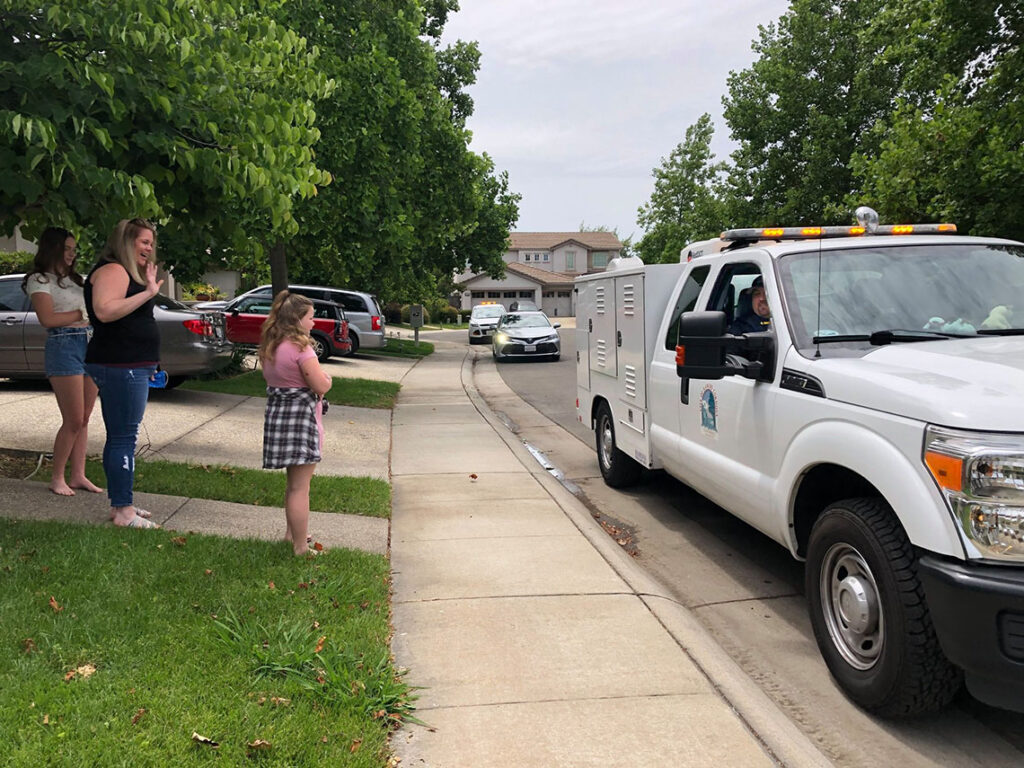
    The Rancho Cordova Animal Services team focuses on building relationships in their community. In this photo, officers visit a nine-year-old girl interested in fostering a dog. (Credit: City of Rancho Cordova)

    This choice cemented the mindset that guided Craig as he led the charge to modernize and grow animal services in Rancho Cordova, hiring Kristy and April. “Have integrity with everything. There’s a lot of things you can do to make your work easier, but it may not be right for the animals. It may not be right for the pet owner who needs help.” 

    The tipping point for the three officers was achingly ordinary, a typical scenario playing out daily in towns and cities across the state: they encountered a fellow community member in a rough spot who was unable to afford the urgent care their pet needed. In the face of nationwide veterinary shortages and rising costs for necessities like food, housing, and healthcare, it’s increasingly challenging for families to access and afford care, and animal services officers see firsthand how emergencies or illnesses can break budgets and strain already burdened families who want to do the right thing for their pets. 

    We were so tired of seeing the limited options for low-income pet owners.

    April Stevenson

    It’s not for lack of love. In this case, Kristy says, the pet “could look at his owner, and the owner could look at him, and there was a palpable feeling that they were bonded. They were connected.”

    Existing protocol and resources meant the team had few options to offer beyond referrals to CareCredit, which comes with its own barriers to financing vet care. More often than not in situations like this, pet owners are faced with the best bad option: surrendering their beloved companion to the shelter and an unknown future to stop that pet’s suffering. Witnessing this outcome and its impact on the family, the animal, and the shelter play out yet again didn’t sit well with the officers.

    “It felt like a punch to the stomach,” says Craig.

    April agrees. “We were so tired of seeing the limited options for low-income pet owners.” 

    Having enough cash to cope with a crisis is a challenge that extends across income levels in the U.S., with over one-third of working adults documented as “financially fragile,” or unable to come up with $2,000 in 30 days. 

    The team knew additional resources could help people and pets in Rancho Cordova stay together, so they developed a plan and applied for a California for All Animals grant to make support—rather than surrender—a viable option.

    Confronting barriers to spark change

    While the Rancho Cordova Animal Services team had one solution to offer before, now they have many. Under their Community Support Program, lending a hand means problem-solving alongside community members and choosing from a variety of tools matched to challenges that could otherwise lead to pets leaving a home where they are already loved.  

    The Rancho Cordova Animal Services team leans in for a group photo: left to right, Craig Hall, Kristy Acuna, and April Stevenson.
    The program established by Craig, Kristy, and April complements existing city programs like free spay/neuter and pet licensing.

    “We’re able to fill that gap between someone saying I can’t have this animal for X, Y, Z—a solvable issue,” Craig says. “A lot of times the best situation for that animal is to stay at home, and a lot of times the owner is almost forced into a position where they have to relinquish their animal, or they feel forced, when, if we can provide a little bit of assistance, we can keep that animal at home.” 
    Since the program’s launch, they’ve teamed up with many families to do just that, whether by removing barriers to vet care through financial assistance, offering collapsible crates and crate training resources, or, for pets who primarily live outside, providing a pulley dog run system or dog house. If someone has trouble keeping a pet in the yard because the fence needs reinforcement, they can help with that too. 
    They’ve also overhauled fee schedules and expanded city partnerships. Craig notes that licensing fees for unaltered pets were initially set high in order to encourage spay/neuter, a common tactic that backfires because it doesn’t take into account the biggest factors that influence owners’ ability to get their pets spayed or neutered: surgery cost and access to vet care.  
    “We addressed that by lowering the cost of licenses and introducing a free spay/neuter program. By addressing fee issues and giving people access to care, we increased license compliance rates by 400%.” And thanks to the city’s Community Enhancement and Investment Fund, pet licenses have been provided to residents free of charge since June 2021.  

    Forging deeper connections

    Craig, April, and Kristy are already seeing the positive impact of the Community Support Program—and imagining the cumulative future impact—on pets, people, and animal shelters, since more pets staying with their families means shelters are able to devote resources to animals who need new homes.  

    They are hopeful that this documented impact will speak for itself, and that, with the continued support and investment of the Rancho Cordova community, the program will be able to continue beyond the life of the grant.

    In this short clip, Craig Hall explains the team’s approach to keeping people and pets together.

    The program is helping forge relationships in the community and rewrite the stereotype of animal services officers as “dog catchers.” This perception, Kristy acknowledges, is often shaped by fear that a pet will be taken away.  

    “[This program] is also going to help open the door for people to trust us and to look at the other resources we have available too, which is really the big goal,” says April. “We want our community [needs] and the animal needs in our community to be met, and we want them to receive the best care. So I think this grant opportunity is definitely going to push us ten steps forward.” 

    Now, when she’s able to offer a pet owner support, Kristy sees an immediate shift in their demeanor: 

    “They exhale,” she says. “They exhale.” 

    The relief is mutual.  

    “This is an overwhelming job as it is. You get the wins, you take the wins, but there are so many losses,” Kristy says. “If [others] were to implement something like this, it would give the officers that added boost—I am working for something greater. There can be something more to this. It’s not just picking up dead animals and closing abuse cases. There’s such a fulfillment in being able to offer this to the community.” 

    Dismantling Vet Care Barriers in Your Community

    When families have access to the veterinary care they need for their pets no matter where they live, pets can stay with the people they love, and shelters can help more pets who need new homes; families and communities thrive. Yet 61% of Americans live paycheck to paycheck, making it impossible to save for unexpected vet bills. As the veterinary medical staff shortage worsens, even Californians able to afford care may need to drive long distances and endure extreme waits for urgent care or spay/neuter services. Here are three ways to confront the access to veterinary care crisis in your community now.

    1. Start or contribute to a community care fund. Whether it’s through applying for a grant, fundraising with neighbors, local businesses and organizations, or advocating to allocate existing funding as in Rancho Cordova’s Community Enhancement and Investment Fund, establishing a mutual aid program can provide immediate vet care support to pets and people in your community. You can also donate and grow support for existing programming. Human Animal Support Services provides a toolkit for shelters interested in starting an in-shelter care support program and a list of steps veterinary care providers can take to expand access to care in their own practices. 

    2. Emphasize the impact and value of removing barriers to keep people and pets together in your organization’s fundraising and storytelling. Follow The Arizona Pet Project for inspiration! Individuals can help amplify campaigns within their networks, and human and animal services organizations can team up to highlight the importance of this issue for the communities they serve.

    3. Support efforts to expand access to vet services via telemedicine. Join advocates like the ASPCA and San Diego Humane Society who argue that veterinary telemedicine can reduce transportation and cost burdens for families and help more Californians access care, particularly in rural areas and in communities where the local shelter does not have a veterinarian on staff.

    Related Stories

  • Senior ACO Christina Avila Is Here to Help
    Senior ACO Christina Avila Is Here to Help

    In 2014, Christina Avila was burned out. She took a hiatus from animal welfare and reluctantly returned a year later, when she joined the City of Perris Animal Control as Senior Animal Control Officer. “I didn’t want to do it anymore,” Christina recalls. “Then I was at home with three boys, and I had to come back to work. Financially… I was desperate for a job.”

    Fast forward eight years: When Christina’s not online looking for lost pets or posting found pets to the local Facebook group, she’s checking in with neighbors and their pets, applying for grants and launching new programs, and passionately pursuing new opportunities that will help people and animals in Perris thrive. So how did Christina go from total burnout to lighting a fire under her team to adopt a new culture of support?

    Driver Brad Rowe joins Christina, center, and her team pointing to the words “Spay & Neuter” on the Riverside County Dept. of Animal Services Mobile Spay/Neuter Clinic bus. Photo credit: City of Perris

    From boxed in to blank slate

    When Christina arrived at the City of Perris, an animal services agency that contracts its sheltering needs with Riverside County, there wasn’t much in the way of programs, a stark difference from the sizable organization where she’d been the previous eight years. There weren’t protocols in place to help lost animals return home or even a way to connect an animal with their owner. There were two options for a cat or dog brought into her agency: euthanasia or a ride to the county shelter.  

    If her previous organization had her feeling like she was working within a predefined box, Perris represented a blank slate. Christina immediately saw opportunity. “Here, if you are willing to go beyond your job description and want to do more, they’ll allow you to do it. I was given a chance to do what I wanted to do.”   

    Knowing the importance of building programs on data, she chose Chameleon to start tracking animals and outcomes and set up a licensing program to register owners to their pets. She opted to forgo redemption fees and kept the licensing fees nominal. With a foundation in place, she was ready to start building the department she envisioned, one that met families where they were and offered support to keep pets in their homes.  

    How her past shaped her forward-thinking vision

    The hardest part is getting people to understand we can help, that we’re here to help. I’m here for you, and I’m going to go all the way.

    —Christina Avila

    Christina never had money growing up, but her mother always scraped together the funds to get their animals spayed and neutered. “My mom related to animals. I’ve always had that empathy for dogs and cats. Growing up an only child, those were my brothers and sisters. But I also relate, too, to growing up in the Hispanic culture where, like, dogs don’t come in the house.”  

    Avila credits her upbringing for adding balance to her approach and giving her a well-rounded view of the world. Having watched people in her own life lose their housing while struggling with addiction, she recognizes the need to dig beyond the surface to find the roots of challenges and address the systemic issues that fuel cycles.

    “Everything is not so black and white. What do they need? Is there an opportunity to educate? Every situation is its own situation. What’s working for this family doesn’t work for this family or this family.”

    From firsthand experience, she also knows it’s not enough to announce a change in approach from punitive to supportive; agencies need to build trust with the community. “If the dog is being cared for, I’m not here to take it from you. The hardest part is getting people to understand we can help, that we’re here to help. I’m here for you, and I’m going to go all the way.”

    His name is Julio: Keeping pets and people together

    Christina recently had an opportunity to build that trust while working with a woman whose dog had developed a hematoma. She wanted to have it removed, Christina learned, and was committed to doing the daily post-op vet care, but she couldn’t afford the surgery.

    “Back in the day we would have said, okay, you can sign it over. And we would have euthanized the dog. And now, now… his name is Julio. Julio has a life! And they want to keep him, and this is a family member. I was able to call the county, and with some of their grant money, they were able to fix his ear.”

    Christina has worked hard to redesign her department’s culture and counter the assumption that the only two choices are a trip to the shelter or euthanasia, but she recognizes the difficulty that arises when the vet care pet owners want is out of reach. And in Perris, as in much of California, essential vet care such as spay and neuter can be especially hard to come by.

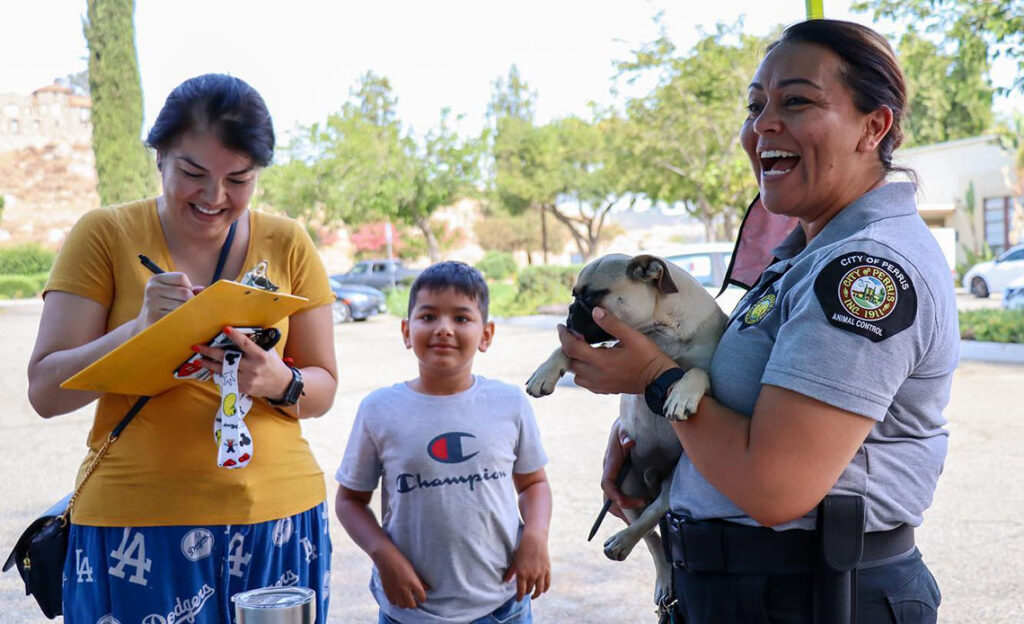
    Christina holds a small dog during a spay/neuter event while a woman signs a clipboard and a young boy looks on. Photo credit: City of Perris

    Perris has a population of nearly 80,000 residents, many of whom have pets they love, yet only two options for sterilization: one is highly restricted, and the other, costing $300 or more, is unattainable for many working families. Christina knew a mobile clinic would make a huge difference for families in her community, if she could raise the funds to host it. When she saw the California for All Animals grant opportunity, she jumped.

    “I didn’t ask anybody. I’ve taken one grant writing class and I was just trying to use my smarts. I was just hoping, hoping to get money to help the community. And it came through! I was so surprised! I think that was one of the happiest days of my life.”

    Christina also secured a grant from the Pet Lover’s License Program to have another 75 large dogs sterilized, a grant to offer microchips and identification to every animal officers pick up. Her department is also currently participating in the Open Arms Challenge with the theme of “Mending Fences,” an initiative that would provide fence repairs, dog houses to shield animals from the hot summer sun, and humane deterrents for residents concerned about community cats in their yard.

    Although it’s still early, she’s already seeing the fruits of her efforts. After receiving a California for All Animals grant to microchip animals, her team started using 24PetConnect and posting photos of lost dogs to various lost and found boards. Compared to the same three-month period in 2022, her team has more than doubled the number of dogs they’ve returned home. “And now we’re trying to think about what else we can do, “says Christina. “What else can we do to keep these animals from going to the shelter?”

    As for Julio, “He’s doing good. I was just over there visiting him yesterday. He had his cone on and his owner was just so appreciative.”

    The career-altering gift of autonomy

    Ultimately, every one of these bright spots fueled Christina’s journey from burned out to on fire, with one in particular sparking her shift: an organization that believed she could do it.

    “I felt valued here. […] Here, my ideas—I could go through with them. I could try something new. I wasn’t in a box anymore. I think that’s where my positivity comes from. I’m grateful I finally get to do what I always wanted to do.”

    Perris also granted her the space and safety to reflect on her past. “I don’t think I was ready to be a senior officer. I was struggling with self-reflection in my personal life too, but as time has gone on, I see what my actions can do to other people. I’ve grown a lot in these past seven years. A lot.”

    Today, she knows the power of autonomy and makes a point to ask her team for their input and opinions.

    “How you show up, it really matters,” she says. “I want to carry with me everything I have to share. I think we all have something to share and we shouldn’t be afraid to share it, and I try to bring that out in the field. Like, I’m here for you.”

    She wants other officers who might not feel like they are in the driver’s seat to know that their actions do have an impact: “Own yourself and don’t let the job own you,” she says. “You picked up a dog that you know was spayed, go pound that cement. Go door to door. Return that dog. Maybe you don’t do a couple of calls, but you get that dog home. And that dog doesn’t enter the shelter. You can make a difference.”

    “This is really, really hard, and we wake up every day, and we come to our jobs to help.” In this short clip, Christina reflects on what she wishes everyone knew about the true nature of the work, opens up about one of the most difficult moments of her career, and shares how she got through it.

    Related Stories