Category: News Item

second-level news item on the #allthenews landing page

  • Gratitude for the Cal for All Animals Community

    Gratitude for the Cal for All Animals Community

    More Pets and People
    Together…

    …more
    Growth

    Gratitude for the Cal for All Animals Community

    Reflecting after the 72nd and final All Call 

    On Valentine’s Day 2022, we gathered in a Zoom room, all squares and no chocolates. A one-eyed cat named Pirate purred his way into the scene. California for All Animals launched with an invitation to dream different, as so many Californians have before. An invitation to imagine what’s possible when we invest in what it takes to match animals in need with the right outcome through the right care, delivered in the right place and at the right time.

    Does that feel incredibly idealistic now?

    It’s true that rising costs and pet restrictions continue to lock families out of stable housing. Violent immigration enforcement policies separate families and send pets to already crowded shelters. For many shelters and communities, essential vet care is out of reach. Even with over $16 million in grant funding devoted to spay/neuter, we’re still limited by shortages of veterinarians and support staff, and a pandemic-era surgery backlog persists.

    These aren’t personal failures. They’re systems failures that make it increasingly difficult for people to care for animals and for shelters to serve their communities.

    But this is also true: Our collective action to make change brings us closer to that Valentine’s Day vision.

    Over 72 All Calls, we saw what this looks like in practice. Shelters building partnerships with veterinarians and community organizations to deliver low-cost care, free spay/neuter, microchips, and vaccines. Piloting short-term foster programs, veterinary assistance funds, fee-waived Return-to-Home and education-before-citation approaches that recognize people want to care for their animals when barriers are removed. Translating shelter websites and adoption materials. Sharing Emotional Support Animal information, pet food, and supplies through pop-up events, flyers and door-knocking. And within and across organizations, sharing disaster support and mutual aid resources, and strengthening cross-team collaboration to get animals home faster. There is a role for everyone to play.
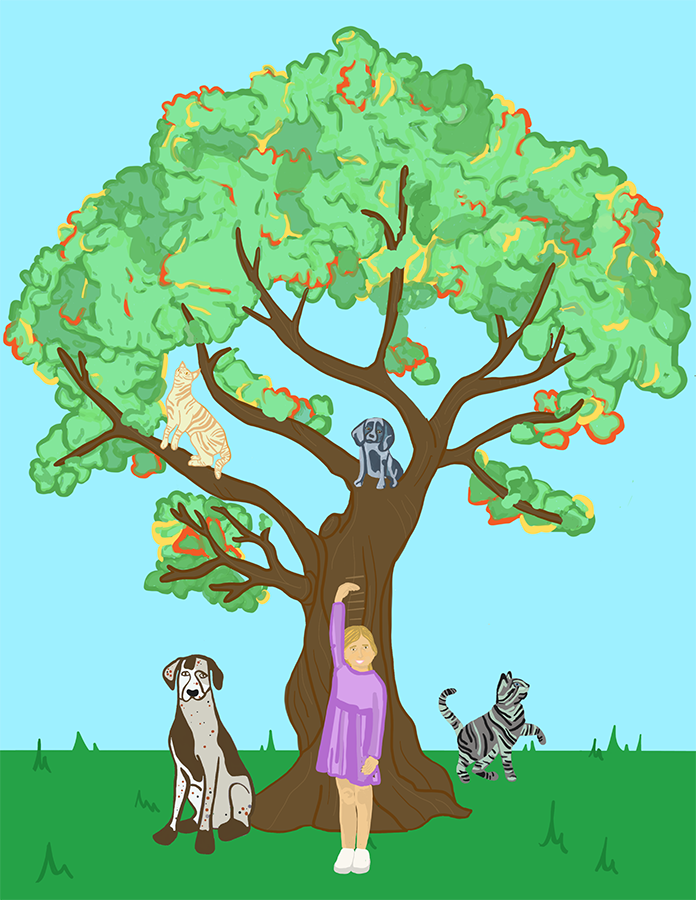

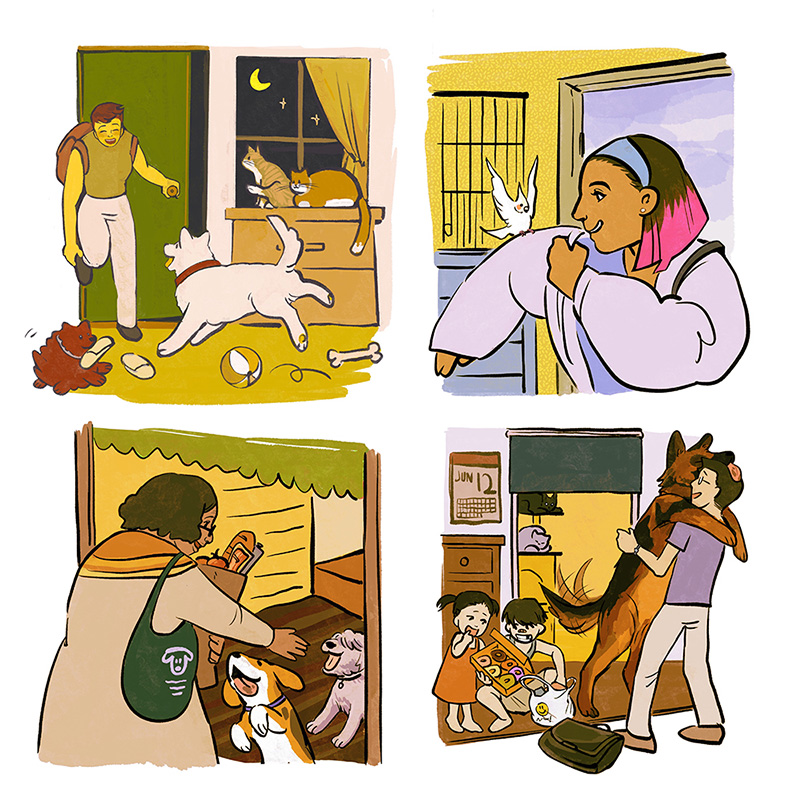
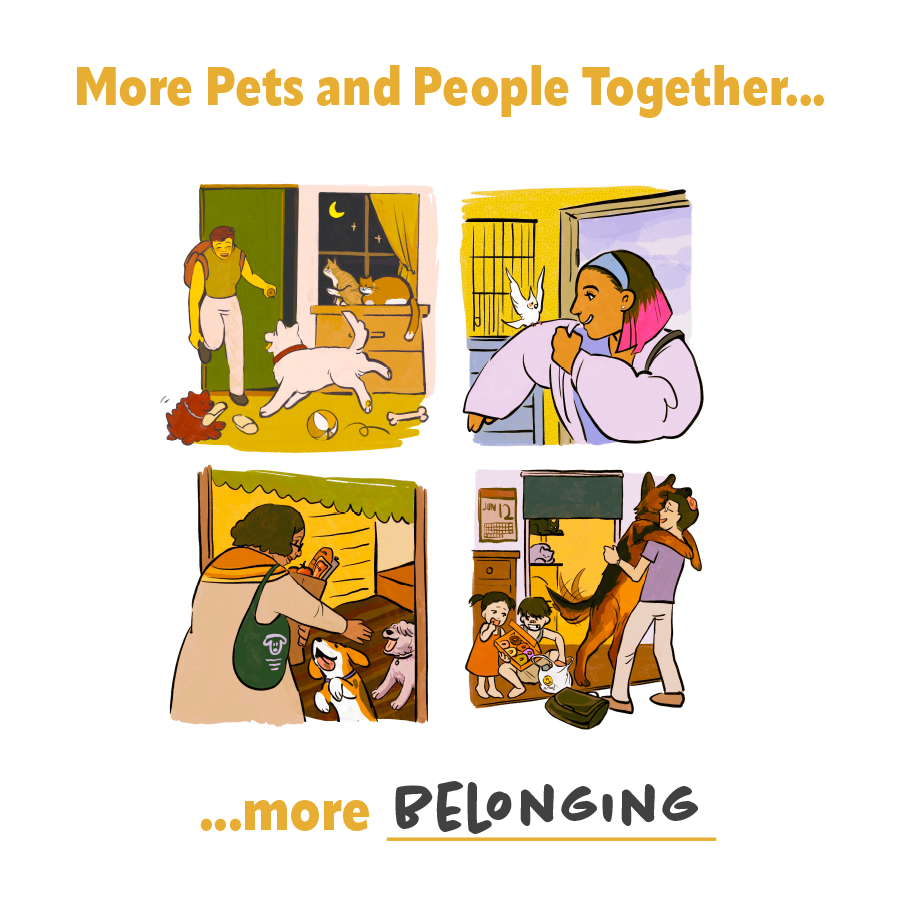
    More Pets and People Together, More Growth by Lola Victor

    You’ve documented what it means to meet people where they are, with compassion, respect, and a recognition of what we share: a belief that pets are family, and that we all deserve the conditions needed to care for the animals who add so much to our lives.

    “More Pets and People Together, More Growth” – Illustration by Lola Victor (Siskiyou Humane Society)

    Ultimately, these 72 hours offer a record of reimagining not just what we do, but how we do it. You’ve documented what it means to meet people where they are, with compassion, respect, and a recognition of what we share: a belief that pets are family, and that we all deserve the conditions needed to care for the animals who add so much to our lives.

    The momentum is spreading. For the first time in 140 years of animal sheltering, New York City will include spay/neuter funding in its budget. Texas appropriated $13 million for spay/neuter over two years.

    A California that’s truly for All Animals—and for safer, healthier, and more connected communities where people and animals can thrive together—requires ongoing action and ongoing investment.

    Thank you for everything you’ve brought to this work over the last three years. The All Calls are ending, but their spirit continues. We hope, on days you feel discouraged, you’ll be reminded of the many colleagues who are ready to support you.

    The community relationships and partnerships you’ve built—they’re yours to keep growing. You’ve shown us that meaningful change builds slowly, through small, brave acts of innovation and care. The bright spots you’ve shared—they’re spreading.

    And the advocacy you’re doing matters. City councils, county boards, and state legislators need to hear from shelter teams and community members why sustained funding is so important. They need to hear firsthand stories that show why a robust state spay/neuter fund is crucial.

    Keep committing to changing systems rather than blaming individuals and one another. We can continue moving toward that vision of the right care, in the right place, at the right time—where pets and people have what they need to stay together, and shelters have what they need to be there when animals need help most.
  • Love in every language – CA Adopt-a-Pet Day site welcomes more adopters

    Love in every language – CA Adopt-a-Pet Day site welcomes more adopters

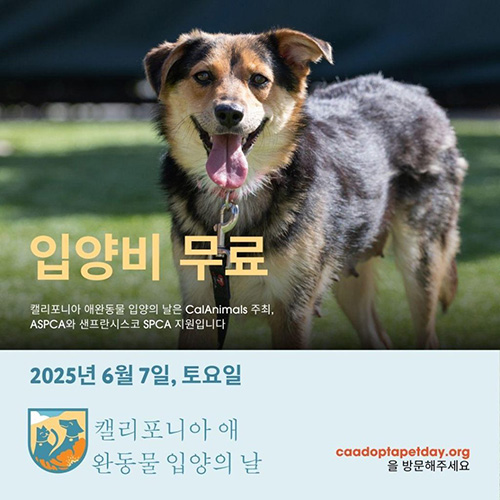
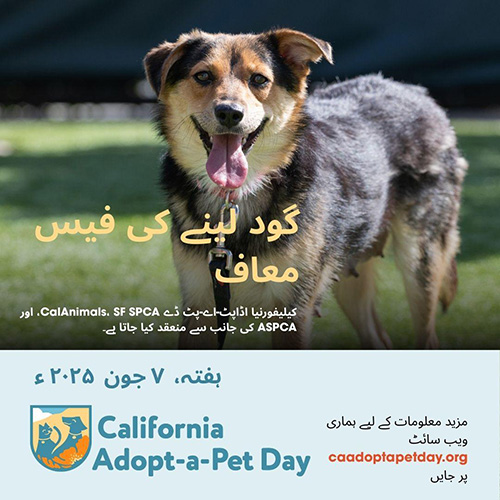
    California4AllAnimals has partnered with Patitas y Palabras, a local translation company, to provide colloquial, customized translations for the 2nd annual CA Adopt-a-Pet Day hosted and sponsored by Cal Animals, SF SPCA and the ASPCA. Adoptions are free at over 100 participating animal shelters throughout California on Saturday, June 7th!  

    We know that people love pets and recent stats show that only about 40% percent of pet owners get their pets from shelters. The fact that more than 2/3 of the population identify as pet owners shows there is a huge opportunity to increase the number of adopters. And being welcoming and inclusive is a way to build trust with the community to increase those numbers. That’s what this multilingual campaign is all about.

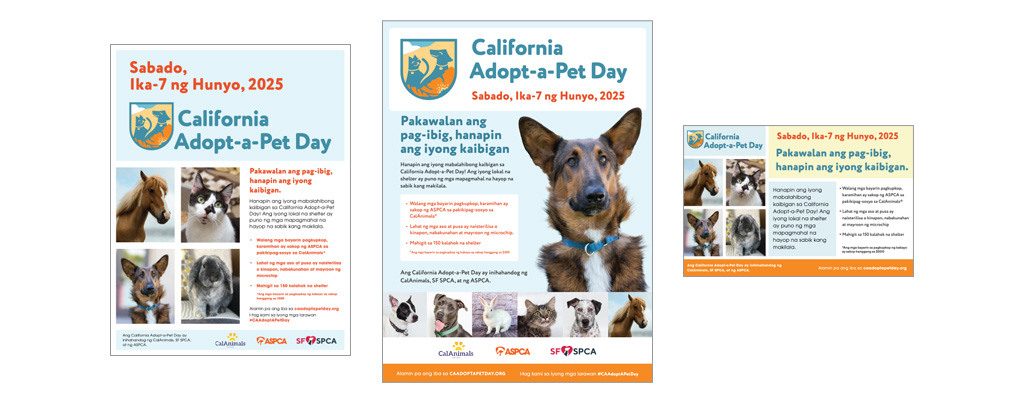
    Did you know that 45% of Californians over the age of 5 speak a language other than English at home? And that many animal shelters are only able to provide materials in English or through an automated web translation? Thanks to the Cal4All/PyP partnership, the www.caadoptapetday.org website is available in English, Spanish, Chinese, Vietnamese, Korean, Urdu and Tagalog,  seven of the most common languages in the state. That means more Californians can find information about this year’s event in the language they associate with home and family. And because the text has been translated by native speakers working in animal welfare, the content is clear and culturally nuanced. 

    While the website serves as a promotional tool inviting potential adopters to the event, it also offers participating shelters pre-made resources to do their own publicity—posters, flyers, banners, and social media assets in all seven languages.

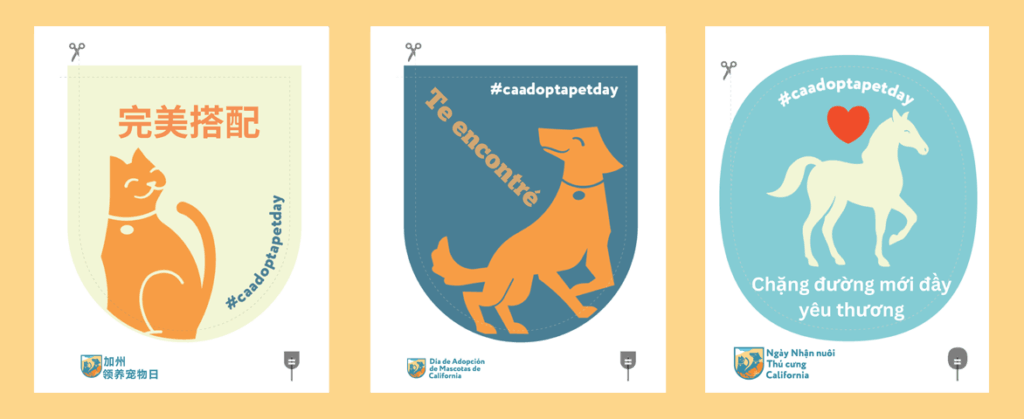
    Cut-out photo props in Chinese, Spanish, and Vietnamese

    With over 200 languages spoken in the state, some shelters may wish for materials in other languages. The Shelter Resources pages on the site have you covered there too. Thanks to CalAnimals, SF SPCA, the ASPCA and the web development and design team at The Engine is Red, editable templates of the posters, flyers and some social media assets are available for free on Canva. 

    Being able to welcome more adopters to the shelter as part of a larger multicultural engagement initiative can create a virtuous cycle of community support. At our Multicultural Engagement Community of Practice calls, shelter workers share how their own personal and professional journeys have helped them deepen ties with their communities. Register to join future calls, or watch a recorded call to learn how your colleagues are working successfully with multiple language communities to run robust field services, food banks, community cat programs and more.

  • Grant Impact – San Bernardino County

    Grant Impact – San Bernardino County

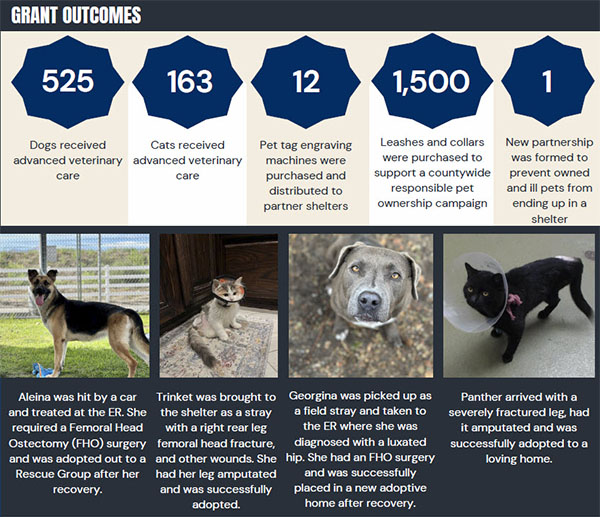
    The San Bernardino County Devore Animal Shelter made great use of their $205,000 California for All Animals grant. Among the outcomes:

    • 525 dogs received advanced veterinary care
    • 163 cats received advanced veterinary care
    • 1,500 leashes and collars were purchased

    From the report:

    “The Vet Care Grant Fund for shelter animals has been instrumental in improving the well-being of animals. Through UC Davis Koret Shelter Medicine California For All Animals grant, we’ve been able to provide essential veterinary care, including surgeries and non- routine/advanced medical care to 525 dogs and 163 cats for a total of 688 animals helped. The positive impact of this grant is reflected in both improved health outcomes and overall quality of life for each of these animals. The success of this grant is a testament to the positive change that can occur when passionate individuals and organizations come together for a shared cause.”

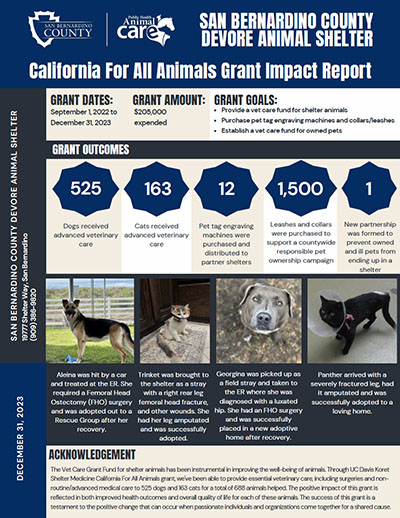
    San Bernardino County Devore Animal Shelter one-page report

    Download the PDF (340 KB)

  • Petting Pitties and Swapping Advice: Compassion in Action at The PAW Mission

    Petting Pitties and Swapping Advice: Compassion in Action at The PAW Mission

    More Pets and People
    Together…

    …more
    Compassion

    Petting Pitties and Swapping Advice: Compassion in Action at The PAW Mission

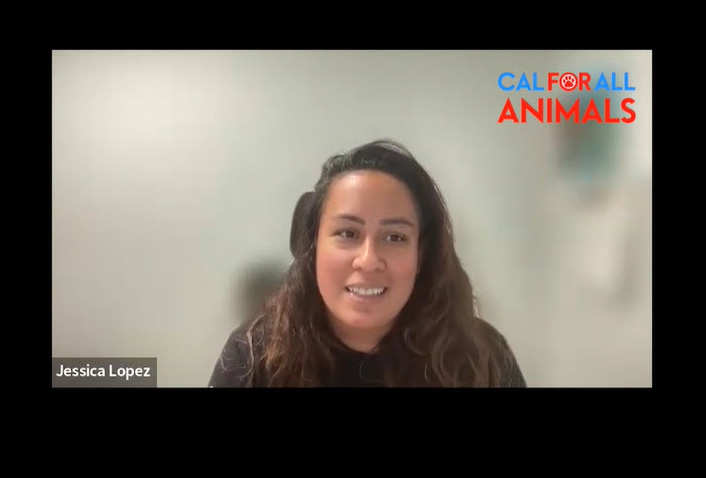
    As part of our More Pets and People Together campaign, we’re asking community members inside the shelter and out, “What do communities look like when we’re stronger side by side? What does More Pets and People Together mean to you?” Together we’re envisioning and creating communities that keep and bring pets and people together, places rooted in mutual care, joy, and connection, where everyone belongs. The PAW Mission Founder and Executive Director Jessica Lopez reflects on the people and circumstances that challenged her assumptions and cleared the way for a new understanding of what compassion looks, feels, and sounds like. 

    On Fridays the Pico Rivera Clinic opened at 6 a.m., and Jessica Lopez was sure Gloria would be first in line. Jessica had recently left work in the private practice veterinary world for a job managing two high-volume spay/neuter clinics for Spay/Neuter Project of Los Angeles, and she’d come to know Gloria through her weekly TNR routine. Without fail, Gloria would trap one of the many community cats she looked after, then line up in the dark at 5 a.m. for the clinic’s low-cost spay/neuter services so she could get in and out and still make it to her job by 6:30. 

    “Rain or shine. She was all business, always composed,” Jessica said. “One time we had a fire in the clinic. She was right there, like, ‘How can I help?’”

    That morning, though, when the doors opened, Gloria was distraught. One of the cats she’d waited in line with the week before had been hit by a car. “She was on the street,” she told Jessica through tears, “and I had to bring her in.”

    The community cats that passed through the clinic every day? For caregivers like Gloria, Jessica realized, they’re family.

    Over time Jessica questioned more of the assumptions she’d carried into the field. “I did a lot of emergency and critical care as a technician, and I was very dead set on the belief that if you did not have $1,500 in your bank account ready for an emergency, then you should not have a pet,” she said. “I was making 16 bucks an hour, and I’m expecting people to have $1,500? That wasn’t even one paycheck of mine.”

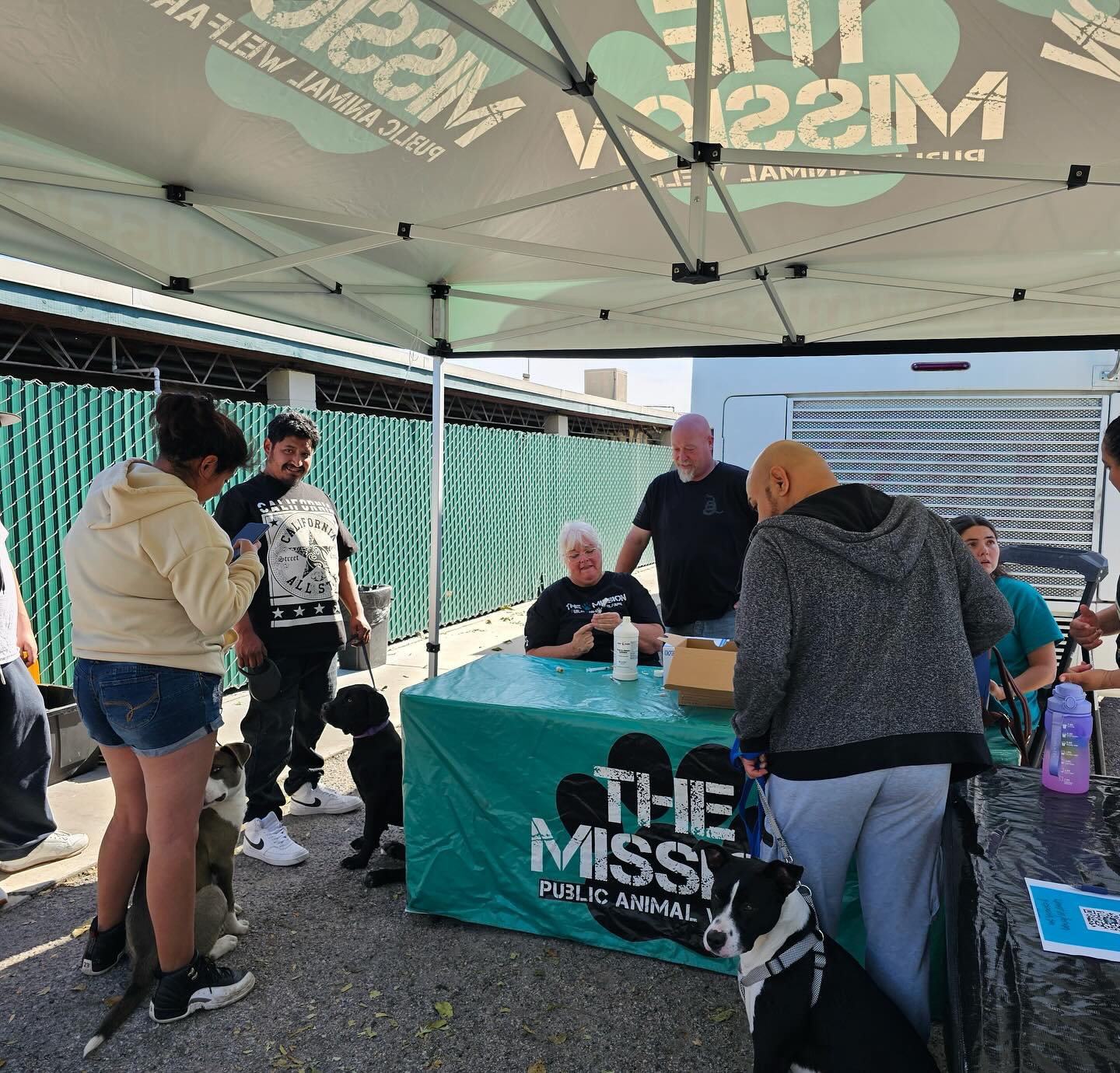
    The PAW Mission in action in San Bernardino. Credit: The PAW Mission

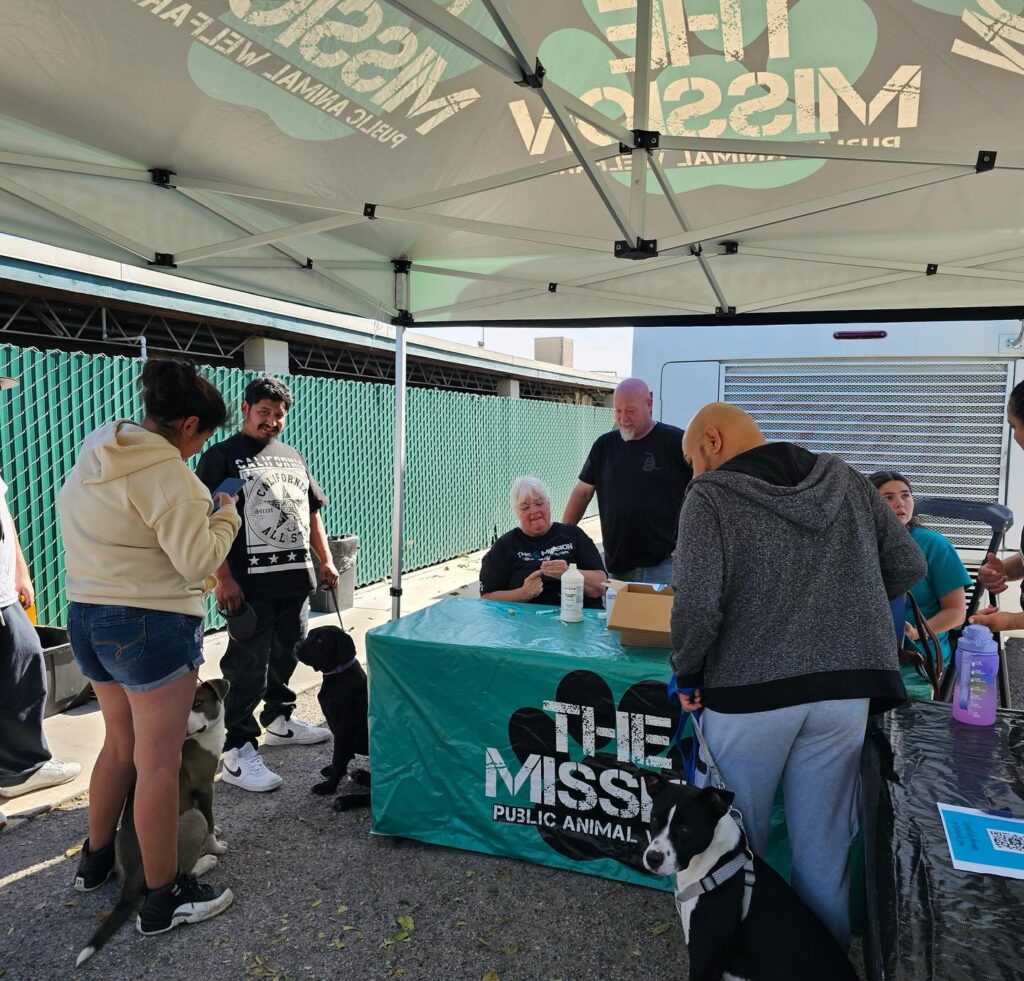
    At community events, people aren’t just standing in line for health checks, vaccines or pet food. They’re petting pitties and swapping advice with the people behind them or sharing stories with the cat parents in front of them.

    Photo courtesy The PAW Mission

    That expectation didn’t square up with her family’s experience either. “We always had pets. We never had an extra $1,500 in the bank account for anything. Ideally everybody has extra income for the emergency fund, for the rainy-day fund. But a lot of people—the majority of the U.S.—is struggling, and they’re going paycheck to paycheck.” 

    People like Gloria changed her views on what true pet care is and what animal care organizations could be offering. Now, through The PAW Mission, Jessica’s goal is to leave the assumptions behind and start with one question: “How can we help you?” Her team can support community members with pet food and supplies, free vaccines, spay/neuter, and low-cost vet care. They can share information or help them bring home a new pet or Rodent Ranger.  

    No matter what, it’s important to meet people where they are, with compassion, Jessica explained. “How are we going to impact our community if we’re constantly telling them that they’re doing something wrong, and we’re not trying to understand where they’re coming from?”  

    For Jessica, more compassion leads to more pets and people together, and it also leads to more voices and a stronger community. She sees it in action at every PAW Mission event. People aren’t just standing in line for health checks, vaccines or pet food. They’re petting pitties and swapping advice with the people behind them or sharing stories with the cat parents in front of them. They’re hanging out after on a nearby bench, laughing together in the sun. They’re realizing that neighbors—even the ones with the rambunctious dog—can also be friends. 

    It’s a change you can feel, Jessica said. “Everybody needs that village to help, whether it’s for pets or for kids.” 

    Three Minutes of Insight from Jessica Lopez

    On support networks

    On support networks

    0:54
    On changing minds

    On changing minds

    0:33
    On spay/neuter

    On spay/neuter

    0:24
    On the power of events

    On the power of events

    1:14

    Hear Jessica reflect on the support networks we all need in our lives, why the benefits of community events go beyond vaccinations, and how to rethink our approach to changing minds.

    Jessica Lopez

    Jessica Lopez serves as Executive Director/Founder of The PAW Mission, overseeing the organization’s management, programs and development. Jessica has worked in the veterinary field for over 20 years; for 14 of those years she worked building vital community programs, wellness clinics, vaccine clinics, and building great teams for organizations in both Los Angeles and San Bernardino. Jessica has always known she was going to work with either animals or children, and she is exhilarated to do both at The PAW Mission. Jessica resides in Yucaipa with her family (husband and three kids) and a menagerie of farm animals, including cows, goats, pigs, chickens, ducks, geese, turkeys, cats, and dogs!


    More Pets and People Together main page


    Back to top

  • A Year-End Message from California for All Animals

    A Year-End Message from California for All Animals

    California State Director Allison Cardona and Program Manager Nadia Oseguera reflect on what we accomplished together in 2023 and look ahead to challenges and opportunities 2024 will bring.

    Over the past year, it’s been incredible to learn about the programs funded by California for All Animals grants. All across the state, capacity-expanding spay/neuter, veterinary care, supplies, transportation, training, and community engagement programs are keeping pets and people together in their homes and communities. It has been inspiring to hear how animal shelters are engaging community members in inclusive ways, understanding that people love their pets and deserve to keep that bond.

    2023 has also been exceptionally challenging for shelters and the communities they serve, and we know you are feeling that strain on a cellular level. Agencies and organizations serving people and pets nationwide are struggling with compounding crises, and California is no exception. Structural challenges like lack of access to pet-inclusive housing, veterinary care, and the veterinary professional shortage, to name a few, are creating the need for innovation, flexibility, and collaboration to address issues and create change. Organizations like the Humane Society of Sonoma County, Berkeley Humane, and Stanislaus Animal Services are partnering with CAMP LA to provide subsidized training for veterinarians to perform high-quality, high-volume spay/neuter surgeries. Just today, Cal for All shelters and partner organizations surpassed 22,000 grant-powered spay/neuter surgeries!

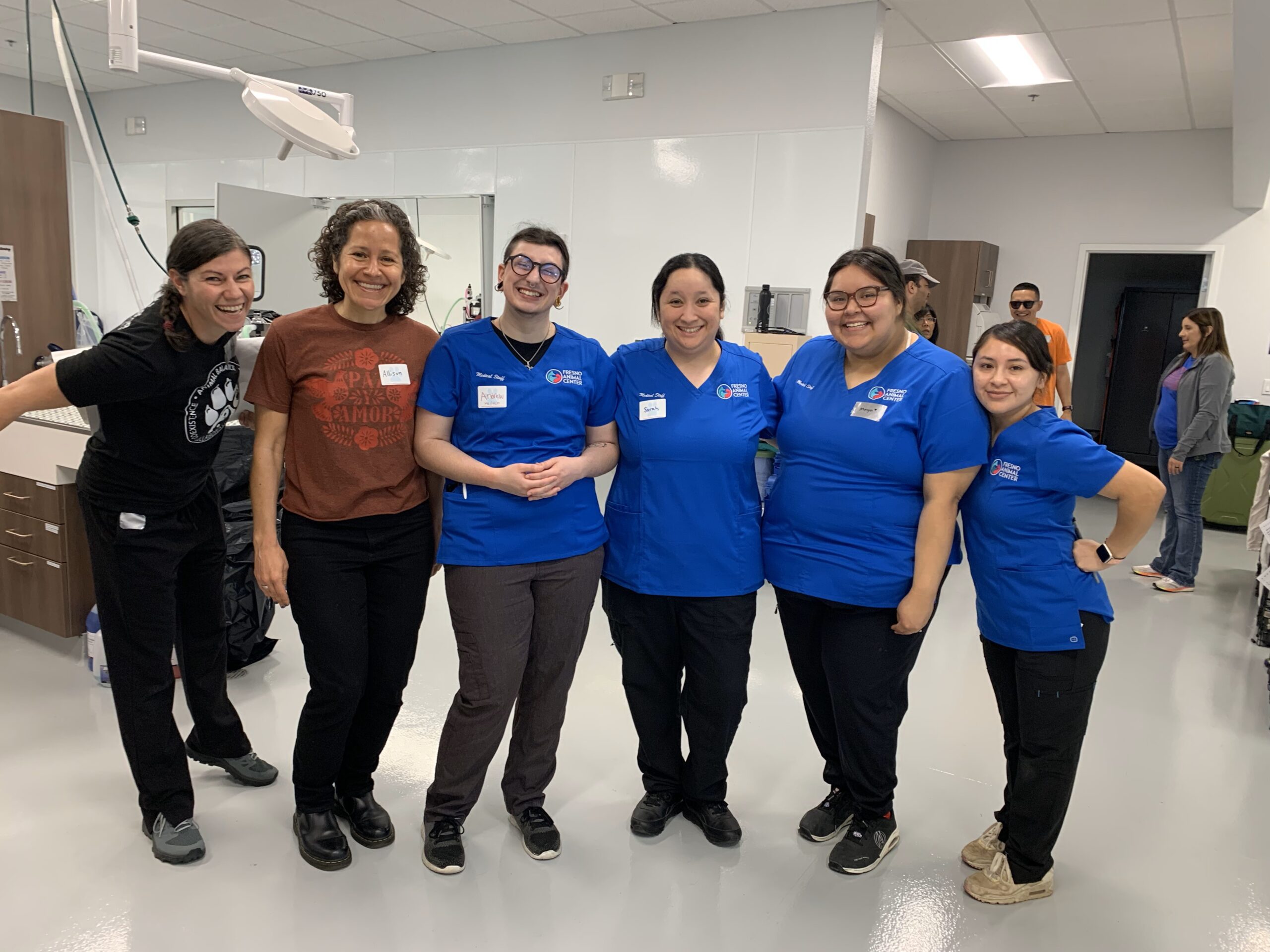
    California for All Animals’ Allison Cardona joined Megan Gram, Animal Balance Director of the Pacific Region, and Fresno Animal Center team members Andrew, Sarah, Maya, and Bede, on the first day of the Fresno Animal Center + Animal Balance Spay/Neuter Clinic.

    We’ll need partnerships like these to weather 2024 together. Economic hardship and housing insecurity will continue to strain pet owners’ ability to care for their pets. We see animal shelters making the shift to providing resources, support, and connection to services so pet owners are empowered and supported to care for their pets. Collaboration and integration between animal shelters and human services is going to be a game changer in 2024.

    Stay tuned for more grant impact news—and more grants—in the new year.

  • Meet Artist Erika Ilumin Wahlberg

    Meet Artist Erika Ilumin Wahlberg

    More Pets and People
    Together…


    …more 
    PLay

    Meet Artist Erika Ilumin Wahlberg

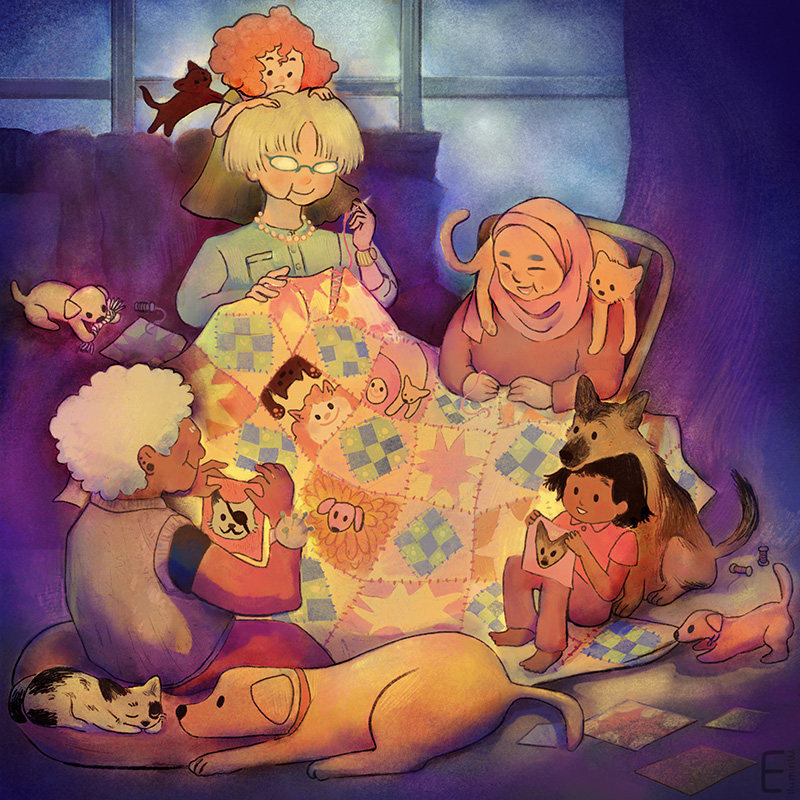
    As part of our More Pets and People Together campaign, we’re asking community members inside the shelter and out, “What do communities look like when we’re stronger side by side? What does More Pets and People Together mean to you?” Together we’re envisioning and creating communities that keep and bring pets and people together, places rooted in mutual care, joy, and connection, where everyone belongs. Artist Erika Ilumin Wahlberg tells us more about her vision and why building bridges and removing barriers to keep pets and people together is important to her. 

    What drew you to this project?

    I may not be an illustrator whose expertise lies with animal art, but the focus on community bonds really resonated with me!

    It’s also important to address barriers for pet owners when it comes to affordable vet care. I remember the panic I felt the one time I called an emergency vet clinic on behalf of a friend, and wondering if my friend’s dog would be okay to wait for a day or if it would be “worth it” to go to the 24-hour clinic and possibly take on expensive fees we couldn’t afford. Luckily his pet was okay to last the night before seeing his regular vet, but I know if the situation was more dire and he didn’t have the money to spare for emergencies—it could easily have been more stressful.

    How have animals impacted your life?

    Though I don’t have a dog of my own, I have spent many weeks dog-sitting for my aunt.

    Her dog, Maile, is a really sweet Shih Tzu and Lhasa Apso mix. When I got knee surgery and was stuck on the couch for an entire week, she would lie on the floor in front of me the entire time—the tiniest guard dog! I felt very helpless at that time, so it was always comforting to see that she was always there watching how I was doing. 

    Playing with one another is how we become stronger as a community. Play is the way we connect with pets, and I hope we carry that over in bringing play into our relationships with people!

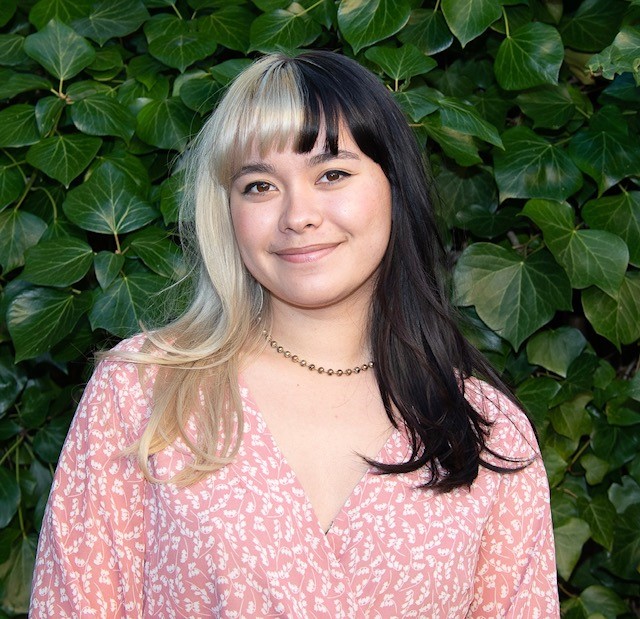
    Illustrator Erika Ilumin Wahlberg

    How would you complete this sentence? More pets and people together, more _____.

    More pets and people together, more play! The bonds we have with our pets, I think, reflects the best part of our human qualities: unconditional love. Pets create connections through play, which is something we forget how to do the older we get. Pets remind us to care for each other for the sake of caring, and to remember to play with each other no matter what age we are.

    Playing with one another is how we become stronger as a community. Play is the way we connect with pets, and I hope we carry that over in bringing play into our relationships with people!

    What do you hope your art inspires in the world?

    I hope that everyone could see themselves, or someone they love, in my art. I hope that they think of the pets and people in their life and feel like they’re part of something greater.

    Everyone deserves to feel like they’re part of something. In the case for this work, part of the quilting circle!

    Artist Erika Ilumin Wahlberg

    Erika Ilumin Wahlberg is a California based writer-illustrator with a love for fantasy and everything delightfully strange. Her work centers around stories with happy endings because she believes that dreaming of a better future is how we can imagine solutions to reach it. To see more of her work visit eilumin.com and follow her Instagram @eiluminart.


    More Pets and People Together main page


    Back to top

  • Draw, Color or Paint Your Way to $5k for Your Shelter

    Draw, Color or Paint Your Way to $5k for Your Shelter

    What’s possible when we all work inside and outside shelter walls to keep and bring more pets and people together and root out barriers that come between them? What does More Pets and People Together mean to you? Answer these questions with art, and you could win a $5,000 grant for your local shelter! 

    As part of the California for All Animals More Pets and People Together campaign, everyone is invited to reflect on what animal companionship means to them and to their community via pencil, crayon, brush, or digital drawing tool. Artists of all ages and skill levels are encouraged to enter. Here’s how:

    Illustration by Ann Liu
    • Post your original art to Facebook or Instagram with the hashtags #PetsAndPeopleTogether #MascotasYPersonasUnidas by November 11, 2023.
    • OR Pick up a flyer from your local shelter or download and print one by clicking here. Draw, paint or color your vision on the front of the flyer and return it to your local shelter. Make sure to include your name, email and phone number on the back.

    Shelters and partner organizations, request a free communications kit complete with contest flyers, posters, buttons, and stickers to share with community members inside the shelter and out, including staff and volunteers! 

    If you can’t get to your shelter or print a flyer, no problem! Draw on any piece of paper, then take a photo of your art and post to Facebook or Instagram with the hashtags #PetsAndPeopleTogether #MascotasYPersonasUnidas.

    Answering the question, “More pets and people together, more ________?” is a good way to spark your creativity. Not a visual artist but want to share what More Pets and People Together means to you? Email your story to together@californiaforallanimals.com. For inspiration and contest details, visit this page to view other art created by emerging California artists like Ann Liu.

  • Tackle Disease and Barriers with August Events

    Tackle Disease and Barriers with August Events

    As intake numbers rise in many shelters, making sure animals receive the right care, in the right place and at the right time is critical to combating crowding, curbing disease and ensuring positive outcomes. Two upcoming events will highlight tried-and-true tips for managing infectious disease and creative approaches shelter teams are taking to keep more animals in their homes, reunite them with their families or, when needed, place them in new homes as quickly as possible. 

    August 16: Curbing Disease As Intake Rises: Prevent, Fight and Win Today

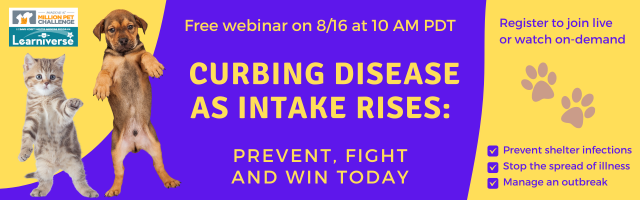
    Curbing Disease As Intake Rises webinar flyer
    Download a puppy– or kitten-themed flyer to share with your team!

    Does it seem like animals keep getting sick no matter what you do, especially right now with intake numbers climbing in many shelters? Does URI have to be status quo for summer? Is parvo inevitable? Have you wondered what else you can do to get ahead of these vicious cycles? This webinar is for you!

    From animal care attendants to RVTs and beyond, everyone in the shelter has the power to have a big impact on animal health. On August 16 at 10 a.m. PDT, UC Davis Koret Shelter Medicine Program veterinarians Dr. Aziz and Dr. Stuntebeck will answer your questions and arm you with the information you need to squash the most concerning infectious diseases in your shelter.

    Whether you’re providing daily care for animals or reviewing care and intake protocols, you’ll learn practical steps to relieve the strain on animals and team members. Come prepared to UNLEARN unhelpful myths and walk away with tools and techniques that will lead to healthier animals, less stress for you, and make your job of serving the pets and people in your community easier.  

    We want to answer your burning questions: submit them here. This webinar will be interactive, so bring your additional infectious inquiries and conundrums for Dr. Aziz and Dr. Stuntebeck to answer live. 

    Register and receive a link to the recording after the event. Our experts can’t wait to give you what you need to tackle this concerning issue in your shelter!

    Register Now

    More Pets and People Together Roundtable Series Kicks Off August 17

    In this series of four dynamic roundtable conversations, frontline workers leading change across California and the country will share collaborative approaches to removing barriers that come between people and pets and dish on innovative solutions they’re implementing to ensure pets spend more nights at home, not in the shelter. 

    Together we’ll dig into questions at the heart of the challenges we’re facing now. Register for the series and join your peers for the first session on August 17 at 9 a.m. PDT!

    Boosting Positive Outcomes: Antidotes to Fear, Bias and Saviorism

    More Pets and People Together Roundtables

    We want to place animals in loving homes, but strict outcomes policies and processes actually discourage awesome adopters or prevent animals from returning home, increasing length of stay; fear, anxiety and stress responses; and disease risk.

    At this roundtable, we’re getting real and discussing how we can respond when barriers rooted in fear, bias, and saviorism creep into our systems, muck up our flowthrough, and keep animals waiting. What does it look like when practices and policies are built around love, fairness, and solidarity with our community and in support of our shared goals? Four organizations will explore how community-centered adoption initiatives have opened their doors and jumpstarted positive outcome cycles for animals and more positive, connection-driven cultures among shelter teams.

    Panelists

    • Cole Wakefield (Good Shepherd Humane Society) 
    • Caitlin Daly (SPCA of Erie) 
    • Joy Smith (FieldHaven Feline Center) 
    • Denise Woodside (SEAACA)
    Save Your Seat
  • Sniptember Partnerships Add HQHVSN Throughout California

    Sniptember Partnerships Add HQHVSN Throughout California

    Up and down the Golden State, shelters and their partners are expanding high-quality, high-volume spay and neuter surgeries and training.

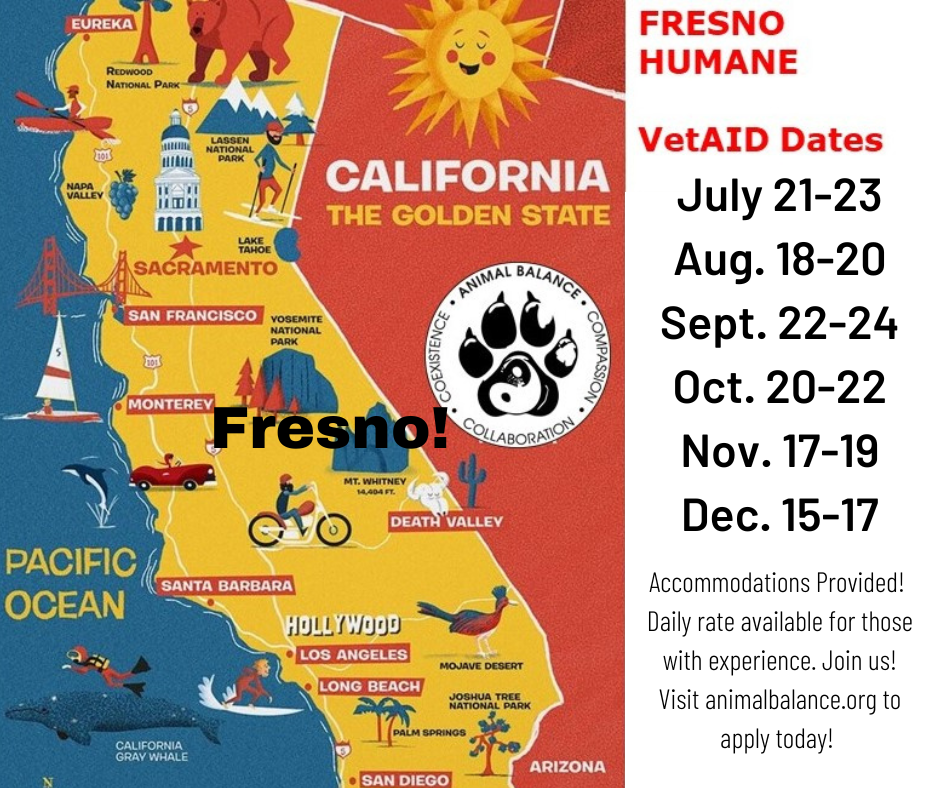
    Fresno Humane Animal Balance HQHVSN dates

    Animal Balance Brings HQHVSN to Fresno

    Thanks to a Sniptember grant and global NGO Animal Balance, Fresno Humane will be spending the second half of 2023 clearing their spay/neuter backlog of hundreds of shelter animals. In a monthly series of three-day “VetAid” High-Quality, High-Volume Spay/Neuter (HQHVSN) clinics, Animal Balance will provide equipment, RVT training and about 200 surgeries per visit from July through December in Fresno Humane’s facilities. It is hoped that as the shelter’s surgical backlog becomes manageable, services will expand to include surgeries, vaccines and anti-parasite treatments for community pets or TNR.

    Over the last three years, Animal Balance has established “consistent and sustainable MASH-style veterinary care in communities across the south and southwestern United States.” California for All Animals leadership is making introductions to encourage partnerships between AB and Central Valley shelters beyond Fresno.

    Animal Balance is looking for RVTs and vet assistants experienced in spay/neuter to participate in the Fresno clinics. Stipends and housing will be provided. Anyone who is interested can click this link to sign up on their website!

    San Diego Humane Offers Mentorships in Southern Cal Counties

    Meanwhile in SoCal, the San Diego Humane society is using its Sniptember grant to provide spay/neuter & HQHVSN mentorship to shelters in Riverside, San Bernardino and Imperial Counties. Their surgical team can travel to partner shelters to:

    • Perform spay/neuter surgeries for animals in your care
    • Provide training in high-volume spay/neuter to your staff

    To learn more or to schedule a visit from their team, contact Sarah Davis, Shelter Spay/Neuter Consult Manager at sdavis@sdhumane.org.

    CAMP/Sonoma Humane Partnership Unites SoCal and NorCal Orgs to Expand S/N Efforts

    And in an alliance that bridges north and south, L.A.-based Community Animal Medicine Project (CAMP) is expanding their Veterinary Training Project (VTP) initiative in partnership with the Humane Society of Sonoma County. Funding including scholarships and travel stipends for qualifying California veterinary professionals to attend CAMP’s VTP will be provided to remove barriers to training in essential surgical and clinical techniques that will help alleviate the overburdened animal shelter system in California. The three-year, $704,000 Sniptember grant provides increased access to training to an estimated 60 veterinary professionals who will take their skills back to animal shelters or non-profit arenas.

    “Our RACE-certified veterinarian training program provides hands-on surgical experience for licensed California veterinarians. Half of our VTP’s seventy-plus graduates have gone on to work as veterinary surgeons at CAMP or work at other nonprofits and shelters, demonstrating the effectiveness of this program,” said Dr. Zach Deegan, CAMP’s VTP Medical Director.

    “The HQHVSN VTP is set to make a profound impact on reducing shelter populations and unnecessary euthanasia,” said Albert Escobedo, Director of Veterinary Operations at HSSC. “In collaboration with CAMP (Community Animal Medicine Project), we are not only expanding access to spay/neuter and basic veterinary services but also actively training veterinarians in HQHVSN techniques…This collaborative effort will help us save countless lives, enhance animal care, and build a more compassionate society for all animals.”

    “This partnership is a perfect example of what is possible when Californians put our heads and our hearts together,” added Nadia Oseguera, California for All Animals program manager. “Through this collaboration, barriers are removed, equity is built, access to High-Quality, High-Volume Spay and Neuter training is expanded, shelter intake is decreased, our statewide capacity to care for each other grows, and, ultimately, more California pets and their people stay together, stronger, side by side.”

  • Assembly Bill Seeks to Advance Veterinary Telemedicine

    Assembly Bill Seeks to Advance Veterinary Telemedicine

    The San Diego Humane Society and the ASPCA are advocating for Assembly Bill 1399, legislation that seeks to increase access to services in the face of a critical shortage of trained veterinarians in California by lifting state regulations restricting provision of veterinary care via telemedicine. The bill was revised and sent back to committee on March 20.

    Advocates argue that telemedicine can help close gaps in access to care particularly in rural areas and in communities where the local shelter does not have a veterinarian on staff.

    In a nationwide survey conducted by the ASPCA, nearly a quarter of the respondents reported they wanted or needed veterinary care in the past two years but were unable to get it. More than two-thirds of them would have used telemedicine if it had been available.  Read the April 10, 2023 press release.

    The ASPCA is asking veterinary professionals to sign an online petition in support of veterinary telemedicine here.

    Cat sitting on woman's lap looking at veterinarian on laptop computer